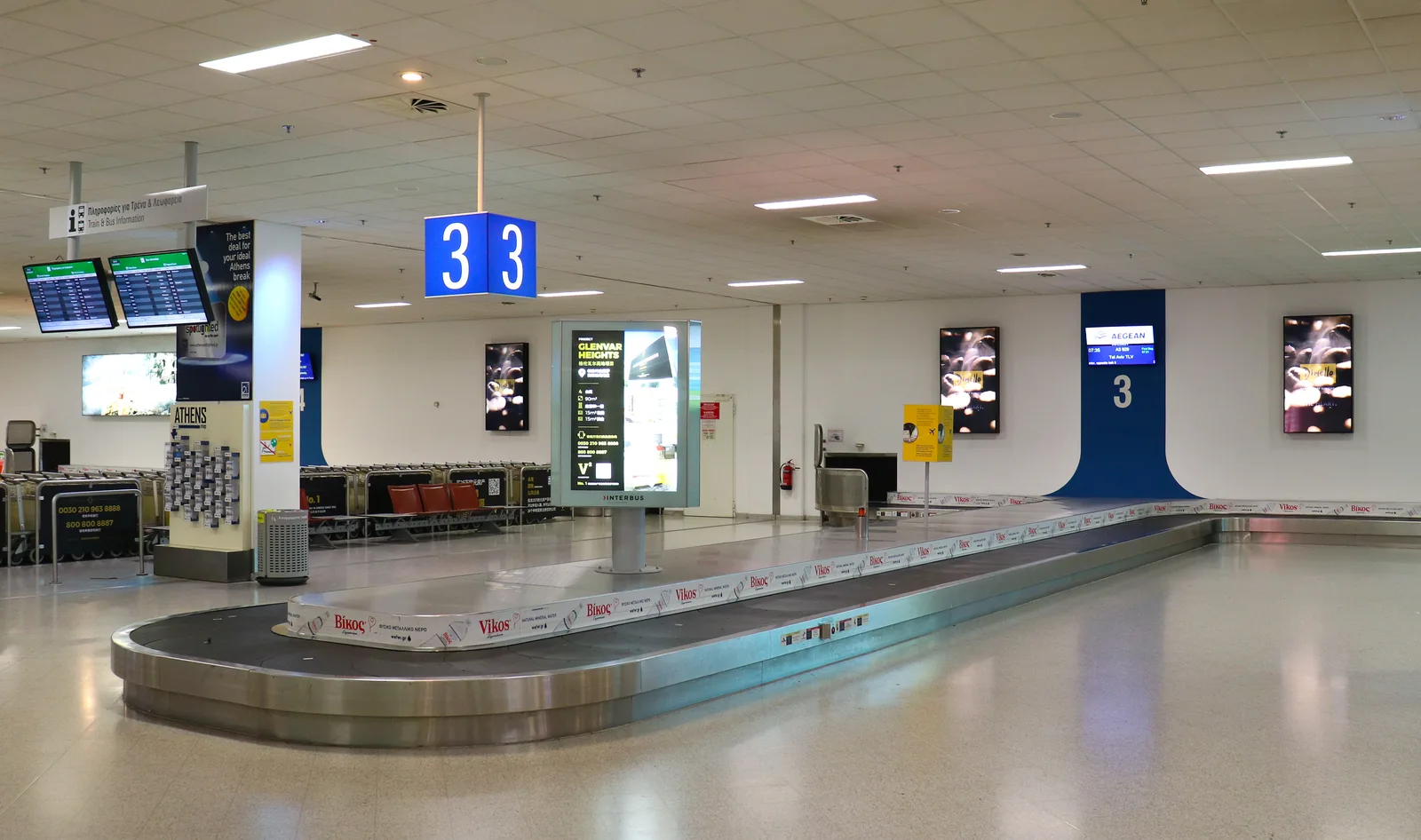
Passport Control at Madrid Barajas (MAD)
If you land at Adolfo Suárez Madrid–Barajas Airport on a flight from outside the Schengen Area, you now pass through the European Entry/Exit System (EES) at passport control instead of collecting a passport stamp. A border officer or a self-service kiosk records your facial image and fingerprints, and the system logs your entry as a digital record. Passengers arriving from inside the Schengen Area walk straight to baggage reclaim and face no border check at all.
This guide explains where passport control sits in each terminal at MAD, how the EES changes the arrival process, whether you need an ETIAS authorisation yet, and how long the queues realistically run in 2026.
Where passport control sits in each terminal?
Barajas runs four passenger terminals — T1, T2 and T3 in one cluster, and T4 with its T4S satellite building a few kilometres away. Passport control applies only to non-Schengen arrivals, and those flights are split between two parts of the airport.
Non-Schengen flights handled at T1 clear immigration inside T1, on the route down toward the ground-floor baggage halls. Long-haul non-Schengen flights operated by Iberia and its oneworld partners land at T4S, the satellite terminal. From T4S you ride the underground automated people mover (APM) to the main T4 building, and you reach passport control in T4 after that train, before baggage reclaim. If you arrive long-haul or connect through T4S, add several minutes for the APM ride when you estimate your time on the ground. Our Madrid Airport terminals guide maps which airline uses which building.
Arrivals from inside the Schengen Area land at T2, T3 or the Schengen side of T4 and bypass passport control completely, heading straight to baggage. The catch is knowing in advance which category your flight falls into: a flight from Paris or Rome is Schengen and needs no check, while one from London, New York or Casablanca is not. Confirm your arrival terminal with your airline before you fly, because it sets both the length of your walk to baggage and whether you queue at the border at all.
What is the EES and how does it work in 2026?
The Entry/Exit System is the Schengen Area's biometric border register for non-EU nationals on short stays. It became fully operational across every Schengen country on 10 April 2026, after a phased rollout that began in October 2025. Rather than stamping your passport, officers capture your facial image, your fingerprints and the data page of your travel document, then record each entry and exit electronically.
Your first EES registration takes longer than any later crossing, because the system builds your biometric file from scratch. On return trips within the three-year life of that record, the check mainly matches your face or fingerprints against the existing file, which moves faster. The European Commission reported more than 52 million entries and exits, and over 27,000 refused entries, in the system's opening months, so the register is active and enforced at Barajas. You can read the official description on the European Commission's EES page.
The system does not apply to everyone. EU, EEA and Swiss citizens, their non-EU family members travelling with them, and holders of a Spanish residence permit or long-stay visa stay outside the EES and keep using the regular lanes. Children under 12 are registered with a facial image but are not asked for fingerprints. For most other non-EU visitors landing at Barajas on a short stay, the biometric step is now part of every entry and every exit.
Do you need an ETIAS to fly into Madrid right now?
No. As of mid-2026, ETIAS is not yet required to enter Spain, and there is no confirmed start date. The European Union removed its earlier end-of-2026 target, and the launch is now expected in 2027; once it begins, a transitional grace period means ETIAS only becomes mandatory for most travellers roughly a year later, into late 2027 or 2028. Until it goes live, visa-exempt visitors from countries such as the United States, the United Kingdom, Canada and Australia enter on their passport alone, subject to the EES check described above.
When ETIAS does launch it will be a quick online authorisation rather than a visa: you apply before you travel, it costs €20 (applicants under 18 or over 70 are exempt from the fee), and each approval is valid for three years or until your passport expires. There is nothing to apply for or pay yet.
One mistake worth avoiding: paying a third-party website for an "ETIAS" that does not exist yet. No authorisation is on sale, and the real application will open only through the official EU travel portal closer to launch, so any site charging you for ETIAS today is one to skip. The current rules sit on the EU's official ETIAS portal.
How long does passport control take at Barajas?
Queue times swing with the arrival bank. The heaviest pressure at T4 lands in the morning, when several long-haul flights from the Americas arrive inside the same window, and EES checks have added minutes per passenger across Europe since April. Plan for a slower process than the old stamp-and-go, and budget more time on your first post-EES trip.
A few practical ways to shorten your wait:
- Have your passport open at the photo page, and take off a hat or glasses so the camera reads your face on the first try.
- Holders of EU, EEA and Swiss passports use separate lanes and the e-gates, which stay quick even at peak.
- If you connect onward through non-Schengen control, treat anything under about 90 minutes as tight during the summer peak, especially in the morning T4 bank.
- Where self-service EES kiosks are open, use them to pre-enrol your data before the officer booth; the captured biometrics are reused on exit and on future trips within the three-year window, so each later crossing is shorter.
For live arrival status and the latest on baggage belts, check our Madrid Airport arrivals page before and during your trip.
Entry rules and documents you need at the booth
Spain follows the standard Schengen short-stay rule: visa-exempt visitors may stay up to 90 days within any 180-day period, and the EES now counts those days for you automatically. Carry a passport issued within the last ten years and valid for at least three months beyond the date you plan to leave. Officers can still ask for proof of onward travel, a booking for where you will stay, and evidence of sufficient funds, even though most short-stay tourists are waved through after the biometric check. Because the EES logs every movement, your 90-day balance is now counted for you, and a stay that runs over shows up at once on your next crossing. If you reach Madrid after connecting through another Schengen country, your entry is registered at that first airport rather than at Barajas. The official arrivals overview for the airport sits on the Aena Barajas arrivals page.
After passport control: baggage, customs and reaching the city
Once the booth clears you, follow signs to the baggage hall for your flight number, then leave through the green "nothing to declare" customs channel if you carry nothing above the duty-free allowance. Central Madrid sits about 12 km from the airport. The Metro and the Cercanías commuter trains run from T2 and T4, an airport taxi charges a city-set fixed fare, and a pre-booked private transfer through GetTransfer.com meets you at arrivals with a name board, which helps after an overnight long-haul flight when the queues have already eaten into your morning.
To compare every option by price and travel time, see our guides on Madrid Airport transfers and getting from the airport to the city centre.
Plan your trip — airport routes
 AranjuezCity
 ÁvilaCity
 CuencaCity
 El Escorial (San Lorenzo)City
 SegoviaCity
 ChuecaNeighborhood
 Gran VíaNeighborhood
 La LatinaNeighborhood
 LavapiésNeighborhood
 MalasañaNeighborhood
 MoncloaNeighborhood
 Puerta del Sol (City Centre)Neighborhood
 Salamanca districtNeighborhood
 ValdebebasNeighborhood
 Chamartín railway stationStation
 Nuevos MinisteriosStation
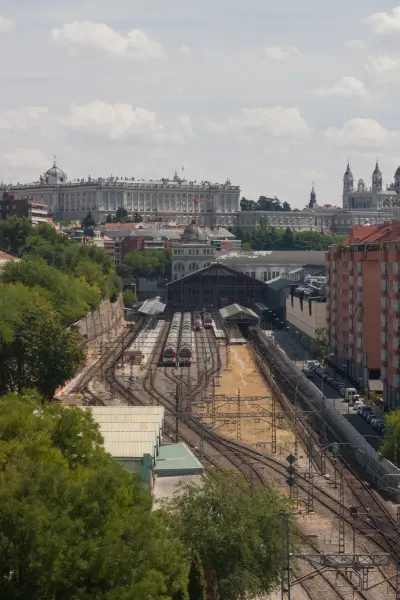 Príncipe Pío stationStation
 Casa de CampoVenue
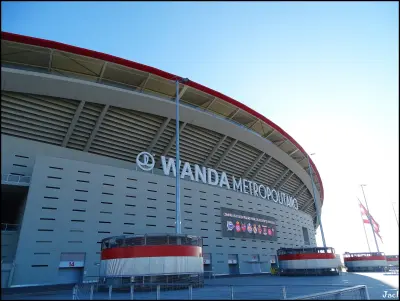 Cívitas Metropolitano (former Wanda Metropolitano)Venue
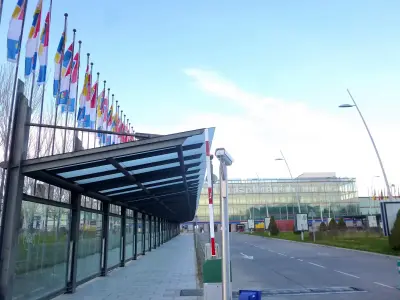 IFEMA Feria de MadridVenue
 Madrid RíoVenue
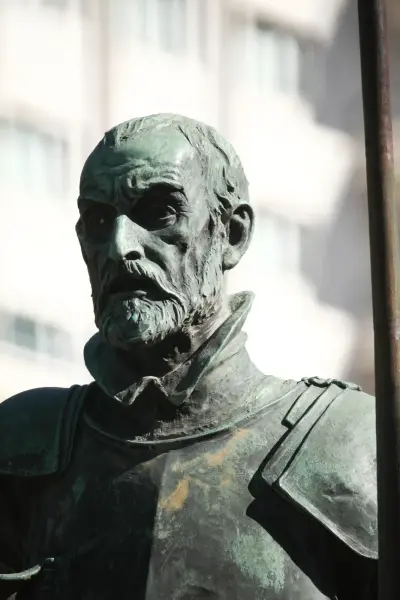 Plaza de EspañaVenue
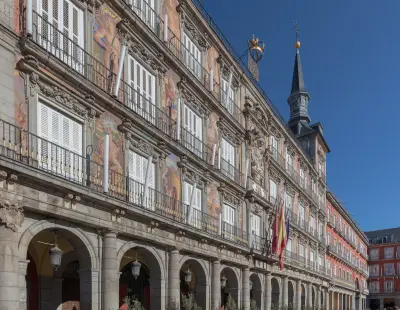 Plaza MayorVenue
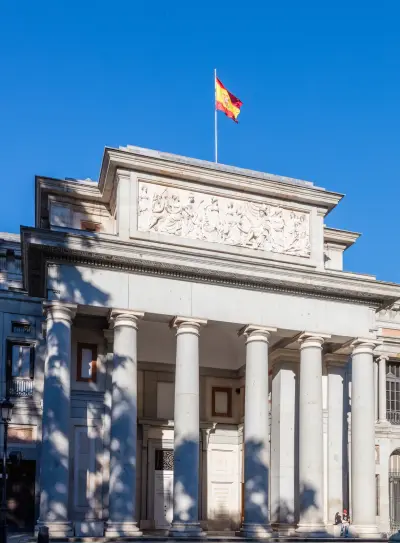 Prado MuseumVenue
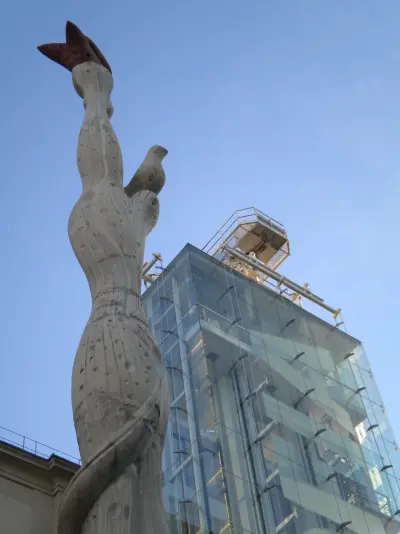 Reina Sofía MuseumVenue
 Retiro ParkVenue
 Royal Palace of MadridVenue
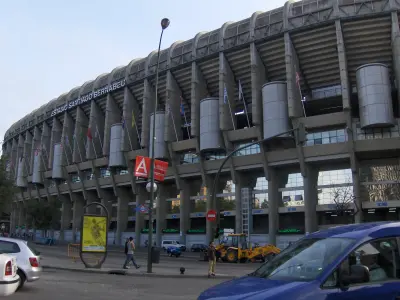 Santiago Bernabéu StadiumVenue
 Thyssen-Bornemisza MuseumVenue
 Valle de los Caídos (Cuelgamuros)Venue