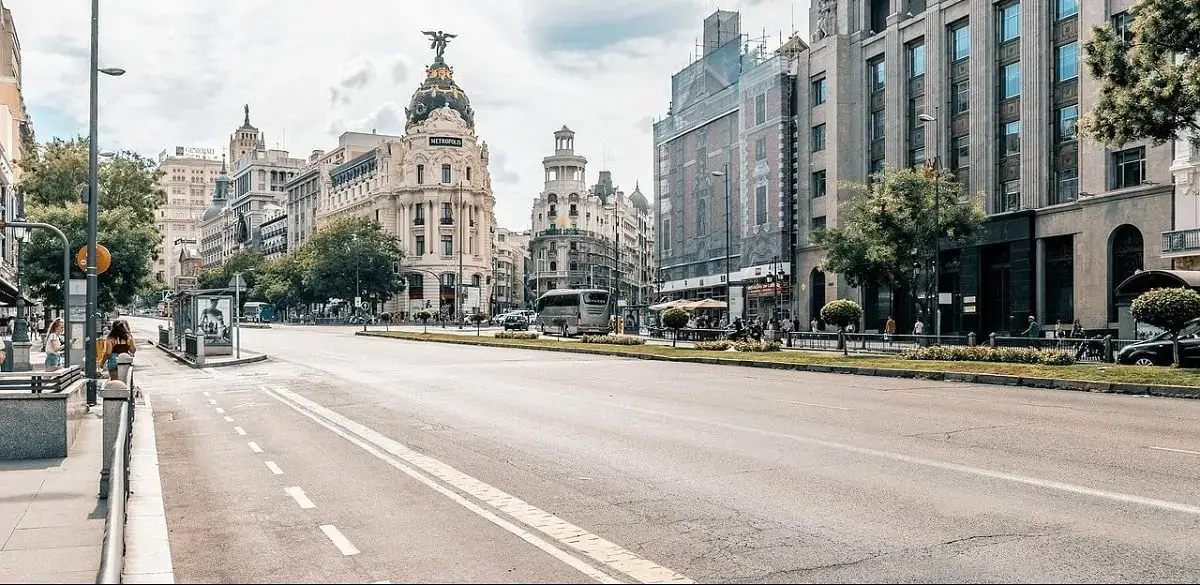
Madrid Airport → City Center: All Options Compared
| Option | Price | Duration | Frequency | Best for |
|---|---|---|---|---|
| Taxi (fixed fare) | €30 | 20–30 min | On demand | Groups 2–4, late nights, luggage |
| Cercanías C-1 train (from T4) | €2.60 | 30 min to Atocha | Every 30 min | Solo travelers, budget |
| Metro Line 8 | €4.50–7.50 | 12–30 min | Every 5–10 min | Direct routes north of center |
| Express Aeropuerto bus (EMT 203) | €5 | 30–45 min | 24h, every 15–35 min | Late nights, direct to Atocha/Cibeles |
| Ride-hail (Uber, Cabify, Bolt) | €25–45 | 20–35 min | On demand | Surge varies; compare in app |
| Private transfer | €40–90 | 25–40 min | Pre-booked | Comfort, groups, business |
Cheapest: Cercanías (€2.60). Fastest: Taxi for door-to-door. Most flexible: Express Aeropuerto bus (EMT 203) which runs 24/7.
How to Get from Madrid Airport to City Center?
The journey from Adolfo Suárez Madrid–Barajas Airport (MAD) to central Madrid is one of the easier airport-to-city transfers in Europe. The airport sits roughly twelve kilometers northeast of the city center, and a network of metro lines, commuter trains, dedicated airport buses, taxis, and ride-sharing services keeps the route well covered at almost every hour of the day. Whichever option you choose, you can be in central Madrid within forty-five minutes of leaving the arrivals hall — sometimes considerably faster.
This guide walks through every realistic option for getting from Madrid Airport (MAD) to the city, comparing journey time, cost, and convenience so you can pick the one that matches your situation. The right choice depends on where exactly you are going, how much luggage you have, what time of day or night you arrive, whether you are travelling solo or with a group, and how you feel about navigating public transport in a new city. The good news is that there is no single "wrong" choice — most of the options are well-organized and reliable. The choice is mostly about optimizing for your priorities.
What follows is an honest, practical comparison of all the options, with details that go beyond the marketing pitches you sometimes find on travel blogs. We cover not just the fastest option but the one that's smartest for travellers with heavy luggage, the one that's cheapest for budget travellers, and the one that's safest for late-night arrivals. Read through and pick the section that matches your situation.
What is All Options to Madrid City Center?
Madrid Airport offers six main ways to reach the city center: the Metro (Line 8), the Cercanías commuter train (Line C-1), the Express Airport Bus (Línea Exprés Aeropuerto), regular city buses, taxis, and ride-share apps such as Uber, Cabify, and Bolt. Each option has its own balance of speed, cost, comfort, and accessibility. Most travellers find that one or two of these emerge as obviously right for their situation; the others are useful to know about as backups.
The cheapest options are the city buses (around €1.50) and the Cercanías train (€2.60). The most expensive is a taxi at the fixed €33 fare to anywhere within Madrid's M-30 ring road. The fastest option to the right destination is sometimes the Cercanías train (T4 to Atocha in roughly 25 minutes) and sometimes the Metro (T4 or T2 to central interchanges in 15–25 minutes), depending on where you are going. The most convenient option for travellers with significant luggage, late-night arrivals, or groups is usually a taxi or a private transfer.
Travellers using arrivals info for the first time often default to whichever option is signposted most clearly upon exiting the terminal. That works, but it isn't always the best fit. Reading the comparison sections below will give you a better starting point than the random sign you happen to see first. The terminals are well-connected to all options — you don't need to switch terminals to access most public-transport choices.
Madrid Metro Line 8 — Route, Cost, and Travel Time
The Madrid Metro is the most popular public transport option for travellers heading to most parts of the city. Line 8 (the pink line) connects all four passenger terminals to Nuevos Ministerios station in the city, where you can transfer to other Metro lines that reach virtually any neighborhood. Trains run every four to seven minutes during the day, and the journey from the airport to Nuevos Ministerios takes about fifteen minutes, with no transfers needed.
The cost is €4.50 to €5, depending on whether you buy a single ticket with the airport supplement or use a multi-trip card with the supplement added. The airport supplement is €3 — a flat fee that applies to any journey starting or ending at one of the airport stations (Aeropuerto T1-T2-T3 or Aeropuerto T4). The base ticket beyond the airport is the standard Metro fare. If you have a Tourist Travel Pass (Abono Turístico), the airport supplement is included in the price.
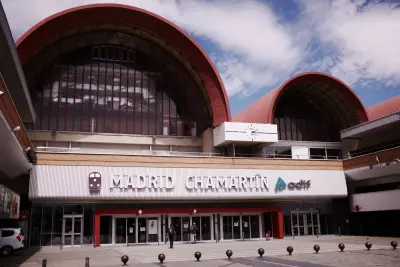
From Nuevos Ministerios, transfer to Line 6, Line 10, or the Cercanías commuter rail (different services share the station) to reach most of central Madrid. To Sol — the geographic and tourist heart of the city — change at Nuevos Ministerios to Line 10, then change again at Tribunal to Line 1. The full journey from the airport to Sol takes about 35 to 40 minutes including transfers and waiting time. Other popular destinations: Gran Vía (about 35 minutes), Atocha (40 minutes via several routes), Chamartín (15 minutes via Line 8 and 10).
The Metro is the right choice for solo travellers or couples with manageable luggage, especially if your final destination is in central or northern Madrid. It's less convenient if you're heading to outer neighborhoods, if you have heavy or multiple bags (the transfers involve stairs and crowded trains), or if you arrive late at night when service is reduced. The Metro closes around 1:30 AM and reopens around 6:00 AM.
Cercanías Commuter Train (Line C-1) — Best for Atocha and Chamartín
The Cercanías Line C-1 is the second main rail option from Madrid Airport. It connects only Terminal 4 (not T1, T2, or T3) directly to Madrid's two main railway stations — Chamartín in the north and Atocha in the south — in roughly 25 to 30 minutes. The cost is €2.60 for a single ticket, making it the cheapest fast option to the city center. There is no airport supplement on Cercanías.
The C-1 is particularly valuable for two specific scenarios: travellers connecting to Spanish high-speed (AVE) trains at Atocha or Chamartín, and travellers staying in hotels near these stations. From Atocha, AVE trains depart to Barcelona, Seville, Valencia, Málaga, and dozens of other Spanish cities. From Chamartín, you can reach northern Spanish destinations and certain international routes. If your overall journey involves an AVE connection, the Cercanías from T4 directly to the station you need is by far the most efficient option.
The catch is that Cercanías serves only T4. If your flight arrives at T1, T2, or T3, you have to take the free inter-terminal bus to T4 first — adding 15 to 20 minutes to your journey. For passengers arriving in T1/T2/T3, the Metro Line 8 is usually a better choice unless you specifically need to reach Atocha or Chamartín.
For more on rail-based travel from MAD, see our dedicated guide on the Cercanías train. Service runs roughly from 6:00 AM to 11:30 PM, with trains every 25 to 30 minutes during peak hours and somewhat less frequent service during off-peak periods. Note that on Sundays and public holidays, frequencies can be lower.
Express Airport Bus (Línea Exprés Aeropuerto)
The Express Airport Bus, also known as Línea 203 or Línea Exprés Aeropuerto, is the only public transport option that runs 24 hours a day between Madrid Airport and the city. It connects all four terminals to Plaza de Cibeles in the city center and continues to Atocha railway station during daytime hours. The cost is €5 (paid in cash or contactless on board), and the journey takes 30 to 40 minutes depending on traffic.
The Express Bus is the strongest option for travellers arriving at night, when the Metro and most Cercanías services are closed. It's also a good choice for travellers heading to Plaza de Cibeles, Atocha, or anywhere within walking distance of those stops. The buses are modern, reasonably comfortable, and have luggage racks, making them practical even with bags.
During the day, the Express Bus runs every 13 to 15 minutes between approximately 6:00 AM and 11:30 PM. From 11:30 PM to 6:00 AM, frequency drops to every 35 minutes, but service continues without interruption. The Cibeles stop is centrally located and within walking distance of many major hotels in central Madrid; for hotels further afield, you can transfer at Cibeles to other buses or to taxis.
For travellers comparing options, the Express Bus offers a good middle ground: more affordable than a taxi, more straightforward than the Metro (no transfers, no stairs), and available 24/7 unlike most other options. It's particularly popular with budget-conscious travellers and those arriving at unusual hours. For other bus options including longer-distance services, see our coverage of shuttle buses.
Regular City Buses (EMT Line 200, 822, etc.)
Several regular Madrid city buses also serve the airport, providing budget alternatives to the Express Airport Bus. The most useful are EMT Line 200, which connects T1, T2, and T3 to Avenida de América (a major Metro and bus interchange in northeastern Madrid), and Line 822, which serves outer Madrid neighborhoods. The cost is the standard EMT bus fare of €1.50 for a single trip.
Regular city buses are slower than the Express Bus and don't go directly to the most central areas. They also stop more frequently and can take longer than the journey time printed on schedules suggests. For travellers heading specifically to areas near Avenida de América or to outer neighborhoods these lines serve, they can be the cheapest option. For most travellers heading to central Madrid, the slightly higher cost of the Express Airport Bus is worth the directness.
City buses don't operate 24 hours — most run from approximately 6:00 AM to 11:30 PM, with reduced overnight service on a small number of routes. Real-time tracking via the EMT Madrid app is reliable and useful for planning. Tickets can be purchased on board (cash or contactless card) or via Multi card if you have one.
For travellers who already have a Madrid Tourist Travel Pass or who plan to use city buses extensively during their stay, integrating airport bus travel with the rest of your transport budget can produce small savings. For most short-stay travellers, however, the Express Airport Bus is the simpler and more comfortable choice.
Taxi — Fixed €33 Fare to City Center (Within M-30)
Madrid Airport taxis operate on a fixed-fare system for journeys to most central destinations: a flat rate of €33 covers the journey to anywhere within the M-30 ring road, including Sol, Plaza Mayor, Atocha, Gran Vía, and most central hotels. The fixed fare applies regardless of traffic, time of day, or specific destination within the M-30, making the cost predictable and eliminating bargaining or meter disputes.
For destinations outside the M-30 — outer suburbs, areas beyond Madrid city limits — taxis use the standard meter, with rates posted clearly inside each vehicle. Madrid taxi rates are regulated and reasonably priced compared to many European capitals; expect to pay €40 to €60 for journeys to outer suburbs.
Taxis are available at the official taxi rank outside the arrivals hall of every terminal. The ranks are clearly marked and supervised by airport staff during peak periods. Avoid unofficial taxi solicitations inside the terminal — they sometimes offer inflated rates and bypass the regulated system. The official Madrid taxis are white with a red diagonal stripe on the front doors and a city seal; they have meters that display the airport-fixed fare automatically when you give a city-center destination.
The taxi is the strongest option for travellers with significant luggage, families with small children, late-night arrivals, and groups of three or four people sharing the cost. The €33 fare divided among four travellers is comparable to the Metro for each individual, but with the comfort and convenience of door-to-door service. For more details, see our coverage of taxis at MAD.
Ride-Share — Uber, Cabify, and Bolt
Major ride-share services operate at Madrid Airport, with designated pickup zones outside each terminal. Uber, Cabify (a Spanish-founded competitor), and Bolt (formerly Taxify) are the main options, with broadly similar pricing and availability. Pickup typically happens within a few minutes of booking, though wait times can extend during peak departure waves at the airport.
Pricing varies by demand and time of day. Off-peak fares to central Madrid are often €25 to €35 — broadly comparable to the fixed taxi fare, sometimes slightly cheaper. During peak demand (early mornings, late evenings, weather events), surge pricing can push fares above €40. Cabify generally offers the most predictable pricing in Madrid and is widely used by locals; Uber and Bolt provide alternatives with their own promotional pricing and rewards.
The advantages of ride-share over taxis: app-based payment with no cash needed, transparent pricing displayed before booking, driver and vehicle details in advance, easy receipt for business expenses. The disadvantages: surge pricing can be unpredictable, pickup point at the airport may require a short walk to the designated ride-share zone, fewer vehicles available during the very early morning hours when taxi supply is more reliable.
For travellers comfortable with smartphone apps and looking for transparent pricing, ride-share is often the easiest choice. For travellers who prefer the certainty of a fixed fare and an immediately visible vehicle, the taxi system at MAD is genuinely well-organized and worth using. Both work well; the choice mostly depends on personal preference.
Private Transfers and Pre-Booked Pickups
Pre-booked private transfers are a third paid option, sitting between regular taxis and luxury car services. Companies like Welcome Pickups, Suntransfers, and various local operators allow you to book a driver in advance for a fixed price, with a named driver waiting at the arrivals hall holding a sign with your name. Prices typically range from €40 to €70 to central Madrid, depending on vehicle size and operator.
The advantages of pre-booked transfers: guaranteed driver waiting on arrival, fixed price agreed in advance, vehicles often larger and more comfortable than standard taxis (useful for groups or families), drivers who frequently speak English. The disadvantages: higher cost than a regular taxi, less flexibility if your flight is significantly delayed (though most operators include flight tracking and grace periods), advance booking required.
Private transfers are particularly valuable for first-time visitors who want to minimize uncertainty, for groups of four or more where the larger vehicle pays for itself in convenience, for business travellers heading directly to meetings, and for travellers with significant luggage or complex onward needs. For more on the full range of options, see our dedicated private transfers guide.
If you book a private transfer, confirm the meeting point in advance — most operators meet you in the arrivals hall holding a sign, but some use specific pickup zones outside the terminal. Confirm cancellation and refund policies if your flight is delayed or cancelled, and confirm that the operator includes flight tracking so they know when to actually be there.
Walking from Nearest Metro and Train Stations
None of the airport terminals are realistically within walking distance of central Madrid — the airport is about twelve kilometers from the city center, and there are no pedestrian-friendly routes between them. However, once you have taken any of the rail options into the city, walking from a station to your final destination is often the most direct option. Madrid is a walking-friendly city, and most central neighborhoods are accessible on foot from the major stations.
From Nuevos Ministerios (the main Metro Line 8 destination), Sol is about 30 minutes on foot through pleasant central streets, but most travellers prefer to transfer to another Metro line for the final leg. From Atocha (Cercanías destination), Sol is about 20 minutes on foot through central Madrid; many travellers walk from Atocha to their hotels in the Lavapiés or Las Letras neighborhoods. From Chamartín, the area is less central, and transferring to onward transport is usually preferable.
For travellers staying in central Madrid (Sol, Gran Vía, Las Letras, Chueca, Malasaña), the combination of "rail to central station, then walk" can be efficient and pleasant — particularly during good weather, with light luggage. For travellers with heavy bags or staying in less central neighborhoods, taking onward Metro or a short taxi from the central station is more practical.
Madrid is a generally safe city for walking at all hours, including the streets between major stations and central tourist areas. Standard urban precautions apply — keep valuables secure, especially in crowded tourist areas — but the walk from Atocha to Sol is one that thousands of travellers do every day without incident.
Journey Times Compared
For travellers trying to choose between options, comparing actual door-to-door journey times helps clarify the trade-offs. The numbers below assume average traffic, no transfer mistakes, and standard waiting times for each service. Your actual experience may vary by 5 to 15 minutes in either direction.
Metro Line 8 to Nuevos Ministerios: 15 minutes on the train + 5–10 minutes wait for service = 20–25 minutes from terminal platform to Nuevos Ministerios. Add another 10 to 15 minutes to reach Sol via Line 10 + Line 1 transfer. Total to Sol: about 35 to 40 minutes.
Cercanías C-1 to Atocha (from T4 only): 25 minutes on the train + 10–15 minutes wait = 35–40 minutes from T4 platform to Atocha. Add 10 minutes if arriving at T1/T2/T3 and needing the inter-terminal bus to T4 first.
Express Airport Bus to Cibeles: 30 to 40 minutes on the bus + 5–10 minutes wait = 40–50 minutes from terminal exit to Cibeles. Add walking time to your final destination.
Taxi or ride-share to Sol: 25 to 35 minutes in normal traffic, 40 to 50 minutes during peak traffic = door-to-door from terminal to hotel. The advantage of door-to-door is significant for travellers heading to specific addresses rather than central interchanges.
For the absolutely fastest journey to a specific destination, the right answer depends on where you're going. To Atocha or Chamartín: Cercanías. To Sol or central tourist areas: tied between Metro and taxi, with Metro slightly cheaper and taxi slightly faster door-to-door. To outer neighborhoods: taxi or private transfer is usually the only practical option.
Cost Comparison
For solo travellers, the cost ranking from cheapest to most expensive: regular city bus (€1.50), Cercanías (€2.60), Metro with airport supplement (€4.50–€5), Express Airport Bus (€5), shared ride-share (variable, often €25–€35), taxi (€33 fixed to M-30), private transfer (€40–€70). The cheapest option costs about 5% of the most expensive — a real difference if you're travelling on a tight budget.
For groups, the math changes significantly. A taxi at €33 split four ways is about €8.25 per person — cheaper than the Metro for any individual. A private transfer at €60 split among four is €15 each — comparable to two Metro tickets but with door-to-door comfort. The taxi or private transfer becomes the obvious choice for groups of three or more, even on tight budgets.
For luggage-heavy travellers, the practical cost of "cheap" options is higher than the ticket price suggests. Wrestling multiple bags onto a Metro train at peak hour, transferring at Nuevos Ministerios with stairs and crowds, then walking the final stretch to a hotel — this can cost you 20 minutes of frustration that a taxi avoids. The €25 saved isn't always worth it. Spend the money on a taxi if you have significant luggage and limited patience.
For business travellers, the cost-conscious options often aren't even on the table — a taxi or private transfer that gets you to a meeting on time without hassles is worth significantly more than €33. For leisure travellers, the calculus is different: saving €25 on the airport transfer could fund another tapas dinner or a museum entry. Choose by what your trip prioritizes.
Choosing the Best Option for Your Situation
For solo travellers with a backpack heading to central Madrid: Metro Line 8 is the standard answer. Cheap, fast enough, and gives you the city's flavor from the start.
For couples with two small suitcases: still Metro for most central destinations. The transfers are manageable with two people sharing the load.
For families with children and multiple bags: taxi. The €33 fare is reasonable for the comfort of door-to-door, and Madrid taxis can usually fit four passengers plus luggage without issues. Some taxis have child seats — request one when booking via app.
For groups of four travelling together: taxi or private transfer. The cost per person is competitive with Metro, and the convenience is much higher.
For travellers connecting to AVE high-speed trains at Atocha or Chamartín: Cercanías C-1 from T4. If you arrive at a different terminal, the inter-terminal bus to T4 first.
For late-night arrivals (after 1:30 AM): Express Airport Bus or taxi. The Metro and Cercanías have closed; these are your remaining options.
For business travellers with morning meetings: pre-booked private transfer or taxi. The certainty of having a vehicle waiting outweighs the slight cost difference.
For budget backpackers: Cercanías to Atocha (€2.60) followed by walking or Metro is the cheapest combination to reach most central destinations.
Late-Night and Early-Morning Options
Madrid Airport's transport options vary significantly by time of day, with late-night and early-morning hours requiring different choices than the daytime defaults. The Metro stops running at approximately 1:30 AM and resumes around 6:00 AM. Cercanías services are limited overnight, with infrequent or no service between roughly 11:30 PM and 5:30 AM. Regular city buses also stop overnight, with limited night-bus coverage that doesn't include the airport.
The Express Airport Bus (Línea 203) is the workhorse of overnight transport at MAD. It runs 24 hours a day, with reduced frequency overnight (approximately every 35 minutes) but uninterrupted service. For arrivals between 1:30 AM and 6:00 AM, this is the only public transport option to the city center.
Taxis are always available at the official taxi ranks regardless of arrival time. The fixed €33 fare applies day and night — there is no surcharge for late-night or early-morning journeys. Ride-share services also operate 24/7, though availability and surge pricing can be more variable during off-peak hours.
For early-morning departures (especially for flights leaving before 7:00 AM), the calculus is reversed: you need to get TO the airport before public transport is fully operational. Hotels with airport shuttles, pre-booked taxis or private transfers, or staying at a hotel near the airport the night before are all common solutions. The Express Airport Bus is also a reliable option for early-morning travellers, with service starting from city center stops in the small hours of the morning.
App Payments and Tickets
Most modern Madrid transport options support app-based or contactless card payments, eliminating the need to handle cash. The Metro and Cercanías both accept contactless credit and debit cards directly at the gates — tap to enter, tap to exit if required. The system charges the appropriate fare automatically, including the airport supplement when applicable.
The Express Airport Bus and city buses accept cash, contactless cards, and certain mobile wallets. The Multi card — Madrid's prepaid transport card — is also accepted across all public transport, and can be loaded with multi-trip ticket sets at modest discounts. For longer stays, a Tourist Travel Pass (Abono Turístico) can be cost-effective and includes the airport supplement.
For taxis and ride-share, payment options are well-developed. Madrid taxis accept cash, all major credit and debit cards (contactless and chip), Apple Pay, Google Pay, and other major mobile wallets. The fixed €33 airport fare is paid via whichever method you prefer. Ride-share apps charge automatically to the payment method linked to your account.
For travellers who prefer paper tickets, single tickets are available from automated machines in Metro and Cercanías stations. Machines accept cash and cards, with multilingual interfaces. The Metro app and Cercanías Renfe app both allow advance ticket purchase and storage on your phone, useful for travellers who want to skip the ticket machine queue at peak times.
Tips for First-Time Travellers
For first-time arrivals at Madrid Airport, several practical tips help you navigate the journey to the city without unnecessary complications. First, decide on your transport option before reaching the arrivals hall. Don't try to figure it out under time pressure with bags in hand — read this guide or a similar one before landing, and know exactly which option you're using and where to find it.
Second, have small change ready if you plan to use public transport. Most ticket machines accept cards, but cash is sometimes useful for buses or for tips. Around €30 to €50 in euros covers most travellers' needs for the first day. ATMs are widely available in arrivals halls if you need to withdraw cash on arrival.
Third, keep your boarding pass accessible until you've left the airport. The boarding pass shows your flight details and is occasionally requested by transport operators or hotels for various reasons. It's also useful as confirmation of your arrival time if you need to claim any kind of transport-related compensation.
Fourth, take a moment in the arrivals hall to orient yourself, withdraw cash if needed, and check your phone for messages or directions. Don't rush. Madrid Airport is well-organized and patient travellers do better than those who try to sprint to their hotels. The few extra minutes spent getting your bearings often save much larger amounts of time later.
Common Mistakes to Avoid
Several common mistakes recur among travellers heading from MAD to central Madrid. The first is taking unofficial taxis solicited inside the terminal — these sometimes operate outside the regulated taxi system and can charge inflated rates. Stick to the official taxi rank outside arrivals; it is clearly marked and supervised.
The second is forgetting the airport supplement when buying Metro tickets. The €3 supplement applies to journeys starting or ending at the airport stations, and the system will not let you exit if you haven't paid it. Buy a ticket that includes the supplement at the airport machine, or use a contactless card that pays automatically.
The third is assuming the Cercanías C-1 serves all terminals — it does not, only T4. Travellers arriving at T1, T2, or T3 sometimes wait at the Cercanías platform thinking the train will appear; it won't. Take the inter-terminal bus to T4 first, then board the Cercanías.
The fourth is misunderstanding journey times when planning onward connections. The "15 minutes on Line 8" advertised journey time doesn't include waiting time, transfers, or walking from your final station to your hotel. Add 20 to 30 minutes of buffer for the full door-to-door journey, especially with luggage.
The fifth is choosing the cheapest option without thinking about luggage. The Metro is great for backpackers; it's a hassle for travellers with two large suitcases. The €25 saved over a taxi can be worth nothing if you spend it on irritation and shoulder pain. Match the option to your situation, not just to your budget.
Want a smooth journey to your hotel? Get in touch.
You May Also Like
- Cercanías Train (Line C-1)
- Madrid Airport Taxis
- Madrid Airport Transfers
- Madrid Airport Shuttle Buses
Plan your trip — airport routes
 AranjuezCity
 ÁvilaCity
 CuencaCity
 El Escorial (San Lorenzo)City
 SegoviaCity
 ChuecaNeighborhood
 Gran VíaNeighborhood
 La LatinaNeighborhood
 LavapiésNeighborhood
 MalasañaNeighborhood
 MoncloaNeighborhood
 Puerta del Sol (City Centre)Neighborhood
 Salamanca districtNeighborhood
 ValdebebasNeighborhood
 Chamartín railway stationStation
 Nuevos MinisteriosStation
 Príncipe Pío stationStation
 Casa de CampoVenue
 Cívitas Metropolitano (former Wanda Metropolitano)Venue
 IFEMA Feria de MadridVenue
 Madrid RíoVenue
 Plaza de EspañaVenue
 Plaza MayorVenue
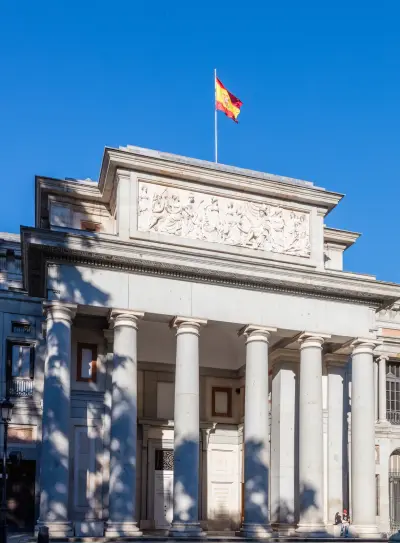 Prado MuseumVenue
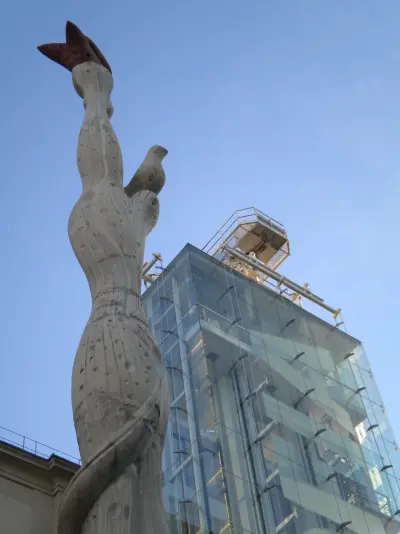 Reina Sofía MuseumVenue
 Retiro ParkVenue
 Royal Palace of MadridVenue
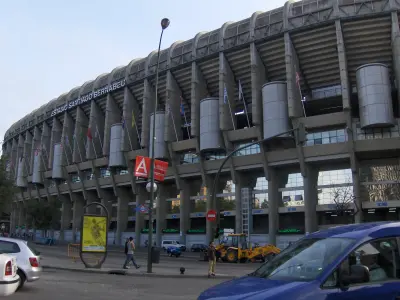 Santiago Bernabéu StadiumVenue
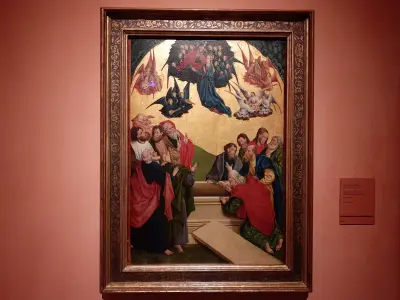 Thyssen-Bornemisza MuseumVenue
 Valle de los Caídos (Cuelgamuros)Venue