
Madrid Airport (MAD): Complete Guide to Adolfo Suárez Madrid–Barajas
Adolfo Suárez Madrid–Barajas Airport, known internationally by its IATA code MAD and ICAO designation LEMD, is the largest and busiest airport in Spain and one of the most important aviation hubs in Europe. Located approximately 12 kilometers northeast of Madrid's city center, it serves as the principal gateway to the Spanish capital and a critical connecting point between Europe, Latin America, and the rest of the world. Whether you are flying through MAD on a brief layover, arriving for a Spanish holiday, or beginning a journey to Toledo, Segovia, or beyond, understanding how this airport works will make your travel substantially smoother.
What is Adolfo Suárez Madrid–Barajas Airport?
The airport was renamed in 2014 in honor of Adolfo Suárez, the first democratically elected Prime Minister of Spain after the country's transition to democracy. Most travelers and locals continue to refer to it simply as Barajas, after the district in which it is located. The original airport opened in 1931, and its evolution from a modest regional facility into one of the world's major air transport hubs traces the broader transformation of Spain over the twentieth century.
Key Facts and Statistics
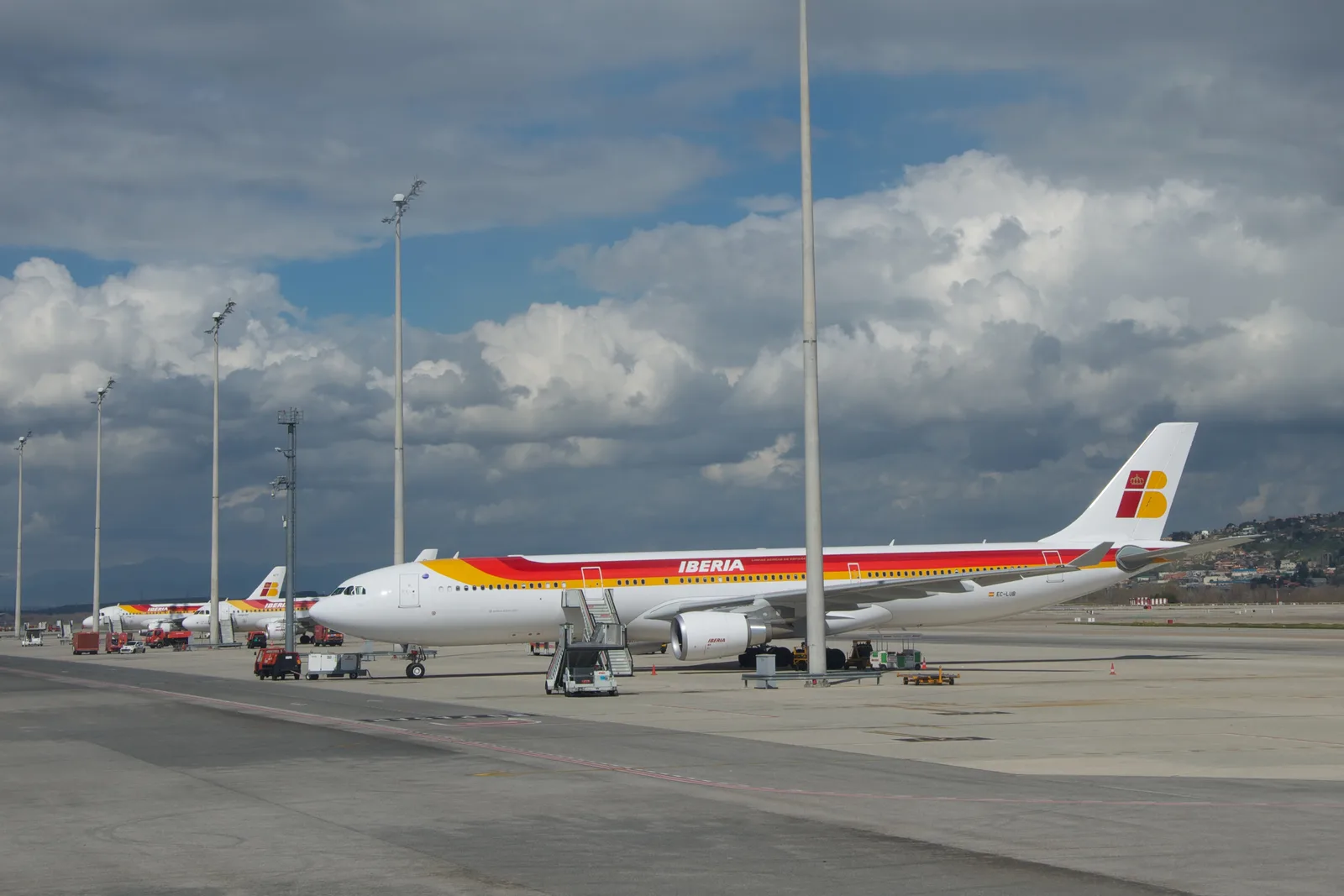
Madrid Airport consistently ranks among Europe's top six busiest airports by passenger volume. In recent years it has handled between 50 and 65 million passengers annually, depending on demand cycles. International traffic accounts for roughly two-thirds of total volume, with domestic Spanish flights making up the remainder. The airport is particularly important for routes between Europe and Latin America, where Iberia and partner airlines maintain extensive networks to Argentina, Brazil, Chile, Colombia, Cuba, Mexico, Peru, and Venezuela.
The Four Terminals: T1, T2, T3, T4, and T4S
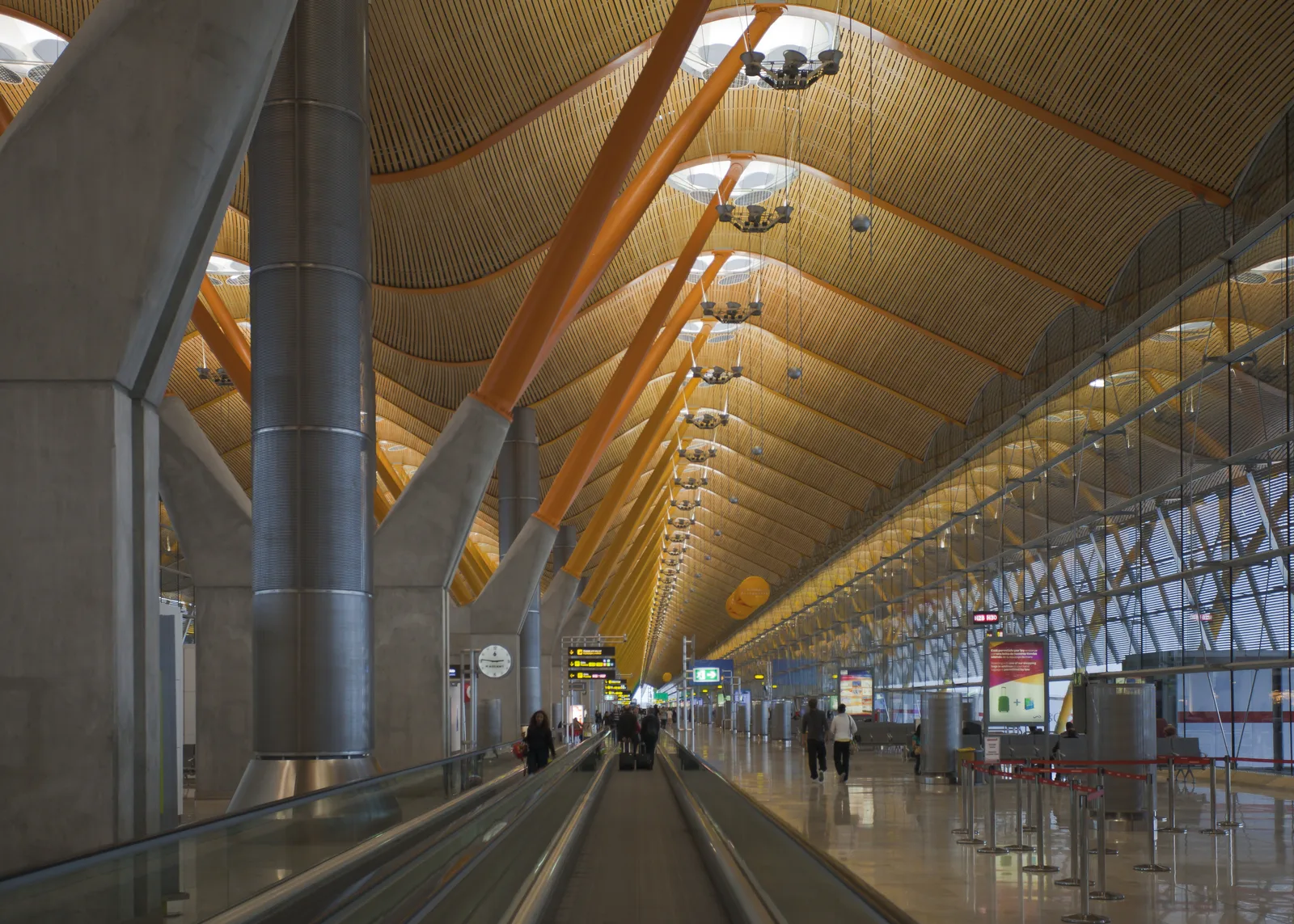
Madrid Airport's terminal complex is divided into two main physical areas. The original terminal area contains Terminals 1, 2, and 3, which are connected to each other by indoor walkways and form a single contiguous building from the passenger's perspective. The newer Terminal 4, opened in 2006 and designed by Richard Rogers and Antonio Lamela, is located several kilometers away and is connected to its satellite Terminal 4S by an automated underground people-mover. Free shuttle buses run continuously between T1/T2/T3 and T4, with a journey time of approximately 15 to 20 minutes depending on traffic.
Getting to Madrid Airport — Overview of All Transport Options
MAD is exceptionally well connected to Madrid and the surrounding region by multiple modes of public and private transport. The most popular options for travelers are the Madrid Metro (Line 8), the Cercanías commuter rail (Line C-1), the Express Airport Bus (Línea Exprés Aeropuerto), regular city buses, taxis, and ride-share services. Each option has different cost, speed, and convenience profiles, and the right choice depends on where you are going, how much luggage you have, and what time you are traveling.
Getting from the Airport to Madrid City Center
The journey from MAD to central Madrid is typically the first practical question travelers face. The right answer depends on your specific destination, time of arrival, luggage, and budget. For travelers heading to the historic center (Sol, Plaza Mayor, La Latina, Malasaña), the Express Airport Bus is often the most convenient option, dropping passengers at Plaza de Cibeles, a short walk or single metro stop from most central hotels. For travelers heading to areas served by Metro Line 8 (Nuevos Ministerios, Chamartín area), the Metro is fastest and cheapest at around €5 with the airport supplement.
Connecting to Other Spanish Cities
Madrid functions as the transport hub for much of central Spain, and many travelers use MAD as the entry point for trips to nearby destinations rather than as the final destination itself. Toledo, the medieval Spanish capital located 70 kilometers south of Madrid, is a particularly popular day trip and short-stay destination. The journey from the airport to Toledo typically involves first reaching Atocha station (via Cercanías from T4) and then taking either the AVE high-speed train (33 minutes to Toledo) or the ALSA bus from Plaza Elíptica. Our dedicated guide on getting to Toledo from the airport covers timing, costs, and alternatives in detail.
Parking Options at Madrid Airport
Madrid Airport offers an extensive range of parking options to suit different needs and durations. The official AENA parking facilities are organized by terminal, with separate short-stay (Express), medium-stay (P1, P2), and long-stay (Larga Estancia) lots. Express parking is located closest to the terminals and is intended for stays of up to two or three hours — useful for picking up arriving passengers but expensive for longer use. P1 and P2 are general-purpose lots suitable for stays of a few hours to a few days. The Larga Estancia (long-stay) lots offer significantly lower daily rates and are connected to the terminals by free shuttle buses.
Hotels at and Near the Airport
Travelers needing accommodation near Madrid Airport — whether for an early-morning flight, a late-night arrival, or a layover that extends into the next day — have several solid options. The on-airport hotel is the Meliá Madrid Aeropuerto, located adjacent to Terminal 4 and accessible by a short walk. This is the only hotel directly within the airport complex, and it offers the convenience of immediate access to T4 without any need for a shuttle.
The City of Madrid
Madrid is the vibrant capital of Spain, home to 3.3 million residents and one of Europe's richest cultural scenes. The city blends royal history (Royal Palace, Plaza Mayor), world-class museums (Prado, Reina Sofía, Thyssen), and a lively food and nightlife scene — all just 12 km from the airport.
Most visitors stay 2–4 nights to cover the historic centre, the Retiro park, and a day-trip to Toledo or Segovia. From MAD you can reach the centre in 30 minutes by Metro or 25 minutes by taxi.
FAQs
What is the IATA code for Madrid airport?
The IATA code is MAD. The ICAO code is LEMD. The airport is officially named Adolfo Suárez Madrid–Barajas Airport.
How many airports does Madrid have?
Madrid is served by one major commercial airport: Adolfo Suárez Madrid–Barajas (MAD). It is the largest airport in Spain and one of the busiest in Europe, handling over 60 million passengers per year.
How many terminals does Madrid airport have?
MAD has five terminals: T1, T2, T3, T4, and T4S (satellite).
T4 and T4S handle Iberia, Oneworld members, and most long-haul flights. T1 and T2 are used by Star Alliance, SkyTeam, and low-cost carriers. T3 is currently used for special operations.
How do I get from Madrid airport to the city centre?
The fastest options:
Metro Line 8 — ~30 min, €5 with airport supplement, runs 06:05–02:00.
Express Aeropuerto bus — €5, ~40 min, 24/7 service from all terminals.
Cercanías C-1 train — connects T4 directly to Atocha and Chamartín.
Taxi — flat fare of €30 anywhere inside the M-30 ring.
How do I get from Madrid airport to Atocha train station?
The Cercanías line C-1 runs directly from T4 to Atocha in about 25 minutes (€2.60). The Metro Line 8 + Line 1 takes ~50 min. A taxi costs the fixed flat fare of €30 and takes 25-40 min depending on traffic.
How much is a taxi from Madrid airport?
Madrid taxis charge a fixed flat fare of €30 to anywhere inside the M-30 ring (covers central Madrid). Outside the M-30, the metered fare applies. All licensed airport taxis are white with a red diagonal stripe.
Does Madrid airport have parking?
Yes. MAD offers several parking options:
Short-stay (P1–P2) — from €4/hour, walking distance to terminals.
Long-stay (P-Largo Estancia) — from €12/day, free shuttle.
Express drop-off (P-Express) — free for the first 10 min.
Online pre-booking via aena.es saves up to 50%.
How many airlines fly to Madrid airport?
More than 90 airlines operate at MAD. Iberia is the main hub carrier (based in T4 and T4S). Other major carriers include Air Europa, Ryanair, easyJet, Lufthansa, Air France, KLM, British Airways, Emirates, Qatar Airways and many more.
What is the best way to do a layover in Madrid?
For layovers under 4 hours, stay airside in T4 or T1 (lounges, restaurants, shops).
For 4–8 hours, clear immigration and visit Plaza Mayor or Parque del Retiro (45 min by Metro Line 8).
For longer layovers, take a day-trip to Toledo (~30 min by AVE high-speed train from Atocha — the train cathedral city is a UNESCO World Heritage Site).
Are there hotels at or near Madrid airport?
Yes. The Sheraton Madrid Airport Hotel is connected directly to T1. Other hotels nearby (5–15 min) include NH Madrid Barajas, Hotel Best Western Plus Plaza Mayor, and several budget options. Many offer free shuttle service to/from terminals.
Contact Information
- Official Name:
- Adolfo Suárez Madrid–Barajas Airport
- Address:
- Av. de la Hispanidad, s/n, 28042 Madrid, Spain
- Service Hotline:
- +34 913 21 10 00
- Email:
- [email protected]
- Website:
- www.aena.es/en/adolfo-suarez-madrid-barajas
Travel guide
Plan your trip — airport routes
 AranjuezCity
 CuencaCity
 El Escorial (San Lorenzo)City
 SegoviaCity
 ÁvilaCity
 ChuecaNeighborhood
 Gran VíaNeighborhood
 La LatinaNeighborhood
 LavapiésNeighborhood
 MalasañaNeighborhood
 MoncloaNeighborhood
 Puerta del Sol (City Centre)Neighborhood
 Salamanca districtNeighborhood
 ValdebebasNeighborhood
 Chamartín railway stationStation
 Nuevos MinisteriosStation
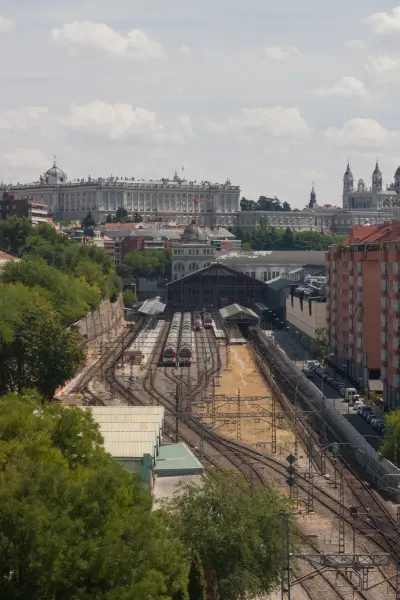 Príncipe Pío stationStation
 Casa de CampoVenue
 Cívitas Metropolitano (former Wanda Metropolitano)Venue
 IFEMA Feria de MadridVenue
 Madrid RíoVenue
 Plaza MayorVenue
 Plaza de EspañaVenue
 Prado MuseumVenue
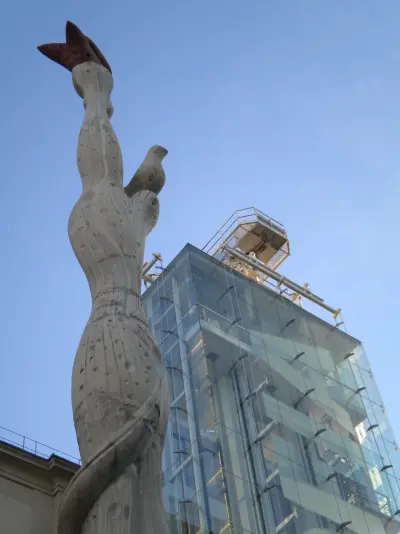 Reina Sofía MuseumVenue
 Retiro ParkVenue
 Royal Palace of MadridVenue
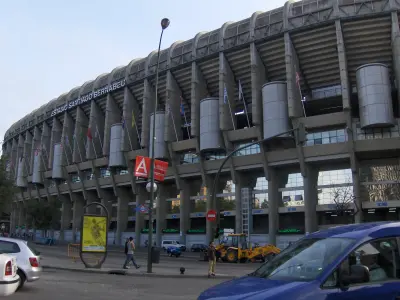 Santiago Bernabéu StadiumVenue
 Thyssen-Bornemisza MuseumVenue
 Valle de los Caídos (Cuelgamuros)Venue