Madrid Airport (MAD) Terminals
| Terminal | Airlines / Use | Connections | Walking distance from T4 |
|---|---|---|---|
| T1 | Most international non-Schengen, non-EU carriers | Metro L8, Cercanías | — |
| T2 | Connected to T1 — international + Schengen | Metro L8, Cercanías | — |
| T3 | Smaller terminal, regional services | Metro L8, Cercanías | — |
| T4 | Iberia, Oneworld, most long-haul | Metro L8, Cercanías C-1 (direct) | — |
| T4S (satellite) | Long-haul Iberia/Oneworld (Latin America, US) | Free shuttle from T4 | 5 min by train |
T1-T2-T3 connected by walkway. T4 + T4S connected by automated people mover (free).
Madrid Airport Terminals
Adolfo Suárez Madrid–Barajas Airport (MAD) is the largest airport in Spain and one of the busiest in Europe, handling more than 60 million passengers in a typical year. To accommodate this enormous volume of traffic, the airport is organized into five passenger buildings: Terminals 1, 2, 3, 4, and the satellite terminal T4S. Each terminal serves specific airlines, alliances, and types of flights, and understanding which terminal you need is one of the most important pieces of preparation for any trip through Madrid.
This guide covers everything you need to know about the terminals at Madrid Airport (MAD) — what each terminal handles, how to navigate between them, where to find specific facilities, and the practical details that make the difference between a smooth transit and a stressful one. Whether you are flying intercontinentally, hopping across the Schengen zone, connecting between flights, or meeting someone arriving from abroad, the layout of Madrid's terminals will shape your airport experience in significant ways.
Madrid Barajas is large by any measure, and the distances between buildings can be substantial. Terminal 4 alone occupies a footprint comparable to dozens of football pitches, and T4S is connected to T4 by an underground people-mover rather than walkable corridors. Knowing what to expect saves both time and unnecessary stress, especially for travelers with tight connections or first-time visitors to Spain.
What is Madrid Barajas Terminals — T1, T2, T3, T4, T4S?
The five terminal buildings at Madrid Airport split into two clusters. Terminals T1, T2, and T3 are located together in the original section of the airport, connected by interior walkways. They handle a wide range of airlines including most low-cost carriers, several non-Schengen operators, and short- to medium-haul Schengen routes. Terminal 4 and its satellite T4S form the second cluster, located approximately 2.5 kilometers from the T1–T3 area. T4 was designed by architects Antonio Lamela and Richard Rogers and opened in 2006, dramatically expanding the airport's long-haul capacity.
The basic split between the clusters is largely about airlines and alliances. T4 and T4S are the home base for Iberia and the Oneworld alliance, including British Airways, American Airlines, Qatar Airways, and Cathay Pacific. T1, T2, and T3 host most other airlines, including Star Alliance and SkyTeam carriers, plus low-cost European operators like Ryanair, easyJet, and Vueling. There are exceptions and occasional changes, so always confirm your terminal on your boarding pass before traveling to the airport.
Knowing your terminal in advance also affects your transport choices. The Metro line 8 stops at both T2 and T4, with a connecting underground walkway from T2 to T1 and T3. The Cercanías commuter train serves only T4. Taxis and ride-sharing services drop passengers directly at the terminal of choice. For more details on getting there, see our coverage of airport transfers and the broader Madrid Airport guide.
Terminal 1 (T1) — Non-Schengen Flights, Airlines, Facilities
Terminal 1 is the oldest of the active terminal buildings at Madrid Barajas, originally opened in 1954 and substantially renovated since. It primarily handles non-Schengen flights — meaning flights to and from countries outside the European Schengen zone, including most international destinations from Africa, Asia, the Americas (other than those operated by T4-based airlines), and parts of the Middle East. Several Star Alliance and SkyTeam carriers use T1, alongside a number of independent international airlines.
Inside T1, you will find the standard array of airport facilities: check-in counters in the departures hall, security control, a duty-free area, restaurants, cafes, and shops both before and after security, ATMs, currency exchange offices, pharmacies, and information desks. The terminal has been updated over time but retains a more traditional feel compared to the soaring spaces of T4. For travelers familiar with older European airports, T1 has a similar character — functional, well-organized, and reasonably comfortable.
The terminal connects directly to T2 and T3 via interior walkways at both the landside (before security) and arrival levels. This makes transferring between the three older terminals relatively simple, though the distances on foot can be longer than they look on maps. There are also moving walkways in some sections to speed up the journey. If you are arriving at T1 and need to reach airlines at Madrid Airport based in T4, you will need to take the inter-terminal shuttle bus, which runs frequently between the clusters.
For meeting passengers arriving at T1, the arrivals hall is on the ground level. Look for clear signage in Spanish and English indicating the meeting points, and note that the corridor between baggage claim and arrivals can take several minutes to walk, particularly for travelers with heavy luggage or reduced mobility.
Terminal 2 (T2) — Schengen Flights, Iberia Regional, Low-Cost Carriers
Terminal 2 is dedicated almost entirely to Schengen-area flights — connections within the European Schengen zone, where passport checks are not required between member countries. Iberia operates many of its short- and medium-haul Schengen flights from T2, and Iberia Regional (the regional brand operated under partnership) also bases its operations here. Several low-cost carriers use T2 as well, particularly for routes within Europe.
Because Schengen flights do not require passport control on either departure or arrival between Schengen countries, the flow at T2 is generally faster than at T1, where international passengers must clear immigration. The check-in halls, security lines, and gate areas tend to feel less congested for this reason, though peak times can still produce significant crowding, especially in the summer holiday season.
T2 connects directly to T1 and T3, and the Metro line 8 station serves T2 directly with an underground access. This makes T2 one of the easier terminals for travelers using public transit, though Cercanías train passengers will need to alight at T4 and use the inter-terminal bus to reach T2. The terminal includes the usual facilities — restaurants, cafes, shops, ATMs, and information services — and has been progressively upgraded over the years.
For travelers planning ahead, T2's compact layout means short walking distances from check-in to gates compared to the sprawling T4 complex. If you are flying intra-European with one of the airlines based here, you can typically arrive a bit later than for long-haul flights — though arriving 90 minutes before departure remains the recommended minimum, and 2 hours during high-traffic periods.
Terminal 3 (T3) — Connections to T1 and T2, Smaller Operations
Terminal 3 is the smallest of the three older terminals at Madrid Barajas. It handles a more limited number of operations and is sometimes used as overflow capacity from T1 and T2, or for specific airlines and routes that have particular handling agreements. Some flights to and from regional Spanish destinations and certain Schengen routes operate from T3.
T3 connects directly to T2 by walkway and is also accessible via the underground passages connecting all three older terminals. Because of its smaller scale, T3 generally has less congestion and shorter wait times at security, though check-in counter availability can be more limited and tends to follow specific airline schedules. Facilities at T3 include the basic complement of cafes, shops, and services, though the variety is somewhat smaller than at T1, T2, or T4.
For travelers arriving at T3 and needing to connect to flights at T4 or T4S, the inter-terminal shuttle bus is the standard method. Allow at least 30 minutes for this transfer plus any subsequent security control, and 45–60 minutes during peak times. As with the other older terminals, the Metro Line 8 access via T2 is the most reliable public transit option for those arriving at or departing from T3.
Because T3 operations can shift over time as airlines move between terminals, it is especially important for T3 travelers to check the current terminal assignment before traveling. Information is available on the airport's official channels and printed on every boarding pass, but operational changes can occasionally happen with short notice during disruptions.
Terminal 4 (T4) — Flagship Terminal, Iberia Hub, Oneworld Base
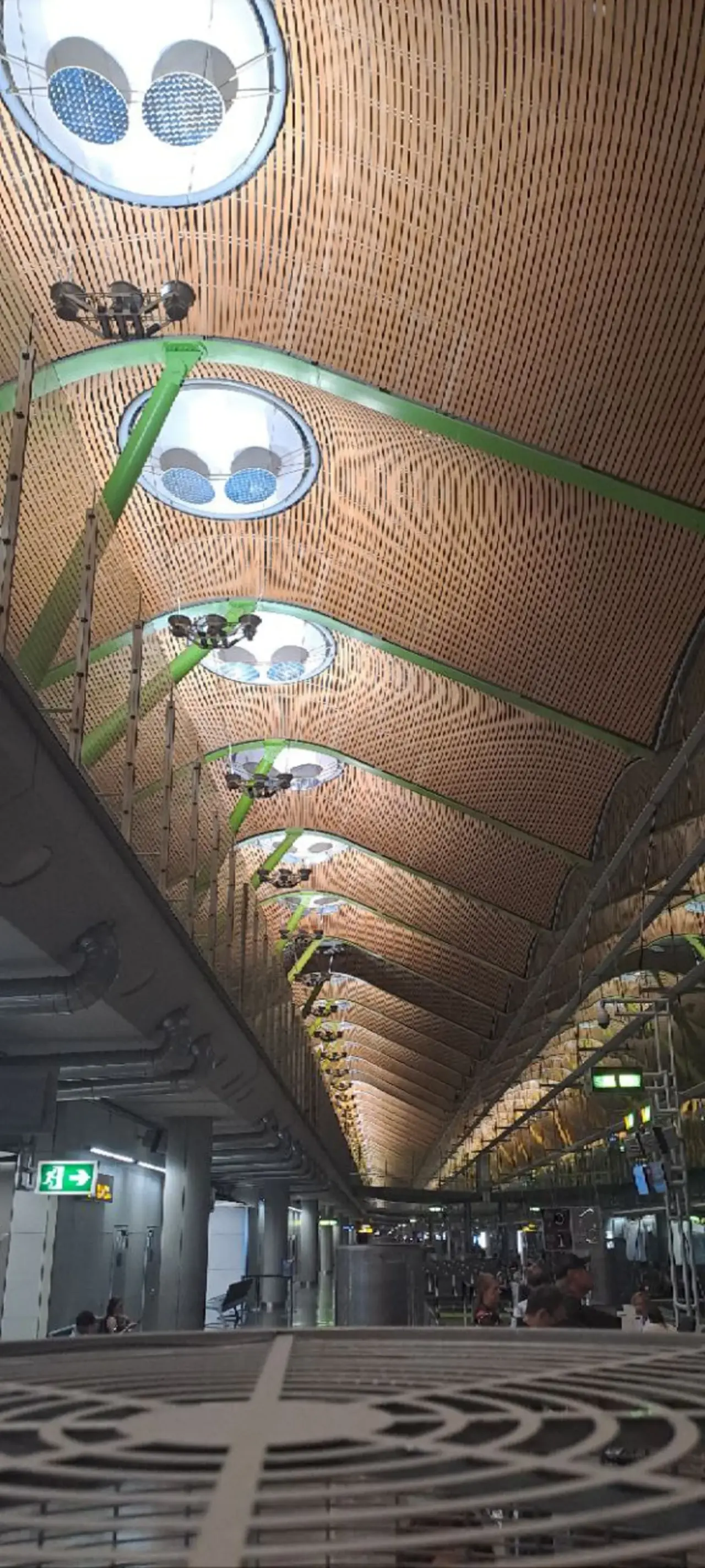
Terminal 4 is the architectural and operational centerpiece of Madrid Barajas. Designed by Spanish firm Estudio Lamela in collaboration with British architect Richard Rogers, T4 opened in 2006 and was awarded the Stirling Prize for architecture in the same year. The terminal's distinctive undulating roof, supported by Y-shaped pillars and made of bamboo paneling, creates one of the most visually striking airport interiors in the world. Natural light floods the terminal through skylights, and the spaces feel airy and contemporary even at peak traffic.
Functionally, T4 is the hub of Iberia, Spain's flag carrier, and serves as the primary base for Oneworld alliance partners at Madrid. This means flights operated by Iberia, British Airways, American Airlines, Qatar Airways, Cathay Pacific, Japan Airlines, Royal Jordanian, and other Oneworld members typically depart from and arrive at T4 or its satellite T4S. Iberia's connections within Spain, to Latin America, to North America, to Europe, and to the Middle East largely route through this terminal, making T4 one of the most important transatlantic hubs in southern Europe.
The terminal includes extensive facilities: a wide range of restaurants spanning Spanish cuisine, international options, fast food, and high-end dining; numerous shops and duty-free outlets; multiple lounges including the Iberia Sala VIP Velázquez and Sala VIP Dalí; banking and currency exchange; and well-organized information services. The check-in halls are large and accommodate efficient processing even during peak departure waves.
For passengers parking at the airport, T4 has its own dedicated parking facilities. See parking services for details on the various options available across all terminals. Travelers using hotels near the airport often find that T4-area hotels offer the most direct access to long-haul departures.
Terminal 4 Satellite (T4S) — Long-Haul Flights, International Destinations
Terminal 4 Satellite, generally referred to as T4S, is the international long-haul extension of T4. Most flights to destinations outside Europe — particularly to the Americas, Asia, and certain African and Middle Eastern routes — operate from T4S. The satellite terminal is connected to the main T4 building by an underground people-mover (an automated train) that runs continuously, taking passengers between the two facilities in a few minutes.
The journey from T4 check-in to T4S departure gates involves: checking in and dropping bags at T4, clearing security at T4, and then taking the people-mover to T4S, where you walk to your gate and boarding area. For passport control, the procedure depends on whether your flight is Schengen-internal or extra-Schengen. Allow plenty of time for this process, especially for first-time travelers — a minimum of 90 minutes from check-in to gate is recommended for departures, and 120 minutes during peak periods.
T4S has its own duty-free shopping, restaurants, lounges (including the high-end Iberia Premium Lounge), and rest areas, designed for the longer dwell times typical of intercontinental travel. The architectural design continues the undulating roof concept of T4, creating visual continuity between the buildings. Some travelers report that T4S can feel quieter and more spacious than T4 itself, particularly in the early morning hours before the major long-haul departure waves.
Connecting passengers at T4/T4S benefit from a streamlined infrastructure: domestic-to-international, international-to-domestic, and international-to-international transfers are all handled within the T4 complex, generally without needing to leave the terminal area. This makes Madrid one of Europe's more efficient connection hubs, particularly for journeys between Latin America and the rest of Europe.
Inter-Terminal Shuttle Bus — Routes, Frequency, Journey Time
Because of the distance between the T1–T2–T3 cluster and the T4/T4S cluster, Madrid Barajas operates a free inter-terminal shuttle bus service. The buses run continuously throughout the day and most of the night, with frequent service during peak hours. Journey time between the terminal clusters is typically 10–15 minutes, depending on traffic and the specific stops.
The shuttle bus stops are located at clearly marked points outside each terminal — you will see signs directing you to the inter-terminal bus pickup areas. Both arriving and departing passengers can use the shuttle without charge. There is room for luggage on the buses, though space can be tight during peak times when many connecting passengers are transferring. If you have very heavy bags or limited mobility, allow extra time and look for accessible boarding areas.
For passengers connecting between flights at different terminal clusters, the shuttle bus is the standard option. However, the time required varies considerably based on time of day, traffic, and your specific connection. Always allow a minimum of 60 minutes between landing and your next departure if you are switching terminals, and ideally 90+ minutes if you have checked baggage to retrieve and re-check.
Some travelers prefer taxis or ride-sharing for inter-terminal transfers when time is critical, but this is generally not necessary — the shuttle bus is reliable and frequent. Note that the shuttle does not connect to off-airport destinations; it is purely an internal terminal-to-terminal service.
Terminal Layouts and Gates
Each terminal at Madrid Barajas has its own gate numbering and layout convention, which can be confusing for first-time visitors. Terminal 1 gates are numbered with the letter prefix matching specific concourses, with most international flights departing from gates in the C and D ranges. Terminal 2 has a smaller gate footprint reflecting its predominantly short-haul role, with most departures from a single concourse area. Terminal 3 typically uses a limited number of gates within a compact area.
Terminal 4's gate structure is more elaborate, organized by concourse with letters and numbers indicating the specific area. Schengen and non-Schengen gates are separated within T4, with appropriate passport control points. T4S, the satellite terminal, has its own gate numbering for the long-haul flights based there. Walking distances from security to gates can be substantial in T4 and T4S — particularly to gates at the far end of the satellite — so build in walking time when planning your arrival at the gate.
Boarding pass information is the definitive source for your gate, but be aware that gate assignments occasionally change with short notice. Display screens throughout the terminals show real-time gate information, and announcements in Spanish and English alert passengers to changes. The official airport app and airline apps also provide gate updates. For the most current departures information, check screens before heading to security.
Some gates at Madrid Airport are bus gates, where passengers board a bus that takes them to an aircraft parked away from the terminal building. This is more common for flights operated by airlines using remote stands, particularly some low-cost carriers. Bus boarding adds time to the boarding process, so allow extra minutes if your boarding pass indicates a bus gate.
Check-In Counters and Self-Service Kiosks per Terminal
Each terminal has dedicated check-in halls with both staffed counters and self-service kiosks. The number and arrangement of counters varies by terminal and by airline. T4 has the largest check-in halls, accommodating Iberia and Oneworld partners alongside other airlines based in T4. T1 has a substantial check-in area for the wide variety of international airlines operating from the terminal, while T2 and T3 have smaller halls reflecting their narrower airline rosters.
Self-service kiosks at all terminals allow passengers to print boarding passes, and most airlines support online and mobile check-in. For travelers with hold luggage, automated bag-drop counters are available in many areas, though staffed counters remain the option for passengers who need assistance, are traveling with special items, or have not been able to check in online.
Check-in opening times vary by airline and route. For long-haul international flights, counters typically open 3 hours before departure and close 60 minutes before. For Schengen flights, counters generally open 2 hours before and close 45 minutes before. Always check your airline's specific requirements, as some carriers — particularly those with strict cut-off times — close check-in earlier than the airport's general guidelines.
For passengers traveling with Iberia or Oneworld partners and using the T4 facilities, dedicated business and first-class check-in areas offer faster processing and direct routing to fast-track security lanes. Status passengers and premium-cabin travelers should use these counters rather than the general check-in lines for the most efficient experience.
Security Control — Fast Track Options, Regular Lines
Security control at Madrid Airport follows standard international procedures. Liquids must be in containers of 100ml or less, packed in a clear plastic bag of one liter or less. Laptops and large electronics must be removed from bags for X-ray inspection. Footwear may need to be removed depending on the type of shoes and the security line. The procedures are similar across all terminals, with some variation in specific equipment and lane configurations.
Fast-track security options are available at all terminals for eligible passengers. Premium-cabin travelers, status passengers in airline frequent-flyer programs, and travelers who have purchased fast-track access can use dedicated lanes that move significantly faster than general lines, particularly during peak hours. The fast-track lanes are clearly marked and located near the regular security control areas.
Wait times at security vary by terminal and time of day. T4 generally has the most efficient processing thanks to its modern equipment and large number of lanes, but peak departure waves — especially the early morning Iberia long-haul departures — can produce significant queues. T2 tends to have more variable wait times depending on the day's flight schedule. T1 can be busy during international departure peaks. Allow 30–45 minutes for security during peak times, and 15–20 minutes during off-peak hours.
For passengers with reduced mobility, special assistance is available throughout the security process. Inform your airline of your needs in advance, and AENA's accessibility staff will help guide you through security with priority handling. Family lanes are also available at busier security points for travelers with young children.
Restaurants, Shopping, Lounges and Family Services
Madrid Airport offers a wide range of food and beverage options across all terminals. Both before and after security control, you will find Spanish staples — tapas bars, jamón ibérico counters, pinchos, paella spots — alongside international fast food, casual dining, and higher-end restaurants. Some venues operate 24 hours, while others follow specific opening times tied to flight schedules. T4 and T4S have the most extensive food offerings, with specialty Spanish cuisine venues, international restaurants, and wine bars suited to long-haul travelers.
Shopping spans the full range typical of major European hubs. Each terminal has duty-free outlets, particularly extensive in T1 and T4 where international departures concentrate. Spanish wines, olive oils, and jamón products are popular purchases. Lounges at Madrid Airport include both airline-operated and pay-per-use facilities — Iberia operates premium lounges in T4 (Sala VIP Velázquez and Sala VIP Dalí) accessible to Iberia and Oneworld premium passengers, status holders, and members of qualifying alliance lounges.
For families, baby-changing facilities are available throughout the airport. Children's play areas exist at several terminals, with the more substantial facilities in T4. AENA provides comprehensive accessibility services — wheelchair assistance, accessible parking, accessible restrooms, and induction loops at key information points. Service animals are welcome with relief areas at appropriate locations.
Practical Tips for Navigating Between Terminals
Several practical tips can make moving between Madrid's terminals significantly easier. First, always confirm your terminal before arriving at the airport — the assignment is on your boarding pass, and AENA's official website provides current terminal information for all flights. Operational changes occasionally happen, so checking 24 hours before your flight is a useful habit.
Second, allow generous time for inter-terminal transfers. The shuttle bus between T1–T3 and T4/T4S takes 10–15 minutes plus waiting time, and walking from the bus stop into the terminal and through security adds significant additional time. For connecting flights between the clusters, allow 90 minutes minimum and 120 minutes for international connections involving immigration.
Third, use the airport's official app and the AENA website to monitor real-time information. Flight delays, gate changes, security wait times, and other operational details are updated continuously and can affect your planning. Free WiFi throughout the airport makes accessing this information straightforward without consuming data on roaming plans.
Fourth, when arriving in Madrid for a connection, listen to announcements in Spanish and English at your arrival gate — connecting passenger procedures often differ depending on the next flight's terminal and whether you are continuing within the Schengen area or going to a non-Schengen destination. For passengers who need help, the information desks at each terminal are staffed with multilingual personnel who can provide directions and assistance.
Have questions about your terminal? Contact us for help planning your route.
You May Also Like
- Madrid Airport Guide
- Airlines at Madrid Airport
- Madrid Airport Arrivals
- Madrid Airport Transfers
Once you know which terminal you are in, things to do at Madrid Airport lists what is actually there — rest areas, lounges, play areas and chapels — with floors and gate numbers.
Plan your trip — airport routes
 AranjuezCity
 ÁvilaCity
 CuencaCity
 El Escorial (San Lorenzo)City
 SegoviaCity
 ChuecaNeighborhood
 Gran VíaNeighborhood
 La LatinaNeighborhood
 LavapiésNeighborhood
 MalasañaNeighborhood
 MoncloaNeighborhood
 Puerta del Sol (City Centre)Neighborhood
 Salamanca districtNeighborhood
 ValdebebasNeighborhood
 Chamartín railway stationStation
 Nuevos MinisteriosStation
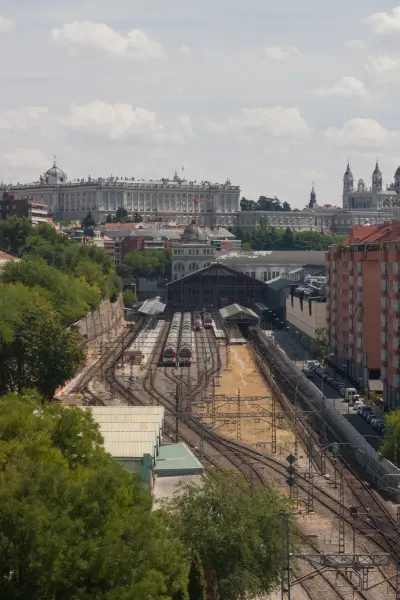 Príncipe Pío stationStation
 Casa de CampoVenue
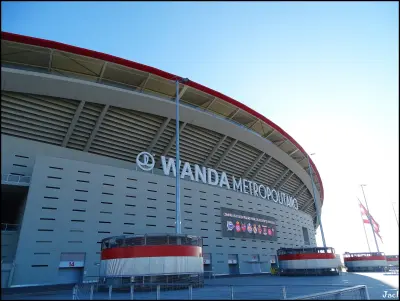 Cívitas Metropolitano (former Wanda Metropolitano)Venue
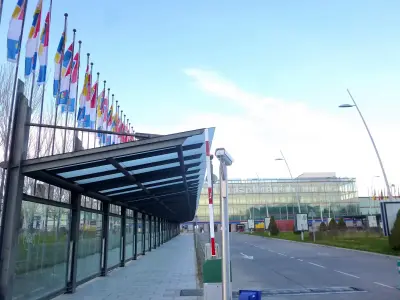 IFEMA Feria de MadridVenue
 Madrid RíoVenue
 Plaza de EspañaVenue
 Plaza MayorVenue
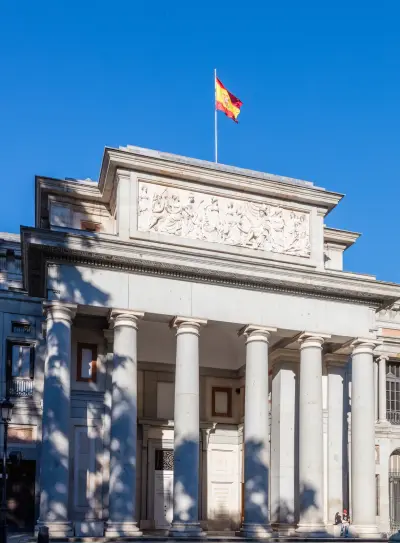 Prado MuseumVenue
 Reina Sofía MuseumVenue
 Retiro ParkVenue
 Royal Palace of MadridVenue
 Santiago Bernabéu StadiumVenue
 Thyssen-Bornemisza MuseumVenue
 Valle de los Caídos (Cuelgamuros)Venue