Madrid Airport Taxi Fares — Quick Reference
| Destination | Fare | Type | Notes |
|---|---|---|---|
| Anywhere within M-30 ring | €30 | Fixed | Sol, Atocha, Salamanca, Malasaña, Chamberí |
| IFEMA convention center | €25–35 | Metered | Just outside M-30 |
| Valdebebas / Real Madrid facility | €15–20 | Metered | Closest destination |
| Las Rozas outlet shopping | €40–50 | Metered | Northwest suburbs |
| Móstoles / Alcorcón | €35–50 | Metered | Southwestern suburbs |
| Alcalá de Henares | €40–55 | Metered | East of Madrid |
| Toledo | €100–130 | Metered | Use Cercanías+AVE instead |
All rates include the €5.50 airport supplement. Fixed €30 applies regardless of traffic or time of day.
Madrid Airport Taxis — A Complete Guide for Travelers
Taking a taxi from Madrid Airport is one of the most straightforward and reliable ways to get into the city, particularly for travelers with luggage, families, late-night arrivals, or anyone who simply prefers a door-to-door ride over public transport. The system at Madrid Airport (MAD) is well-organized, regulated by the city authorities, and operates on a transparent fixed-fare structure for most central destinations — but there are still details worth knowing before you climb into the back seat.
This guide covers everything a traveler needs to know about taxi service at Madrid Airport: where to find official taxis at each terminal, how the fixed-fare system works, what alternative ride-hailing options exist, how to avoid the small number of scams that target tourists, and what to do if something goes wrong. The information applies whether you are arriving on a quick European hop or a long-haul flight from Latin America at three in the morning.
Madrid's official taxi service is regulated by the city council and operates under strict rules about fares, vehicle condition, and driver behavior. Compared to many European capitals, the system is unusually straightforward — most journeys to central Madrid have a fixed price that does not vary by traffic, time of day, or route. This eliminates the most common source of taxi-related friction that travelers encounter elsewhere.
What is Taxi Service at Madrid Airport?
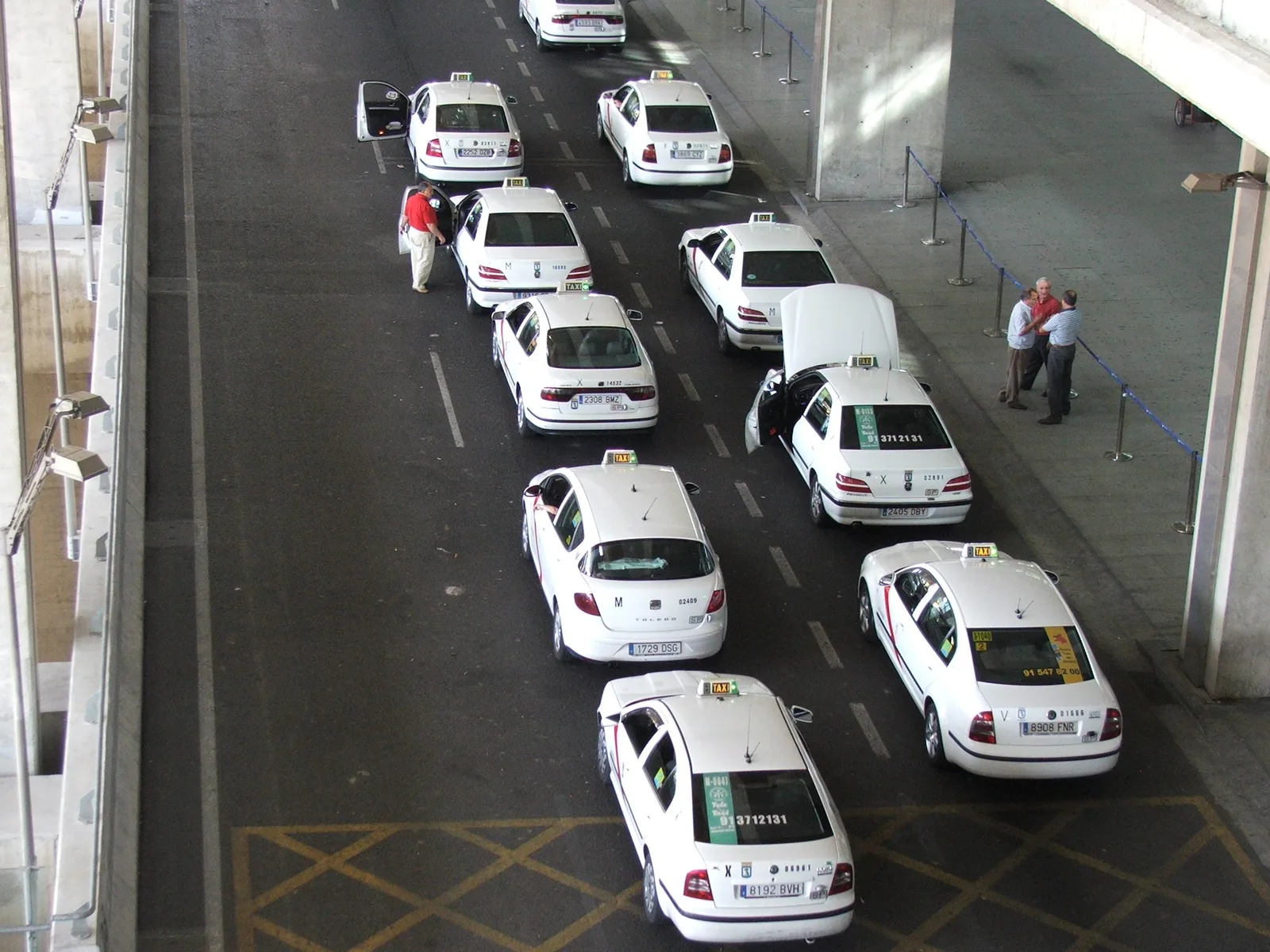
Madrid Airport is served by the city's official taxi fleet, which operates 24 hours a day, 365 days a year. The service is managed under the same regulations that apply to taxis throughout Madrid municipality, with specific provisions for airport pickups including dedicated ranks at each terminal, fixed fares for common destinations, and priority service for arriving passengers. There is no separate "airport taxi" company — every white taxi with a red diagonal stripe that you see at the airport is part of the same regulated fleet that operates throughout the city.
The taxi rank at each terminal is operated continuously, with a queue management system that ensures incoming travelers can find a vehicle within minutes of stepping out of arrivals. During peak arrival waves — particularly mid-morning when transatlantic flights cluster, and early evening when European leisure flights land — there can be brief queues at the rank, but supply generally keeps pace with demand. Even at the busiest times, waiting more than 10 to 15 minutes for a taxi is unusual.
For most travelers, the official airport taxi rank is the right choice. It eliminates the need to pre-book, the fixed-fare structure removes any uncertainty about cost, and the regulated nature of the service provides recourse if something goes wrong. The only travelers who routinely benefit from alternatives are those traveling in larger groups (where ride-share or private transfer can be more economical), those who want a specific vehicle type (luxury, accessible, or with child seats), or those arriving at hours when ride-hailing apps may have lower wait times.
The Fixed €33 Fare to Madrid City Center
Confirmed for 2026: Madrid kept the airport flat fare at €33 in its January 2026 tariff update (the fare last changed on 1 January 2024, rising from €30). Rides from the airport that fall outside the flat-fare rules carry a €22 minimum covering the first 9 km, with 2026 meter rates of €1.40/km on weekdays 7:00–21:00 (Tarifa 1) and €1.60/km at night and on weekends (Tarifa 2).
The most useful thing for any traveler to know about Madrid airport taxis is the fixed-fare system for central destinations. Any taxi journey from Madrid Airport to a destination within the M-30 ring road — which encompasses essentially all of central Madrid, including Sol, Plaza Mayor, Atocha, the Salamanca district, Chamberí, Malasaña, La Latina, and most major hotels — costs exactly €33. This fare is set by city regulation, displayed prominently at every taxi rank, and applies regardless of traffic, time of day, day of the week, or specific destination within the ring.
The fixed fare includes one item of luggage per passenger and the airport supplement that would otherwise apply to airport pickups. Additional luggage may attract a small surcharge in some cases, though this is rarely enforced for typical traveler loads. There is no fare meter activity for fixed-fare journeys — the driver does not run the meter, and the agreed €33 is the total amount due upon arrival at your destination, including all taxes and fees.
This is one of the genuinely traveler-friendly features of Madrid's transport system. Compared to airports where metered taxi fares vary widely based on traffic conditions or time of day, the Madrid fixed fare provides certainty before you even get in the car. You know exactly what you will pay, the driver knows exactly what to charge, and there is no opportunity for disputes about routes, detours, or surge pricing. For groups of two to four people sharing a single taxi, the per-person cost is comparable to or lower than the Metro plus airport supplement, with the added convenience of door-to-door service.
One important caveat: the fixed €33 applies only to journeys terminating within the M-30 ring road. If your destination is outside M-30 — for example, the AZCA business district north of Nuevos Ministerios, the IFEMA convention center, or hotels in the Vallecas or Móstoles districts — the meter applies, and the fare will be calculated based on distance and time. For these journeys, the cost is typically €40 to €60 depending on exact distance.
What are the fares to Destinations Outside the M-30 Ring?
For destinations beyond the M-30, Madrid taxi fares operate on a metered basis with two main tariff schedules. Tariff 1 applies during weekdays from 7:00 AM to 9:00 PM, with a starting fee of €2.50 and a per-kilometer rate of approximately €1.05. Tariff 2 applies in the evenings, on weekends, and on public holidays, with a slightly higher starting fee of €3.15 and a per-kilometer rate of approximately €1.20. There is also an airport supplement of €5.50 that is added to all metered journeys originating at MAD, plus a luggage charge for additional bags above the standard one per passenger.
For common destinations outside M-30, sample fares look approximately like this. To IFEMA convention center, expect €25 to €35 depending on time of day. To the Las Rozas outlet shopping district, around €40 to €50. To Móstoles or Alcorcón in the southwestern suburbs, €35 to €50. To the Real Madrid training facility in Valdebebas, €15 to €20 — this is one of the closer destinations to the airport. To Alcalá de Henares east of the city, €40 to €55. To Toledo, the medieval city 70 kilometers south, €100 to €130 — a journey that most travelers complete more economically by combining the Cercanías to Atocha and the AVE high-speed train.
Concert venues can sit outside the ring too. The Iberdrola Music grounds in Villaverde — home to the Shakira Stadium residency (18 September to 11 October 2026) — are about 25 km south of the airport, so the meter applies there as well: budget roughly €40 to €55 depending on traffic. The same holds for Palacio Vistalegre Arena in Carabanchel, where Evanescence and Tokio Hotel play in autumn 2026 — reckon on €35 to €45.
For longer journeys outside the city, taxis can be a reasonable choice for groups but quickly become more expensive than alternatives like the Cercanías train connecting to AVE high-speed services from Atocha. Private transfer companies often offer more competitive flat rates for trips to suburban destinations or surrounding cities, particularly when booked in advance. For destinations more than 50 kilometers from the airport, comparing taxi metered fares against private transfer quotes is worthwhile.
Taxi Rank Locations at Each Terminal
Each terminal at Madrid Airport has its own taxi rank, located immediately outside the arrivals hall on the ground level. The ranks are clearly signed in Spanish and English with the icon of a yellow taxi or the word "Taxi," and they are positioned for easy access from the baggage claim and passport control areas. There is no need to walk far or use any internal transport to reach the rank — it is essentially the first thing you encounter after exiting the controlled areas.
At Terminal 4, which handles Iberia and Oneworld flights including most long-haul Latin American services, the taxi rank is located outside the main arrivals hall on Floor 0 (ground level). Follow signs from baggage claim toward "Taxi" or "Salida" (exit), and the rank is directly outside the doors. The T4 rank is among the busiest at the airport given the volume of arriving passengers, but the queue management is efficient and waits are typically under 10 minutes.
At Terminal 4 Satellite (T4S), which handles most long-haul international flights, passengers proceed through the underground people-mover to T4 first, then through baggage claim and customs, and finally to the same T4 taxi rank described above. There is no separate taxi rank at T4S itself — the people-mover transit is part of the standard arrival process for T4S travelers.
At Terminals 1, 2, and 3, each has its own dedicated taxi rank immediately outside the arrivals hall. T1 handles non-Schengen international flights from non-Oneworld carriers and tends to be the second-busiest terminal for taxi pickups. T2 serves Schengen flights and has a smaller but well-functioning rank. T3 has the smallest rank, reflecting its lower passenger volumes. All three of these ranks are within walking distance of each other along the terminal frontage, but you should use the rank at your specific terminal of arrival rather than walking between terminals — the queue at your own terminal is generally faster.
Official Taxi Colors and Identification
Official Madrid taxis are easy to identify by their distinctive appearance. They are uniformly painted white, with a red diagonal stripe across each front door bearing the city's coat of arms (a bear and a strawberry tree, the symbol of Madrid). The taxi license number is displayed prominently on each side and on the rear. A green light on the roof, when illuminated, indicates that the taxi is available; when not illuminated, the taxi is occupied or off-duty.
Inside the taxi, the driver's photo, license number, and identification card are displayed on the dashboard or visor, visible to passengers in the back seat. The fare schedule and the official complaints information are also displayed prominently inside the cabin. These visible identifications serve both to reassure passengers that they are in an official taxi and to provide accountability if anything goes wrong with the journey.
Avoid any vehicle that does not match this description. Unofficial drivers occasionally approach travelers in the arrivals hall offering "taxi" or "transport" service, sometimes at inflated prices and almost always without the regulatory protections that apply to official taxis. The standard advice is simple: walk to the marked taxi rank outside the terminal and take the next vehicle in line, regardless of any offers you may receive inside. The rank-managed taxis are reliable, regulated, and almost always cheaper than informal offers.
If a person inside the terminal approaches you and offers a taxi or transfer, politely decline and proceed to the official rank. This is not a sign of distrust — it is simply the standard practice that protects you from the small number of bad actors who occasionally operate in airport environments anywhere in the world. The official rank is plainly visible from the arrivals hall and a one-minute walk from any baggage claim exit.
Ride-Hailing Alternatives — Uber, Cabify, Bolt
Madrid is well-served by ride-hailing apps, all of which operate at the airport with designated pickup zones. Uber, Cabify (a Spanish-founded competitor that is particularly popular in Madrid), and Bolt all function essentially as they do in other major cities — you order a ride through the app, see the driver and vehicle details before pickup, and the fare is calculated and charged automatically through the app. There is no need to handle cash or coordinate payment with the driver.
The pickup process for ride-hailing at Madrid Airport involves walking to the designated VTC (Vehículos de Transporte con Conductor) pickup zone at your terminal. These zones are typically located on a different level or section from the official taxi rank, and signage in the arrivals hall directs ride-hailing passengers to the correct location. The driver will message you when they arrive, and you locate them by vehicle license plate and color in the pickup area.
Pricing for ride-hailing rides between MAD and central Madrid is typically competitive with the fixed €33 taxi fare during normal hours, sometimes slightly cheaper. During peak demand periods — early morning rush, late evening, weekend nights — surge pricing can push ride-hailing fares above the taxi fixed fare, sometimes by 50% or more. The taxi fixed fare does not surge, which makes it the more predictable choice during high-demand windows.
For travelers who already use these apps in their home country, ride-hailing provides familiarity, payment convenience, and detailed receipts that are useful for business travel expense tracking. For first-time visitors who do not have the apps installed, the simpler choice is usually the official taxi rank — no app installation, no payment setup, no need to navigate to a separate pickup zone. Both options work well, and the choice between them is largely about personal preference and current pricing.
What are the payment options?
Madrid taxis are required by city regulation to accept multiple payment methods, including cash and card payments. In practice, every official airport taxi has a working card reader that accepts the major international networks (Visa, Mastercard, American Express). Contactless payment, including Apple Pay and Google Pay, is widely supported and is now the default payment method for most travelers.
If a driver claims that their card reader is not working, this is sometimes legitimate (technology fails) but more often a small attempt to encourage cash payment, which avoids the small fee that the driver pays on card transactions. If you do not have euros in cash and the driver insists card payment is impossible, you have a few options. First, ask politely whether they can try the reader again — it sometimes works on a second attempt. Second, ask them to take you to a nearby ATM if you are willing to withdraw cash. Third, note the taxi license number and report the issue to the city's taxi authority, since refusal of card payment is a regulatory violation.
For the standard €33 fixed-fare journey to central Madrid, paying by card is the simplest approach. The driver will key in the fixed fare, you tap or insert your card, and the receipt is generated automatically. Tips are not included in the fare and are not expected to the same degree as in countries like the United States; rounding up to the nearest euro or adding a euro or two for good service is appropriate but not required.
For travelers who prefer cash, ATMs are widely available throughout the arrivals halls of all terminals, and Spanish banks generally offer competitive exchange rates compared to currency exchange counters. Withdrawing €40 to €50 in advance covers the fixed fare plus any small additional expenses.
Tipping in Spain — How It Works for Taxis
Tipping culture in Spain, including for taxis, is much more modest than in countries like the United States or Canada. Spaniards generally tip small amounts when service is good — typically rounding up to the nearest euro for a short ride or adding €1 to €2 for longer journeys. There is no expectation of percentage-based tipping, and drivers do not depend on tips as a significant portion of their income, since the regulated fare structure provides their primary compensation.
For an airport taxi journey at the fixed €33 fare, the most common tipping behavior among Spanish residents is either no tip at all or rounding up to €31 or €32. International travelers who feel comfortable tipping more — particularly if the driver was helpful with luggage, friendly, or made the journey particularly pleasant — can tip €3 to €5 without it seeming excessive. Tipping much more than 10% of the fare is uncommon in Spain and may even feel slightly awkward to the driver.
For travelers from countries with strong tipping cultures, the lower tipping norm in Spain can take some adjustment. The simplest approach is to follow your own comfort level — if you would tip generously at home, you can do so in Spain without giving offense, but you do not need to feel obligated to do so. The driver is not silently judging your generosity, and a journey paid at the exact fixed fare with no tip is perfectly normal and accepted.
For longer journeys to destinations outside the M-30 where the meter is running, the same general guidance applies — round up or add a small additional amount for good service, but percentage-based tipping is not the norm. Card payment systems in Madrid taxis usually allow you to add a tip when paying by card, with prompts in Spanish and English.
Late-Night and Early-Morning Taxis
Unlike many transport options at Madrid Airport, taxis operate continuously and are unaffected by the overnight reductions that affect Metro and Cercanías services. Whether your flight arrives at three in the morning or you are heading to the airport for a 5:00 AM departure, the taxi rank at each terminal is staffed and operational. There is no separate "night service" or different procedure — the same fleet, same fixed fares, and same procedures apply at all hours.
For arriving travelers on late-night flights, the taxi is often the most practical option. The Metro and Cercanías services have reduced or no overnight operations between roughly 1:30 AM and 5:30 AM, and while the 24-hour Express Airport Bus continues running, it does not offer the door-to-door convenience that travelers fatigued from long flights often appreciate. The fixed €33 fare to central destinations means the cost is identical to a daytime journey, with no nighttime surcharge to worry about.
For travelers heading to the airport for an early-morning departure, calling a taxi to your accommodation is straightforward. Most Madrid hotels can call a taxi on your behalf, or you can use a ride-hailing app or hail a taxi on the street. The journey from central Madrid to the airport in early-morning hours typically takes 25 to 35 minutes, less than during daytime traffic peaks. Building in 45 minutes to be safe gives you a comfortable buffer before any check-in deadlines.
One practical consideration for very late or very early journeys: the taxi rank at the airport is fully staffed, but during the quietest overnight hours (roughly 2:00 AM to 5:00 AM), there may be slightly fewer taxis immediately available. Waits during these hours can occasionally be 5 to 10 minutes longer than during daytime, but they are still very manageable.
Accessibility Taxis at Madrid Airport
Madrid's taxi fleet includes a number of accessibility-equipped vehicles known as "Eurotaxis," which are designed to accommodate wheelchairs, mobility scooters, and other accessibility needs. These vehicles are part of the same regulated fleet as standard taxis and operate under the same fare structure, including the fixed €33 fare to central destinations within M-30.
Eurotaxis are available at Madrid Airport but in smaller numbers than standard taxis, which means that travelers with accessibility requirements should typically book in advance to ensure availability. The Madrid taxi cooperatives operate dedicated phone lines for accessibility taxi requests, and several apps allow you to specifically request Eurotaxi-equipped vehicles. If you arrive without a booking and need an accessibility taxi, ask the rank attendant — they can typically arrange one within 15 to 30 minutes, though the wait can be longer during peak periods.
For travelers using wheelchairs, the Eurotaxi vehicles have ramps or lifts that allow direct boarding without transfers, and securing systems for the wheelchair during the ride. Drivers of these vehicles are trained in providing accessibility assistance, including helping with luggage and ensuring safe and comfortable transit.
For travelers with other accessibility needs — visual or hearing impairments, mobility difficulties that don't require a full wheelchair, or other circumstances — the standard taxi service is generally well-equipped to assist. Drivers are accustomed to a wide range of passengers and will typically offer help with luggage, navigation, and any specific needs you communicate. AENA's general accessibility services at the airport (the "Sin Barreras" program) can also help coordinate transport arrangements for travelers who arrange assistance in advance through their airline.
Taxis with Child Seats and Family Travel
One of the questions families frequently ask is whether Madrid taxis provide child seats. The standard answer is that they do not — most taxis are not equipped with child or booster seats, and Spanish law does not require taxis to provide them. For short journeys within the city, this is generally legal under Spanish road safety rules, which include exceptions for taxi service (similar to many other European countries). However, parents who are uncomfortable transporting young children without proper seats have a few options.
The simplest option is to bring a portable car seat or booster from home. Many travel-friendly child seat models fold compactly and can be carried as cabin baggage, particularly the inflatable or compact booster models designed specifically for travel. Using your own seat in a Madrid taxi is straightforward — you install it across the back seat in the standard manner and remove it at your destination.
The second option is to specifically request a taxi with a child seat at the time of booking. Some Madrid taxi cooperatives offer this service for an additional fee, typically €5 to €10 per journey. Booking in advance via the cooperative's app or phone line is the most reliable way to ensure a vehicle with the appropriate seat will be sent. Walking up to the airport rank and requesting this on the spot is less reliable, since most rank vehicles do not carry child seats by default.
The third option is to use a private transfer service, which can almost always provide vehicles with child seats matched to the ages of your children. Other transfer options often include this provision as a standard part of family bookings. For families traveling with multiple young children, a private transfer with appropriate seats is often more practical than a taxi, even if the cost is somewhat higher.
Common Scams to Avoid
Madrid is generally a safe city for travelers, and the taxi system is well-regulated, but a small number of scams target tourists at the airport. Knowing what to watch for keeps you on the right side of the system. The most common issue is unofficial drivers approaching travelers inside the terminal or just outside the doors, offering "taxi" service. These drivers are not part of the regulated fleet, often charge inflated prices, and may not provide receipts or accountability if something goes wrong. The standard defense is to ignore all unsolicited offers and walk directly to the marked taxi rank.
A second occasional issue is drivers claiming that the fixed-fare system does not apply to your specific destination, attempting to charge a metered fare for a journey that should be at the fixed €33. This is uncommon but does occur. The defense is simple: know that the fixed fare applies to all destinations within the M-30 ring road, and confirm at the rank attendant if you are uncertain. If a driver insists on running the meter for a within-M-30 destination, you can decline the ride and take the next taxi in line.
A third issue is drivers taking unnecessarily long routes to inflate metered fares for destinations outside M-30. This is also uncommon, but you can protect yourself by checking the route on a phone map (Google Maps, Apple Maps) during the ride, particularly for destinations you are not familiar with. If the driver is taking an obviously circuitous route, you can politely ask them to take a more direct path.
Finally, occasional issues arise with drivers claiming card readers are broken to encourage cash payment, sometimes in higher amounts than the legitimate fare. The defense is to insist on card payment as your right under Madrid taxi regulations, and to note the taxi license number if the driver continues to refuse. These situations are rare, and most Madrid taxi journeys proceed without any issues whatsoever — the official fleet is among the most professional and traveler-friendly in any major European capital.
What to Do If You're Overcharged?
If you believe you have been overcharged or otherwise mistreated by a Madrid taxi driver, you have several options for recourse. The most important step is to obtain the taxi license number, which is displayed inside the vehicle and on the exterior. Take a photo of the license plate and the driver's identification card if possible. Note the time, date, and approximate route of the journey, plus a description of the issue.
The Madrid city council operates a taxi complaints office that handles formal complaints about regulated taxi service. Complaints can be filed through the city's general administrative procedure (online at madrid.es), through the Junta Arbitral del Transporte, or through the consumer protection office (OMIC). For tourists, the simpler option is often to report the incident to the airport's police office or AENA's customer service desk before leaving the airport, since they can sometimes facilitate immediate resolution if the driver is still on site.
For card payment disputes — for example, if the driver charged a higher amount than the agreed fare to your card — you can also dispute the charge with your card issuer through the standard chargeback process. This is most effective if you have a receipt showing the agreed fare differs from the amount charged. Saving your card receipt at the end of the ride is good practice for this reason.
For most travelers, the right approach is to be aware of the standard fare structure (the fixed €33 for central destinations), to insist on the correct fare during the journey, and to escalate to formal complaints only if necessary. The vast majority of Madrid taxi journeys proceed without any issues, and the regulated system provides strong protections for passengers when problems do arise.
Sample Fares to Common Destinations
To help travelers plan, here are sample fares for common destinations from Madrid Airport. All within-M-30 destinations are covered by the fixed €33 fare regardless of specific address. The following are approximate metered fares for destinations outside the ring road, based on standard daytime tariff and current rates.
To IFEMA convention center (just outside M-30 to the northeast): €25 to €35. To the Real Madrid Bernabéu stadium: fixed €33 fare (within M-30). To Atocha train station: fixed €33 fare (within M-30). To Chamartín train station: fixed €33 fare (within M-30). To the Las Rozas outlet shopping village (northwest of city): €40 to €55. To the Xanadú shopping center in Arroyomolinos (southwest): €60 to €75. To Móstoles or Alcorcón (southwestern suburbs): €40 to €55. To Alcalá de Henares (east, university town): €45 to €65. To San Lorenzo de El Escorial (northwest, monastery town): €100 to €130. To Toledo (south, medieval city): €100 to €130 (a journey most travelers complete by Cercanías + AVE for €15 to €25 in the same time).
For the Madrid stadiums and major venues that hold events: Estadio Santiago Bernabéu (Real Madrid) is within M-30, so fixed €33. Estadio Cívitas Metropolitano (Atlético de Madrid) is outside M-30 to the east, so metered fare around €25 to €35. The Wanda Metropolitano sometimes hosts events that bring crowds; expect taxi waits during major matches. The Caja Mágica tennis venue in the south is metered, around €30 to €40.
For travelers heading to the surrounding region for day trips or onward travel, the comparison with rail-based options usually favors the train. Getting to the city center via the Cercanías connects you to Atocha for AVE services to Toledo (33 minutes by AVE), Segovia (30 minutes by AVE from Chamartín), and other Spanish destinations at far lower cost than a direct taxi journey.
Choosing Between Taxi, Metro, and Other Options
For most travelers, the choice between a taxi and other transport options from Madrid Airport comes down to a few practical factors. Group size matters — for solo travelers or pairs, the Metro at €5 with the airport supplement is significantly cheaper than the €33 taxi fare. For groups of three or four sharing one taxi, the per-person cost of a taxi (€7.50 to €10) is competitive with the Metro and saves the time and effort of navigating a station with luggage.
Luggage matters too. With one or two small bags, the Metro is straightforward — Line 8 has step-free access, elevators, and reasonable space for luggage. With four large suitcases or multiple oversized items, a taxi is much more practical. The same applies for travelers with mobility considerations — the door-to-door convenience of a taxi often outweighs the cost difference.
Time of day matters. During Metro operating hours (roughly 6:00 AM to 1:30 AM), the Metro is fast and reliable, with journeys to central Madrid taking 25 to 40 minutes including any transfers. During the overnight period when the Metro is closed, the taxi or the 24-hour Express Bus are your main options, and the taxi is the more direct of the two.
Specific destination matters. If you are heading to a hotel near a Metro Line 8 station — particularly along the Nuevos Ministerios to Chamartín corridor — the Metro is a strong choice. If you are heading to the historic center (Sol, Plaza Mayor, Malasaña), you face transfers on the Metro that the taxi avoids. If you are heading to areas not well-served by Metro, the taxi or a private transfer is generally the better choice. The Cercanías train is the right answer for travelers connecting directly to AVE services from Atocha.
Tips for a Smooth Taxi Experience
A few practical tips help ensure your Madrid airport taxi experience is as smooth as possible. First, head directly to the official taxi rank at your terminal — ignore unsolicited offers from anyone inside the terminal. The rank is impossible to miss, signed clearly in multiple languages, and the wait is usually short. Second, confirm your destination clearly before getting in. If you are going to a destination within M-30, the driver should not run the meter; confirm "fixed fare, thirty euros" before pulling away.
Third, if you have a written address — printed or on your phone — show it to the driver. Even drivers with strong English may appreciate seeing the exact spelling of street names, particularly for less central destinations. The address format in Spain is "Street name, number" (Calle Mayor 23, for example), and including the neighborhood or district can help (Calle Mayor 23, Sol). Fourth, keep your phone charged and accessible during the ride — having a map app open allows you to confirm the route and provides reassurance that you are heading the right direction.
Fifth, for return journeys to the airport from your hotel, asking your hotel front desk to call a taxi is the simplest approach. They will note the destination as the airport, confirm the fixed fare, and the taxi will arrive at the door within 5 to 10 minutes. Build in time for traffic — central Madrid to MAD typically takes 25 to 35 minutes outside peak hours, but rush-hour traffic can extend this to 45 minutes. Heading out 90 minutes before your check-in deadline gives you comfortable margin for short-haul flights, and 2 hours for international.
Sixth, save the receipt at the end of the ride. The Madrid taxi card payment system generates an automatic receipt, and the driver can also provide a paper receipt if you prefer. Receipts are useful for business expense reporting and provide documentation if any disputes arise after the journey. For more on related transport options around Madrid, see our coverage of Madrid taxis citywide, beyond just the airport service.
Want a stress-free taxi experience? Reach out.
You May Also Like
Plan your trip — airport routes
 AranjuezCity
 ÁvilaCity
 CuencaCity
 El Escorial (San Lorenzo)City
 SegoviaCity
 ChuecaNeighborhood
 Gran VíaNeighborhood
 La LatinaNeighborhood
 LavapiésNeighborhood
 MalasañaNeighborhood
 MoncloaNeighborhood
 Puerta del Sol (City Centre)Neighborhood
 Salamanca districtNeighborhood
 ValdebebasNeighborhood
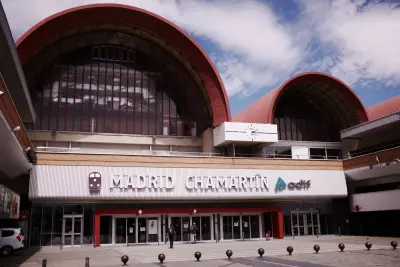 Chamartín railway stationStation
 Nuevos MinisteriosStation
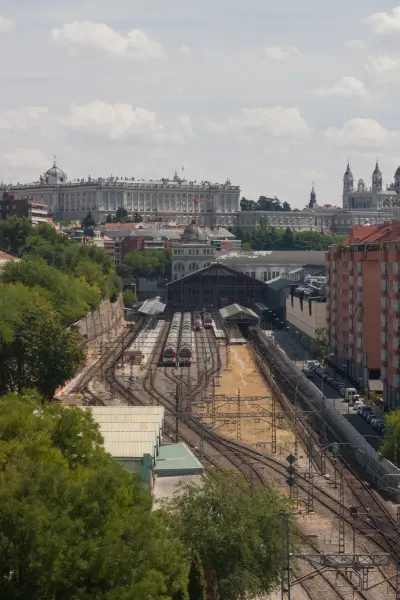 Príncipe Pío stationStation
 Casa de CampoVenue
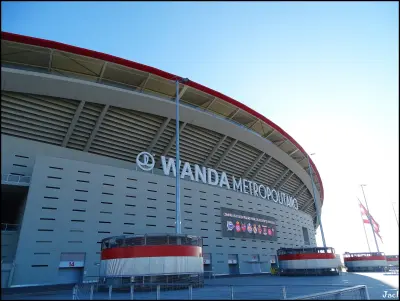 Cívitas Metropolitano (former Wanda Metropolitano)Venue
 IFEMA Feria de MadridVenue
 Madrid RíoVenue
 Plaza de EspañaVenue
 Plaza MayorVenue
 Prado MuseumVenue
 Reina Sofía MuseumVenue
 Retiro ParkVenue
 Royal Palace of MadridVenue
 Santiago Bernabéu StadiumVenue
 Thyssen-Bornemisza MuseumVenue
 Valle de los Caídos (Cuelgamuros)Venue