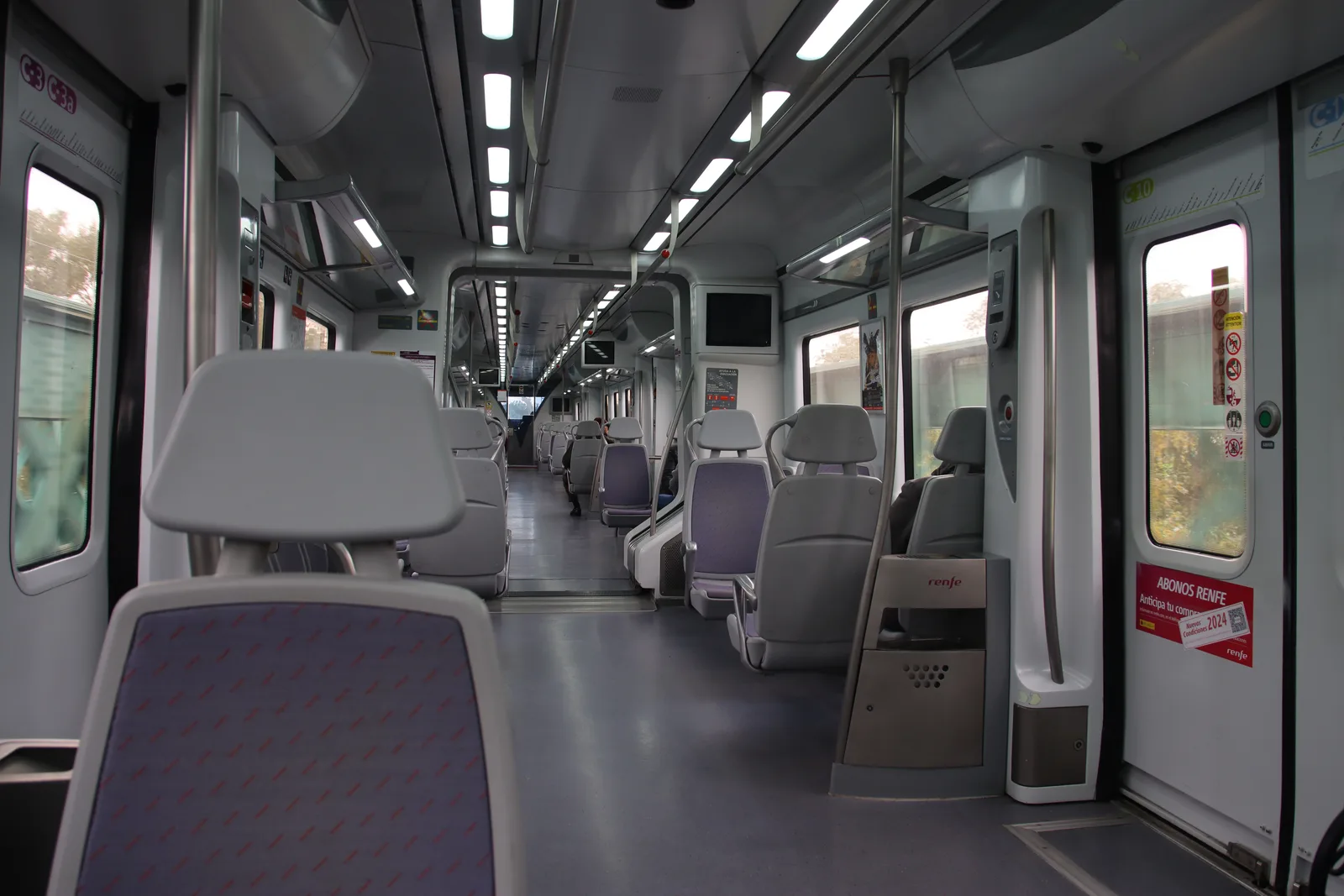
Madrid Airport Train Options
| Service | Price | Duration | Frequency | Connects to |
|---|---|---|---|---|
| Cercanías C-1 (from T4) | €2.60 | 30 min | Every 30 min | Atocha (AVE high-speed hub) |
| Metro Line 8 (from T1-T2-T3 / T4) | €4.50 + €3 supp | 12–30 min | Every 5–10 min | Nuevos Ministerios → city network |
For onward AVE high-speed connections (Barcelona, Sevilla, Valencia), Cercanías C-1 → Atocha is the most direct path.
Madrid Airport Train (Cercanías C-1)
The Cercanías Line C-1 is one of the most efficient and overlooked ways to get from Madrid Airport (MAD) to the centre of the city, and it is the only direct rail link between the airport and the heart of Madrid's national rail network. Operated by Renfe, the Spanish state railway company, the C-1 line runs between Príncipe Pío in central Madrid and Madrid–Barajas Airport's Terminal 4, stopping at major stations including Chamartín, Nuevos Ministerios, and Atocha along the way. For many travellers — particularly those continuing onward to other Spanish cities by high-speed rail — the Cercanías is the single most practical airport transfer option.
Despite this, the train is one of the lesser-known transport options at Madrid Airport, partly because it only serves Terminal 4 and partly because the Metro and Express Bus tend to dominate the marketing of airport-to-city transfers. This guide is a complete reference to the Cercanías service from MAD: where the station is located, what tickets cost, how often trains run, where they go, and the practical tips that make the experience smoother for first-time users.
If your journey involves connecting to a long-distance train at Atocha or Chamartín — or if you are heading to neighbourhoods near those stations — the Cercanías is almost always the right choice. For other destinations, it is one of several reasonable options, and this guide also covers when other transport modes might serve you better.
What is Cercanías Line C-1 from MAD?
The Cercanías commuter rail network covers the broader Madrid metropolitan region with multiple lines radiating from the city centre. Line C-1 specifically connects Príncipe Pío station in western central Madrid to Madrid–Barajas Airport, with stops at the most important interchanges along the way. The line is single-direction from the perspective of airport travellers — you board at the airport's T4 station and ride toward central Madrid, or vice versa for departures.
Cercanías service is fundamentally different from the Madrid Metro. While the Metro is a dense urban subway network running short, frequent trains within the city limits, Cercanías uses larger, longer trains designed for regional commuter travel. The carriages are more spacious, with proper seating arrangements, dedicated luggage space at the ends of cars, and accessibility features designed for travellers with bags rather than just commuters with briefcases. For airport passengers carrying suitcases, this difference matters significantly.
The line stops at a small number of strategic stations between MAD and central Madrid: Madrid–Barajas Aeropuerto T4 (the airport stop), Fuente de la Mora, Chamartín, Nuevos Ministerios, Recoletos, Atocha, and Príncipe Pío. The most important of these for travellers are Chamartín, Nuevos Ministerios, and Atocha — each of which connects to the broader Metro network and the long-distance rail system, opening up access to virtually anywhere in Madrid or Spain.
Where the Train Station Is at the Airport (T4)?
The Cercanías station at Madrid Airport is located underneath Terminal 4. This is critical information that catches many first-time users by surprise: the train does not serve Madrid Airport terminals 1, 2, or 3 directly. If you arrive at T1, T2, or T3 and want to use the Cercanías, you will first need to take the free inter-terminal shuttle bus to T4, which adds 15 to 20 minutes to your journey depending on the time of day and shuttle frequency.
From within T4, the station is reached by following clear signage marked "Cercanías" or with the standard Cercanías logo (a red C inside a circle). The station is on the lower level of T4, accessible by escalators, lifts, and stairs from the main arrivals and departures levels. Walking time from baggage claim or check-in to the platform is typically 5 to 10 minutes for an unhurried walker, longer if you are unfamiliar with the terminal or carrying heavy luggage.
The Cercanías station itself is modern, clearly marked, and equipped with the standard amenities you would expect: ticket vending machines, an information desk during operational hours, automated turnstiles for entry and exit, lifts and ramps for accessibility, and platform displays showing the next train and its destination. Free WiFi reaches the station area via the airport's network. The platforms are large enough to accommodate the volume of airport travellers without significant crowding outside peak times.
Trains usually depart from the same platform direction (toward central Madrid), but it is always wise to confirm by checking the destination on the front of the train and the platform display before boarding. Trains in the opposite direction terminate at T4 and depart again toward Madrid after a brief stop.
Trains Do Not Serve T1/T2/T3 Directly
This point bears repeating because it is one of the most common sources of confusion for travellers new to Madrid Airport. The Cercanías Line C-1 stops only at Terminal 4. There is no train station at T1, T2, or T3, and there has been no announced plan to extend the line to those terminals.
If your flight uses T1, T2, or T3 and you want to use the Cercanías, your route is: arrive in your terminal, follow signs to the inter-terminal shuttle bus stop (typically just outside the terminal building), wait for the next free shuttle bus, ride it to T4 (a 10-15 minute journey), and then walk into T4 and follow signs to the Cercanías station. Total added time is 25-35 minutes beyond your arrival at the original terminal.
For arrivals at T1, T2, or T3, the Metro is often a better choice than going through the trouble of getting to T4 for the train. Metro Line 8 stops at both T2 (with a short walk to T1 and T3 via underground passage) and T4. If your destination is along the Metro network rather than at one of the major train stations, this may be more efficient than the Cercanías.
The exception is when you are heading specifically to Chamartín or Atocha for an onward train connection, in which case the Cercanías from T4 is the most direct route despite the inter-terminal transfer. The time you save versus the Metro+walk approach can outweigh the extra transfer.
Journey to Chamartín and Atocha
The two most important destinations for airport travellers using the Cercanías are Chamartín and Atocha, Madrid's principal long-distance rail stations. Together they handle virtually all AVE high-speed rail services to other Spanish cities, plus regional and international trains. If your trip involves onward rail travel, knowing which station you need is essential.
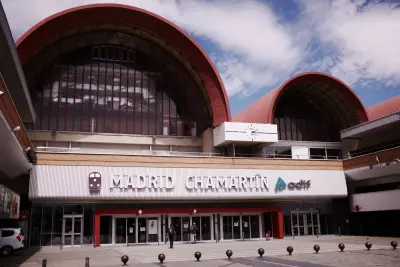
From T4, the Cercanías reaches Chamartín in approximately 12 to 15 minutes. Chamartín is the northern long-distance hub, handling AVE services to Burgos, Valladolid, León, A Coruña, the Basque Country, and increasingly to Barcelona and the eastern Mediterranean coast. It also has Metro connections to Lines 1 and 10 and is a major Cercanías interchange to several other commuter rail lines.
Atocha, by contrast, is reached in approximately 25 to 30 minutes from T4. Atocha is the southern long-distance hub, handling AVE services to Sevilla, Córdoba, Málaga, Toledo, Valencia, and Alicante. It also has Metro connections to Line 1, the Express Airport Bus terminus, and direct access to neighbourhoods like Lavapiés, Atocha itself, and the Prado–Retiro area. The journey from MAD to Atocha specifically is one of the most popular Cercanías routes for travellers, particularly those connecting to Atocha for an onward AVE journey.
Between Chamartín and Atocha, the Cercanías stops at Nuevos Ministerios and Recoletos. Nuevos Ministerios is the more useful of the two for general airport travellers — it connects to Metro Lines 6, 8, and 10, putting most of central Madrid within a single Metro transfer. Recoletos is closer to specific neighbourhoods (Salamanca, Recoletos itself) but is less of a transport interchange than Nuevos Ministerios.
Metro Alternative — When to Choose Which
The Madrid Metro Line 8 is the main alternative to the Cercanías for getting to and from the airport. Choosing between them depends on your specific destination and circumstances.
Metro Line 8 has the advantage of serving T1, T2, T3, and T4 directly — no inter-terminal shuttle required. It runs every 4 to 7 minutes during the day and reaches Nuevos Ministerios (a major interchange) in about 15 minutes from the airport. From Nuevos Ministerios, you can connect to Metro Lines 6, 10, or other Cercanías lines to reach essentially any neighbourhood in central Madrid. Total journey to most destinations: 25 to 40 minutes.
The Cercanías has the advantage of being faster to Atocha and Chamartín specifically, with proper seated trains rather than the Metro's commuter-style carriages, and dedicated luggage space. It is also slightly cheaper for some journeys when you have the right ticket combinations. Total journey from T4 to Atocha: about 25 minutes including platform-to-platform walking.
The simple rule: if you are going to or from Atocha or Chamartín for a long-distance train, use the Cercanías. If you are going to or from a neighbourhood best reached via Metro Line 8 or its connections at Nuevos Ministerios, use the Metro. For other transfer alternatives, see our overview of other transfer options from the airport.
Ticket Prices and How to Buy
Cercanías tickets are reasonably priced and several options are available depending on your needs. The standard fare from Madrid–Barajas Aeropuerto T4 to any station within the central Madrid zone is approximately €2.60 for a single one-way journey. This compares favourably with the Metro (around €4.50 to €5.00 with the airport supplement) and the Express Airport Bus (€5.00).
Tickets can be purchased at the automated vending machines in the Cercanías station at T4. The machines accept coins, banknotes, credit cards, and contactless payment, and they are available in multiple languages including English, French, German, Italian, and Portuguese. Choose your destination on the touch screen, select the number of tickets, and pay. The machine prints a paper ticket with a magnetic strip on the back.
For travellers who plan to use Cercanías frequently, multi-journey passes are available, including 10-trip cards (Bonotren) that offer modest savings per journey. For airport travellers making just one or two trips, the single-journey ticket is typically the most practical choice. Children under 4 travel free; passengers between 4 and 13 receive discounted fares.
Holders of the Tarjeta Transporte Público (TTP), the Madrid public transport contactless card, can also use the Cercanías by topping up the card with the appropriate fare. The TTP is more useful for residents and longer-stay travellers than for tourists making one or two airport transfers.
Important note: the Cercanías ticket from the airport does NOT work as an inclusive transfer to the Metro. If you exit the Cercanías at Nuevos Ministerios and want to continue on the Metro, you will need to buy a separate Metro ticket. The combined fare structures across operators is one of the genuine confusions of Madrid public transport.
Journey Time and Frequency
Cercanías Line C-1 runs at varying frequencies depending on the time of day. During peak commuting hours (roughly 06:30 to 09:30 in the morning and 17:00 to 20:00 in the evening), trains run approximately every 15 minutes. During off-peak daytime hours, the frequency drops to roughly every 30 minutes. Late at night and on weekends, the service operates approximately every 30 to 45 minutes depending on the schedule.
Total journey time from MAD T4 to specific destinations: Chamartín approximately 12 minutes, Nuevos Ministerios approximately 17 minutes, Recoletos approximately 22 minutes, Atocha approximately 25 minutes, Príncipe Pío approximately 35 minutes. These times are scheduled and subject to small variations due to traffic on the rail network.
The journey itself is mostly above ground for the segment between the airport and Chamartín, then largely underground through the city centre. The above-ground section provides views of the airport's runways and the residential areas of northeast Madrid; the underground section is unremarkable. Trains run smoothly and quietly compared with the Metro, with proper seating and air conditioning year-round.
Service can be disrupted occasionally by signalling issues, weather (particularly in winter when rare snow can affect operations), or labour actions. The Renfe app and Cercanías Twitter accounts post real-time updates when disruptions occur. For most travellers, the train runs reliably enough that backup planning is unnecessary, but for very tight connections to long-distance trains it is wise to allow buffer time.
Schedule and Operating Hours
The Cercanías Line C-1 operates from approximately 05:30 in the morning until approximately 23:30 at night, with the first train from T4 typically departing around 05:50 and the last departure around 23:15. These times are seasonal and can vary slightly with timetable changes; always check the current Renfe schedule before relying on a specific departure.
For very early-morning flights (departing before approximately 07:00), the first Cercanías arrival at the airport may be too late to be useful, depending on which terminal you depart from and how long you need at the airport. In these cases, the Express Airport Bus (which runs 24 hours) or a taxi is a better choice. The Metro Line 8 also begins service before the Cercanías and can sometimes be a useful early-morning option.
For late-night arrivals after the last Cercanías has departed, alternatives are similarly limited. The Express Airport Bus runs through the night, and taxis are always available at the airport's official taxi ranks. The fixed €33 taxi fare from MAD to anywhere within the M-30 ring road remains in effect 24 hours a day, including a small late-night supplement on top.
Weekend and holiday schedules are slightly reduced compared with weekdays, with the first train running approximately 30 minutes later and the last train departing approximately 30 minutes earlier. Holiday schedules in particular can vary widely; on major Spanish public holidays (Christmas Day, New Year's Day, Three Kings Day, Good Friday, Easter Sunday, Labour Day), the schedule is significantly reduced.
Accessibility on Cercanías
The Cercanías service from Madrid Airport is generally accessible for travellers with mobility limitations, but with some caveats worth knowing in advance. The T4 station has lifts between the platform level and the terminal level above, ramps where appropriate, and accessible turnstiles at the entry and exit. The platforms are level with the train doors, allowing wheelchair users to roll directly onto the train without requiring assistance in most cases.
The trains themselves include designated wheelchair spaces with appropriate restraints, accessible toilets on longer-distance carriages, and lower-positioned passenger information screens. Audible announcements provide station information for visually impaired travellers, and visual displays on the train show the current station and next stop.
Stations along the line have variable levels of accessibility. Chamartín and Atocha are fully accessible with lifts to all levels and ramps to the platforms. Smaller stations like Fuente de la Mora may have less complete accessibility infrastructure. For travellers with significant mobility needs, contacting Renfe in advance through the Atendo service (Renfe's free assistance program for passengers with disabilities) ensures someone is available to help with boarding, transfers, and arrival.
Service animals are welcome on the Cercanías without special arrangements. Travellers with infants in pushchairs or strollers can typically use the wheelchair-accessible doors and spaces, though folding the pushchair may be necessary during peak crowding.
Luggage on the Train
Unlike the Metro, the Cercanías is designed with regional commuter travel in mind, including travellers who carry luggage. The carriages have dedicated luggage racks at both ends of each car, with overhead spaces for smaller bags above the seats. There is generally enough space for several large suitcases plus carry-on bags per traveller.
During peak commuting hours, the train can become crowded enough that finding luggage space requires some forethought. Boarding from the rear of the platform (where the doors at the ends of the carriages open onto the luggage racks) is often more efficient than boarding from the centre. If you have particularly bulky luggage or multiple oversized items, consider whether your travel timing aligns with peak hours and adjust accordingly.
There is no formal weight or size limit on luggage for the Cercanías, but practical limits apply: very oversized items (bicycles, large sports equipment, furniture) may not fit through the doors and would not be welcome on a busy train. For these, alternative transport — taxi, private transfer, or specialist transport — is more appropriate. Standard travel suitcases of any size are accommodated without issue.
Luggage on the train is your responsibility. Theft on the Cercanías is rare but not unknown, particularly on busy trains where passengers and bags are crowded together. Keep small valuables (phone, wallet, passport) in a secure pocket or bag rather than in checked luggage on the train, and keep bags within sight when possible.
Connecting to AVE High-Speed Trains at Atocha
One of the most powerful uses of the Cercanías from Madrid Airport is as a connecting service to the AVE high-speed rail network. AVE trains depart from Atocha station to Sevilla, Córdoba, Málaga, Toledo, Valencia, Alicante, and other major Spanish cities, often at travel times that compete favourably with flying within Spain.
The connection process at Atocha is straightforward: arrive at Atocha Cercanías platform, follow signs upward to the main concourse, and proceed to the AVE departure area for security screening before boarding. AVE trains require a security screening similar to airline security, though typically faster and less invasive. Allow approximately 30 minutes between Cercanías arrival and AVE departure for a comfortable connection, and 45 minutes if you have not yet collected your AVE ticket or need to use the toilet, get food, etc.
Atocha is a large and somewhat confusing station for first-time visitors, with multiple levels, the famous tropical garden in the central concourse, and separate areas for Cercanías, Metro, AVE, and other long-distance trains. Signage is good but extensive, and walking distances between the Cercanías platforms and the AVE area can be 5-10 minutes. Allow time for this.
Through-tickets that combine an airline arrival with an AVE departure are sometimes available and offer the convenience of a single booking with guaranteed connection protection. Search for "AVE + Vuelo" or use Renfe's combination search for these. For most travellers booking separately, ensuring at least 90 minutes between scheduled flight arrival and AVE departure is a sensible buffer.
Common Mistakes (Taking the Wrong Line)
Several common mistakes catch travellers off guard when using Cercanías from Madrid Airport. The first is taking the wrong line. The C-1 is the only Cercanías line serving T4, but at Chamartín, Nuevos Ministerios, and Atocha, multiple Cercanías lines converge. If you transfer to another line at one of these stations, double-check that you are boarding the correct service for your final destination.
The second common mistake is buying the wrong ticket. The Cercanías and the Metro use separate ticketing systems, and a Cercanías ticket does not include onward Metro travel. Travellers who arrive at Nuevos Ministerios with a Cercanías ticket and try to enter the Metro turnstiles are often surprised to find their ticket rejected. Plan ahead: either buy a Metro ticket separately (the Metro turnstiles accept contactless payment, which is the easiest option) or obtain a combined ticket where applicable.
The third mistake is confusion about which station to alight at. For travellers heading to specific neighbourhoods, the optimal transfer point varies: Nuevos Ministerios connects to Metro Lines 6, 8, 10; Atocha connects to Line 1; Recoletos has limited Metro access. Check the Metro map and your final destination before deciding where to leave the train.
The fourth mistake is missing the train. Cercanías frequencies of 30 minutes during off-peak hours mean that if you arrive at the platform just as a train is leaving, you may have a long wait for the next. Check the schedule in advance and time your arrival at the station to minimise waiting.
Renfe App for Tickets
The Renfe Cercanías app is genuinely useful for airport travellers and is available free for iOS and Android in multiple languages. Key features include real-time train arrivals at any station, schedule lookup for any route, ticket purchasing for journeys (with the QR code displayed on your phone screen as your ticket), service alerts and disruption notifications, and station information including accessibility details.
For the airport route specifically, the app shows the next several departures from T4 toward central Madrid in real time, with platform numbers and any delay information. Buying tickets through the app saves the small amount of time spent at vending machines and provides a backup if the machines are out of order. Tickets purchased via the app are scanned at the turnstiles using the phone's screen.
The main Renfe app (separate from the Cercanías-specific app) handles AVE long-distance bookings and is necessary if you are connecting from Cercanías to AVE. For optimal preparation, install both apps before your trip and create accounts. Spanish residents and frequent users may also benefit from the Tarjeta Cliente (Client Card), which offers discounts on AVE journeys.
For travellers without smartphones or who prefer paper tickets, the vending machines at T4 work reliably and accept all major payment methods. Staff at the information desks (during operational hours) can also help with ticket purchases and route advice.
Tips for First-Time Users
If this is your first time using the Cercanías from Madrid Airport, several practical tips will smooth the experience. Allow extra time for finding the station: signage in T4 is good but the walking distance from baggage claim to the platform is not trivial, and the lifts can be slow during peak times. From the moment you exit baggage claim, plan on 10-15 minutes to reach the platform.
Carry small change or have your card ready. Vending machines accept multiple payment methods but card payment is faster than cash. The standard fare to most central destinations is €2.60, so having that amount or your card available speeds the process.
Validate your ticket before boarding. Cercanías tickets must be inserted into the magnetic ticket validator at the turnstile (or scanned by the QR reader for app tickets). Trains do not check tickets onboard for most journeys, but conducting checks happen randomly, and travelling without a valid ticket carries a fine.
Look for the right train. Trains terminating at T4 are clearly marked, but at the airport platform, departures are typically toward central Madrid. The destination on the front of the train and the platform display board confirms which line and direction you are boarding. If you are uncertain, ask a fellow passenger or a station attendant.
Compare the Cercanías to taxis and other transport for your specific route. The Cercanías is excellent for many destinations but not every one. The fixed €33 taxi fare to central Madrid can be a better value for groups of 3-4 travellers, and certain neighbourhoods are more conveniently reached by Metro or Express Bus. The right choice is the one that fits your specific destination and preferences. For a comprehensive overview, see getting to city center.
Finally, monitor your luggage and surroundings. The Cercanías is a generally safe service, but as with any urban transport system, staying alert for opportunistic theft and keeping valuables close to you is sensible. Keep your phone, passport, and wallet in inside pockets or zipped bags rather than in outer pockets or unsecured spots.
Need help planning your train journey? Reach out.
You May Also Like
- How to Get from Madrid Airport to Atocha Train Station
- How to Get from Madrid Airport to City Center
- Madrid Airport Transfers
- Madrid Airport Terminals
Continuing to Toledo from Madrid Airport? See our complete Toledo route guide covering Cercanías + AVE, ALSA bus, and taxi options.
Plan your trip — airport routes
 AranjuezCity
 ÁvilaCity
 CuencaCity
 El Escorial (San Lorenzo)City
 SegoviaCity
 ChuecaNeighborhood
 Gran VíaNeighborhood
 La LatinaNeighborhood
 LavapiésNeighborhood
 MalasañaNeighborhood
 MoncloaNeighborhood
 Puerta del Sol (City Centre)Neighborhood
 Salamanca districtNeighborhood
 ValdebebasNeighborhood
 Chamartín railway stationStation
 Nuevos MinisteriosStation
 Príncipe Pío stationStation
 Casa de CampoVenue
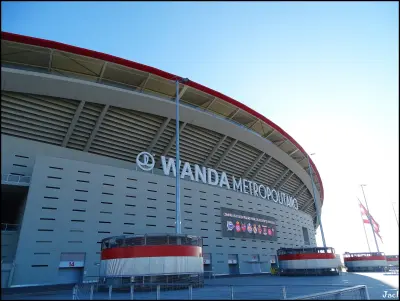 Cívitas Metropolitano (former Wanda Metropolitano)Venue
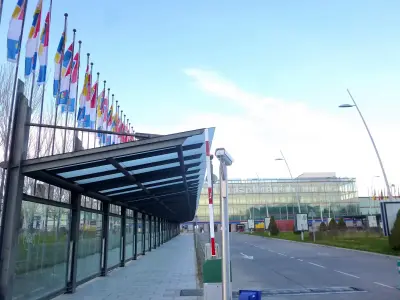 IFEMA Feria de MadridVenue
 Madrid RíoVenue
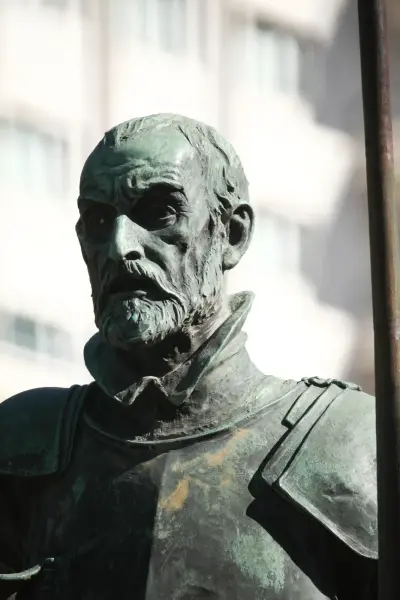 Plaza de EspañaVenue
 Plaza MayorVenue
 Prado MuseumVenue
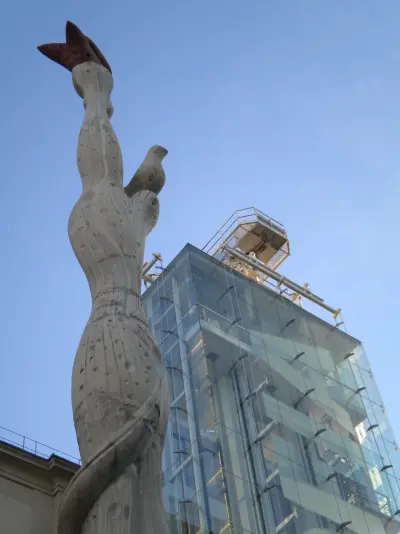 Reina Sofía MuseumVenue
 Retiro ParkVenue
 Royal Palace of MadridVenue
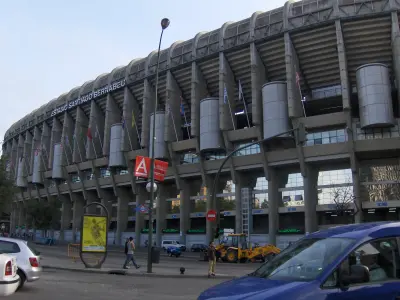 Santiago Bernabéu StadiumVenue
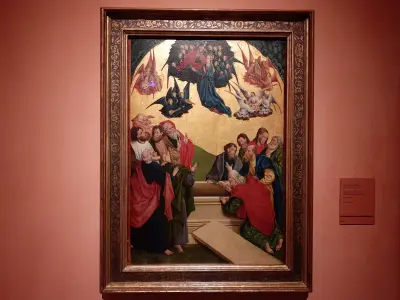 Thyssen-Bornemisza MuseumVenue
 Valle de los Caídos (Cuelgamuros)Venue