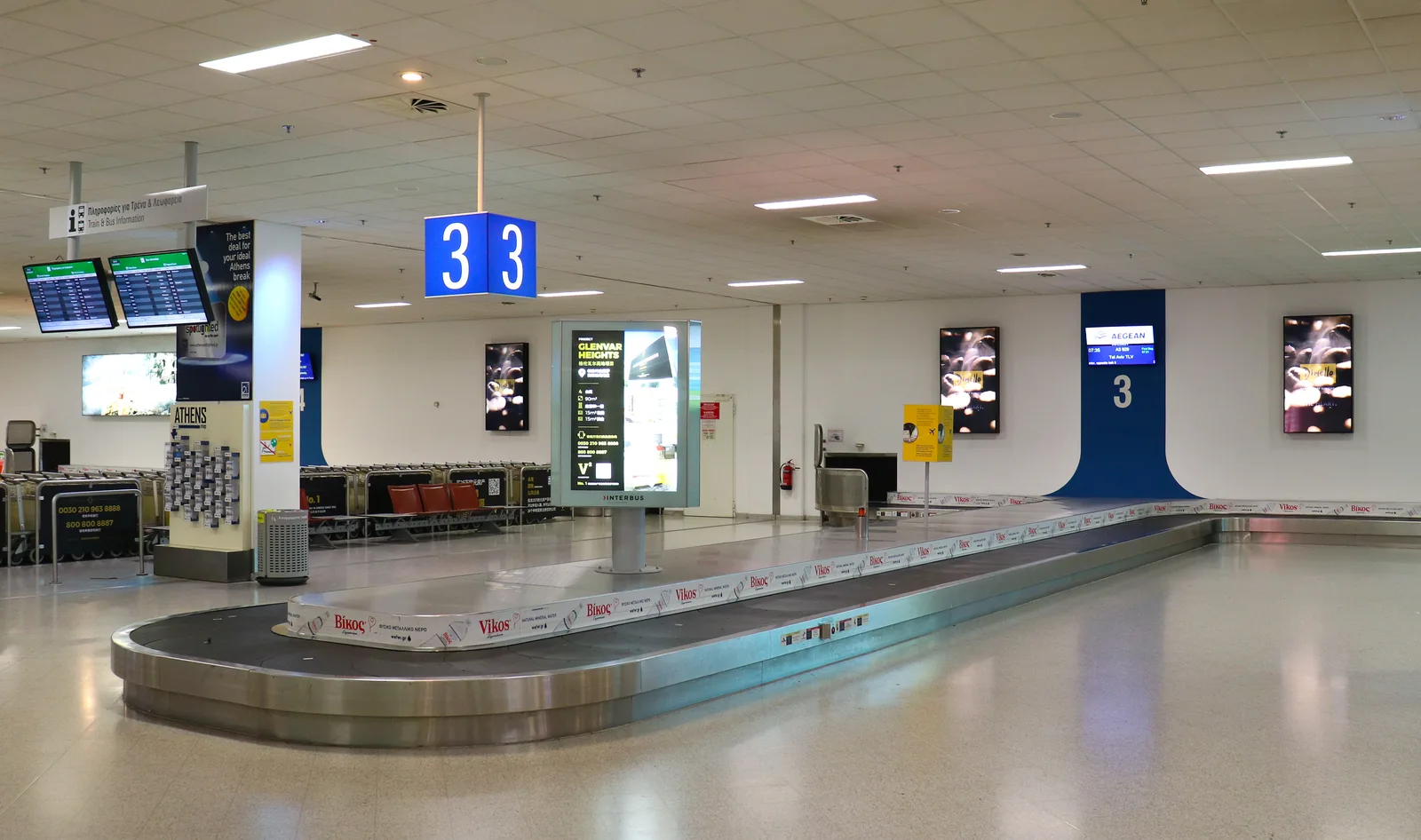
Madrid Airport Arrivals
Arriving at Madrid Airport (MAD) — formally Adolfo Suárez Madrid–Barajas Airport — is many travellers' first impression of Spain, and the airport handles that role at scale. As one of Europe's busiest hubs, MAD welcomes more than fifty million passengers annually, distributed across four terminals and a satellite that together form one of the continent's largest aviation complexes. For arriving passengers, the experience can range from a smooth fifteen-minute walk from gate to taxi to a longer journey through customs, baggage claim, and onward transport, depending on the terminal, the flight origin, and the time of day.
This guide is written for travellers who want to know what to expect when their plane touches down at Madrid Barajas — how the arrivals process actually works, where to go for transport into the city or onward connections, and what practical realities to plan around. The information here applies whether you're arriving on a short Schengen hop from Lisbon or a long-haul transatlantic flight from Latin America, with attention to the differences in procedure between flight types.
Madrid is a generally efficient airport for arrivals, but it's also large enough that a few minutes of preparation save significant time and frustration on the ground. The sections below cover live information sources, the specifics of each terminal's arrival hall, the standard procedures, and the transport options that wait beyond the doors.
What is Arriving at Madrid Barajas?
Madrid Barajas Airport is structured as five connected facilities — Terminals 1, 2, and 3 form one cluster on the older south side of the airport, while Terminals 4 and the T4 Satellite (T4S) form a separate, more modern cluster on the north. Most arrivals end at one of these terminals, with the specific destination determined by the airline and the type of route. Iberia and other Oneworld members operate primarily from T4 and T4S; many low-cost carriers, regional flights, and non-aligned international airlines arrive at T1, T2, or T3.
The arrival flow itself is similar across terminals: passengers disembark, walk to passport control if required, collect any checked baggage, pass through customs (typically a green-channel walk-through unless declaring), and emerge into the arrivals hall where transport options are concentrated. The full process from wheels-down to street can take anywhere from twenty minutes for a Schengen flight with cabin baggage only to ninety minutes for a long-haul flight with checked bags during a busy peak.
The arrivals halls are organised consistently — meeting areas with seating, information desks, currency exchange, ATMs, basic food options, and clearly signed transport routes. WiFi is available throughout the airport, and signage in all Madrid Airport terminals is provided in Spanish and English at minimum, with additional languages at key wayfinding points.
Live Arrivals Information — Where to Check
Real-time arrival data is essential when meeting someone, planning onward connections, or simply confirming a flight is running on schedule. The official source is AENA, Spain's airport operator, which maintains the authoritative arrival information for Madrid Barajas. The AENA website and mobile app both provide live status updates with terminal assignments, expected arrival times, and any delays or gate changes.
Third-party flight tracking services — FlightAware, Flightradar24, and the airline's own apps — typically show the same data but sometimes faster, particularly for delays caused by airspace conditions, slot restrictions, or weather. For meeting passengers, the AENA arrivals board is the most reliable source for terminal and time information; for understanding why a flight is late, third-party trackers often provide more context, including the position of the aircraft on its approach.
Inside the airport, monitor screens are located throughout the terminals, with banks of arrival displays in the public areas of each arrivals hall. The displays show flight number, origin, scheduled and actual arrival times, baggage belt assignment once baggage is being delivered, and any status messages such as "landed," "in customs," or "delayed."
For travellers connecting onwards, gate information for outbound flights is available on the same systems, with departure boards positioned in the airside areas. The gate assignment is typically published 30–60 minutes before departure, so connecting passengers should head toward the general area indicated and watch for final gate confirmation.
Arrival Terminals — Which Terminal for Which Flight Type
Identifying your arrival terminal in advance simplifies onward planning, particularly when meeting someone or arranging transport. Madrid Barajas distributes flights across terminals based on a combination of airline alliance, flight type (Schengen vs. non-Schengen), and operational factors.
Terminal 4 (T4) and Terminal 4 Satellite (T4S) handle Iberia and Oneworld member airlines (American, British Airways, Cathay Pacific, Finnair, Japan Airlines, LATAM, Qantas, Qatar Airways, Royal Jordanian, Sri Lankan, and others). T4 is for short-haul Schengen and a portion of long-haul flights, while T4S is dedicated to long-haul non-Schengen operations and connects to T4 by an underground automated people mover.
Terminal 1 (T1) handles non-Schengen international flights from airlines at MAD outside the Oneworld alliance — including Star Alliance carriers like Singapore Airlines and Lufthansa, SkyTeam carriers like Air France and KLM, and many independent international airlines. Terminal 2 (T2) primarily serves intra-Schengen flights from non-Oneworld carriers, including low-cost airlines like easyJet, Vueling regional services, and Air Europa for some routes. Terminal 3 (T3) is the smallest and currently handles a limited number of regional and charter flights, often closed to passenger arrivals during off-peak times.
The terminal assignment for a specific flight should be confirmed through the airline's booking confirmation, the airline's app, or the AENA arrivals board, as occasional reassignments occur due to operational changes.
Arrival Procedures for Schengen Flights
Schengen arrivals — flights from other countries within the Schengen Area — are the simplest in terms of formalities. Passengers do not pass through passport control on arrival, since the Schengen Agreement treats internal travel similarly to a domestic flight in terms of border procedures. After disembarking, passengers walk directly through the terminal toward baggage claim, following signage marked with the standard arrival icons.
Baggage claim halls in the Schengen sections of T2 and T4 are organised by belt number, displayed both on overhead screens and at each carousel. Belt assignments are typically posted 5–10 minutes after the flight lands. Once bags are collected, the route to the arrivals hall is straightforward — there is no customs inspection on Schengen flights, and the green-channel exit is a continuous walk into the public area.
For Schengen passengers travelling with cabin baggage only, the arrival process is often complete within fifteen to twenty minutes of touchdown. Walking distance from gate to public arrivals area varies by terminal but generally takes 5–10 minutes at unhurried pace, including any required transit between terminal sections.
Travel documents required on arrival are minimal — for EU and Schengen citizens, no document check; for non-EU travellers entering on a Schengen visa, that visa was checked at the original departure airport, and the entry into Spain is recorded electronically without an additional check at MAD.
Arrival Procedures for Non-Schengen and International Flights
Non-Schengen and international arrivals — including all flights from outside the Schengen Area, regardless of whether the origin is within the EU (such as flights from Ireland or Cyprus) or further afield — require passport control on arrival in Madrid. The process begins immediately after disembarking, with signage directing passengers to the immigration hall.
Passport control queues at MAD vary significantly by time of day and the cluster of arriving flights. EU citizens use dedicated lanes that are typically faster, while non-EU citizens use separate, longer queues. Wait times in non-EU lanes can range from 10 minutes during quiet periods to 60 minutes or more during peak arrival waves, particularly mid-morning when transatlantic flights cluster.
Spanish immigration officers will typically ask the standard questions: purpose of visit, length of stay, accommodation, and onward travel. Having documentation accessible — return ticket, hotel reservation, sufficient funds — speeds the process even if not always requested. After passport control, passengers proceed to baggage claim, then through customs, and into the arrivals hall.
For travellers connecting from non-Schengen flights to Schengen onward flights, the immigration process must be completed at the first point of entry into the Schengen Area — which is Madrid for many transatlantic and long-haul travellers. After clearing immigration, the connecting flight is treated as a domestic-equivalent journey within Schengen.
Passport Control and Immigration at MAD
Spanish immigration at Madrid Barajas operates within the broader European framework, applying Schengen rules consistently with other EU border points. The immigration halls are equipped with both manual passport control booths and automated e-gates for passengers with biometric passports.
EU and Schengen citizens, plus citizens of certain other countries with reciprocal agreements (such as the UK, US, and Canada under specific conditions), can typically use automated e-gates if their passport contains a biometric chip and they meet age requirements. E-gate processing takes approximately one minute per passenger and significantly reduces wait time during busy periods.
Non-EU passport holders requiring visas for Schengen entry should ensure their visa is valid for the date of arrival, that it covers Spain (most Schengen visas do, but some are country-specific), and that any required supporting documents are accessible. The Schengen entry stamp is placed in the passport on arrival, and the date of entry begins the count toward any 90-in-180-day Schengen stay limit applicable to visa-exempt travellers.
Travellers facing immigration questions or refusals should remain calm, answer truthfully, and request an interpreter or consular contact if needed. Spain provides standard rights to refused entrants, including the right to appeal and to contact their consulate.
Customs and Baggage Claim
Baggage claim at Madrid Barajas is generally efficient, though times vary by flight size and arrival timing. A typical wait from passport control to baggage delivery is 10–25 minutes, though long-haul flights with maximum capacity can occasionally extend this to 40 minutes or more during peak periods.
Belts are clearly marked, with display screens above each carousel showing the assigned flights. Trolleys are available free of charge in baggage claim areas, with collection points near the entrances and at periodic positions along the halls. Passengers travelling with oversized items, sports equipment, or strollers should look for the dedicated outsize baggage area, usually near the standard belts.
For lost or delayed baggage, the airline's lost baggage office is located within the baggage claim area of each terminal. File a property irregularity report (PIR) before exiting customs, as it may be more difficult to initiate the claim afterwards. Each airline has its own desk; staff can typically arrange delivery to a Madrid address once the bag is located.
Spanish customs follows EU rules for travellers from non-EU countries: tobacco and alcohol allowances, currency declaration thresholds (€10,000 or equivalent in cash), and prohibited items including certain food products from outside the EU. The green channel (nothing to declare) and red channel (something to declare) operate as in most international airports. Travellers entering from EU countries pass through a blue channel (intra-EU) with even more limited checks, mainly focused on goods exceeding personal-use quantities.
EU Passenger Rights and Delayed/Cancelled Arrivals
Passengers arriving in Madrid on flights that have been significantly delayed or cancelled have rights under EU Regulation 261/2004, provided the flight was operated by an EU carrier or arrived from outside the EU on an EU carrier. The regulation establishes compensation, care, and rerouting rights based on the length of delay and the distance of the flight.
For arrivals delayed by three hours or more, passengers may be entitled to monetary compensation ranging from €250 to €600, depending on flight distance, unless the delay was caused by extraordinary circumstances (such as severe weather, air traffic control restrictions, or political instability) outside the airline's control. Compensation claims are typically submitted to the airline within a year of the flight, with details of the delay and supporting documentation.
During the delay or after a cancellation, airlines are required to provide care — meals, refreshments, and accommodation if the delay extends overnight — proportional to the wait. Vouchers for food are sometimes distributed at the gate, while accommodation arrangements are usually organised through the airline's ground handling team.
For cancelled flights, passengers have the right to choose between rerouting on the next available flight (at the airline's expense) or a full refund. Travel insurance often provides additional coverage for expenses not covered by EU 261, including pre-booked onward travel that becomes unusable.
Connecting Flights — Minimum Connection Times and Transfer Process
Madrid is a major connection hub, and many arriving passengers continue to other destinations rather than entering the city. Minimum connection times (MCT) at MAD vary based on the combination of arrival and departure terminals, and the type of connection (Schengen-Schengen, Schengen-international, or international-international).
For Schengen-to-Schengen connections within the same terminal cluster, the published MCT is typically 45 minutes, though Iberia and other carriers often publish longer practical minimums for booking purposes. International-to-international connections in T4S generally require 60–75 minutes, with Iberia hub connections sometimes published as low as 50 minutes for tight Oneworld itineraries.
Connections involving terminal changes — particularly between T1/T2/T3 and T4/T4S — require additional time because passengers must take the inter-terminal shuttle bus, which runs every 5–10 minutes but can take 15–25 minutes including walking time. The published MCT for such connections is usually 90–120 minutes.
The transfer process itself depends on whether passengers stay airside or must re-enter through security. Connections within the same terminal between Schengen-tagged flights typically allow airside transit; connections between Schengen and non-Schengen require passing through immigration; some terminal-change connections require collecting and re-checking baggage.
Meeting Points, Transport Options, and Connectivity
Each terminal at Madrid Barajas has a designated public arrivals area where passengers exit the controlled zone and meeters can wait. Terminal 4 has the most spacious arrivals area, with a long open hall featuring multiple exits from baggage claim, restaurants and cafes overlooking the meeting area, and direct access to the inter-terminal shuttle, the Cercanías train, and various transport options. Terminals 1, 2, and 3 share a more compact arrivals layout, with separate but adjacent halls.
For meeting parties, agreeing in advance on a specific landmark — the central information desk, a particular café, or a specific exit — avoids confusion in busy halls. Mobile coverage and WiFi work well throughout, so coordination by phone is also reliable.
Madrid Barajas offers comprehensive onward transport. For getting to Madrid city center, the Metro is the cheapest option (€4.50–€5 with the airport supplement), with Metro Line 8 connecting all terminals to the Nuevos Ministerios station. The Cercanías train (line C-1) offers a faster connection from T4 to Atocha and Chamartín stations in 25–35 minutes for €2.60. Buses operate from each terminal to various destinations within and beyond Madrid.
For personalised transport, taxi services at MAD operate from designated ranks outside each terminal, with a fixed fare of €33 to anywhere within the M-30 inner ring road. Private transfers can be pre-booked for door-to-door service. Car rental at MAD is available from major international and Spanish providers.
Currency Exchange, ATMs, and Connectivity at Arrivals
Travellers arriving from non-Eurozone countries often need euros immediately for ground transport, tips, or small purchases. ATMs are widely available throughout each arrivals hall, operated by Spanish banks (Santander, BBVA, CaixaBank, and others) and offering competitive exchange rates when using foreign debit or credit cards. Withdrawal fees vary by issuing bank, but the exchange rate from ATMs is typically the most favourable available at the airport.
Currency exchange counters operated by Global Exchange and other providers are present in arrivals halls, offering immediate cash exchange but at less competitive rates than ATMs. These are most useful for travellers with large amounts of foreign currency or those whose home banks impose high foreign withdrawal fees.
Most Madrid taxi drivers accept card payments, including contactless and Apple/Google Pay, so cash is rarely strictly necessary on arrival. Public transport machines accept major credit and debit cards, including non-Spanish issuers.
Madrid Barajas provides free WiFi throughout the airport. The network "WiFi Aeropuerto Madrid" is unlimited in time and connection-friendly. For longer connectivity needs, Spanish SIM cards or eSIMs are available from several sources. Vodafone, Movistar, and Orange operate kiosks or shops in the arrivals areas. eSIM services like Airalo, Holafly, and others offer instant activation. EU and EEA travellers benefit from "roam like at home" rules.
Tips for First Arrivals at MAD and Late-Night Arrivals
For first-time arrivals at Madrid Barajas, allow more time than expected, particularly for non-Schengen arrivals during peak hours (mid-morning and early evening). The walk from gate to baggage claim in T4S can be 10–15 minutes; from baggage claim to the arrivals hall, another 5–10 minutes; and from the arrivals hall to a taxi or transport mode, another 5 minutes. Total from wheels-down to vehicle can easily be 60–90 minutes for international flights.
Trolleys are free at MAD, unlike at some airports — collect one if travelling with multiple bags, particularly for the longer walks in T4S. Restrooms are plentiful throughout, including immediately after immigration and before baggage claim if needed.
Avoid unofficial taxi solicitations inside or just outside the terminals. Authorised Madrid taxis are clearly marked, white with red diagonal stripes on the doors, and operate from designated taxi ranks. The fixed €33 fare to central Madrid eliminates negotiation and pricing disputes for the most common journey.
Late-night arrivals face a more limited but still functional environment. The Metro stops running around 01:30 and resumes at 06:00. The Express Airport Bus (Línea 203) runs 24 hours between Atocha and the airport, providing a reliable connection at any hour. Taxis are always available at the official ranks, regardless of arrival time. Hotels near the airport include several with 24-hour shuttles.
Useful Contacts on Arrival
AENA's general information line (+34 913 211 000 from outside Spain, 913 211 000 within Spain) provides 24-hour information about flight status, services, and general queries. The AENA app offers the same information in real time, with notifications for flight changes and lost item reporting.
For lost items found in airport common areas (not on the plane), AENA's Objetos Perdidos office handles claims. Items left on aircraft are handled by the operating airline directly. Reports can be filed in person at the airport or online for follow-up after departure.
For medical emergencies, dial 112 — Spain's general emergency number — which connects to ambulance, fire, and police services with multilingual operators. The airport has medical facilities staffed during operating hours; for urgent care outside these times, the nearest hospital is Hospital Universitario Ramón y Cajal, accessible by taxi within 15 minutes.
Tourist information desks operated by the Madrid tourism authority are present in the arrivals areas, offering maps, advice, and event information for visitors. These are particularly useful for first-time visitors to Madrid wanting orientation on neighbourhoods, transport, and attractions.
Need transport from Madrid Airport? See our transfer options.
You May Also Like
- Madrid Airport Terminals
- Madrid Airport Taxis
- How to Get from Madrid Airport to Madrid City Center
- Madrid Airport Transfers
Plan your trip — airport routes
 AranjuezCity
 ÁvilaCity
 CuencaCity
 El Escorial (San Lorenzo)City
 SegoviaCity
 ChuecaNeighborhood
 Gran VíaNeighborhood
 La LatinaNeighborhood
 LavapiésNeighborhood
 MalasañaNeighborhood
 MoncloaNeighborhood
 Puerta del Sol (City Centre)Neighborhood
 Salamanca districtNeighborhood
 ValdebebasNeighborhood
 Chamartín railway stationStation
 Nuevos MinisteriosStation
 Príncipe Pío stationStation
 Casa de CampoVenue
 Cívitas Metropolitano (former Wanda Metropolitano)Venue
 IFEMA Feria de MadridVenue
 Madrid RíoVenue
 Plaza de EspañaVenue
 Plaza MayorVenue
 Prado MuseumVenue
 Reina Sofía MuseumVenue
 Retiro ParkVenue
 Royal Palace of MadridVenue
 Santiago Bernabéu StadiumVenue
 Thyssen-Bornemisza MuseumVenue
 Valle de los Caídos (Cuelgamuros)Venue