How to Get from Madrid Airport to Atocha Train Station?
Atocha is Madrid's most important railway station, and for many travelers passing through the Spanish capital it is the real destination — not Madrid itself, but the connecting point for AVE high-speed trains to Barcelona, Sevilla, Valencia, Málaga, Córdoba, Zaragoza, and dozens of other cities across Spain. If your itinerary involves flying into Madrid Airport (MAD) and then taking an AVE train onward, the airport-to-Atocha leg is one of the most important logistical decisions of your trip. Get it right and the connection is smooth; get it wrong and you can miss your train, even when the airport-to-station distance is only twelve kilometers.
This guide walks through every option for getting from Madrid Barajas to Atocha — Cercanías commuter rail, the 24-hour Express Airport Bus, taxis, ride-hailing services, the Metro, and combinations of these. It covers journey times, costs, where to buy tickets, how much buffer time to allow, what to expect once you reach Atocha, and the practical details that separate a stress-free connection from a stressful one. Whether you are catching an AVE in two hours or have all afternoon to make your way across the city, the right answer depends on your specific circumstances.
The good news is that Atocha is one of the easier major-city train stations to reach from its airport. The Cercanías commuter train that connects them is direct, frequent, fast, and inexpensive — among the most efficient airport-to-rail-station links in Europe. The bad news, if there is any, is that it serves only Terminal 4. Travelers arriving at Terminals 1, 2, or 3 need to either take the inter-terminal shuttle bus to T4 first or use a different transport mode entirely. The sections below cover all of these scenarios.
Atocha as Madrid's Main Rail Hub
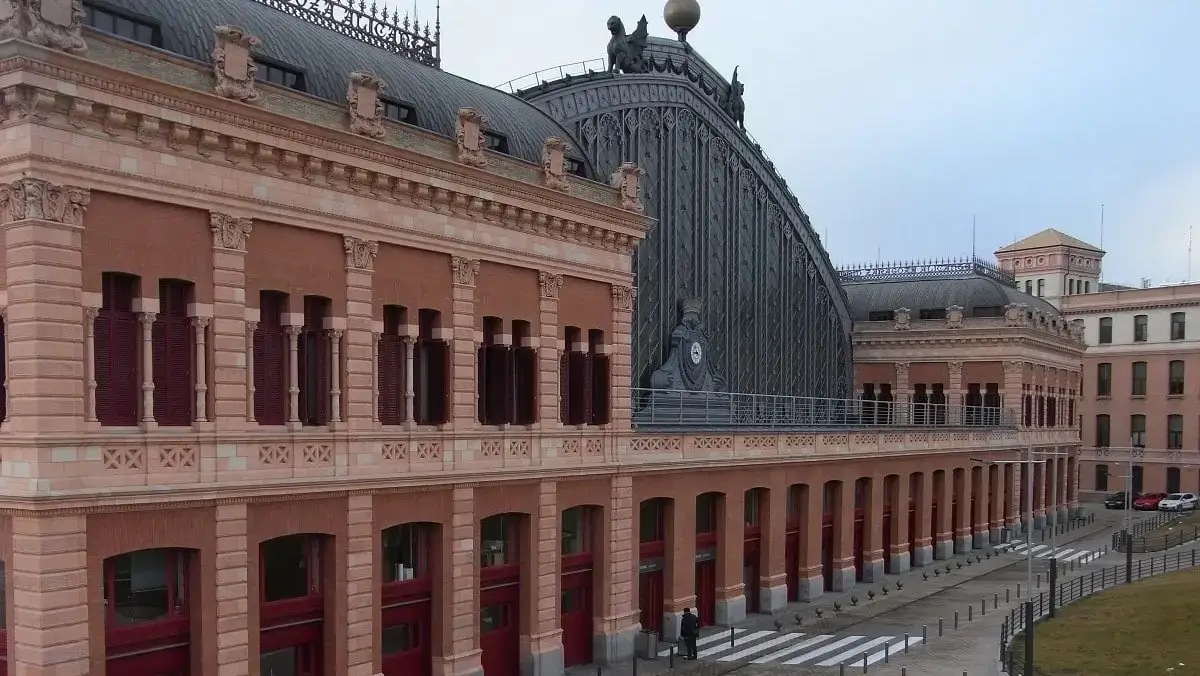
Estación de Madrid Atocha — usually just called Atocha — is the largest railway station in Spain by passenger volume and the principal terminal for the country's high-speed rail network. The station sits in the south-central part of Madrid, walking distance from the Prado Museum, the Reina Sofía art museum, and the Retiro park. It is split functionally into two sides: Atocha Cercanías, which serves commuter trains around the Madrid metropolitan area, and Atocha AVE / Larga Distancia, which serves long-distance trains including AVE high-speed services and Talgo trains.
The Cercanías side is where the airport train arrives. The high-speed side, which sits a short walk away through the connecting concourse, is where most travelers continue their journey. Both sides share the same station name and address but have distinct entrances, ticketing areas, and platforms, so knowing which side you need on arrival saves time. Long-distance Renfe ticket counters are on the AVE side; Cercanías tickets and machines are throughout both sides. The famous tropical garden inside the original 1892 station building sits between the two halves and is worth a quick visit if your schedule allows.
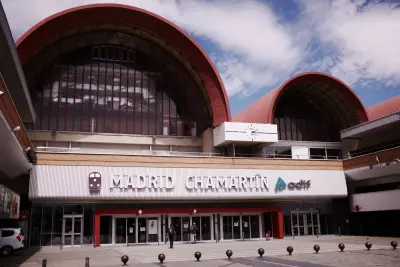
From Atocha, AVE high-speed trains run to Barcelona (typically 2 hours 30 minutes), Sevilla (2 hours 30 minutes), Valencia (1 hour 50 minutes), Málaga (2 hours 30 minutes), Córdoba (1 hour 45 minutes), and Zaragoza (1 hour 15 minutes). Slower long-distance trains and regional services serve dozens of additional destinations. For travelers using Madrid as a transit point for trips elsewhere in Spain, Atocha is almost always the station you need — though Chamartín, Madrid's other main station, handles some northern services and is also reachable from the airport.
Cercanías C-1 from Terminal 4 — The Most Efficient Option
The most direct way to reach Atocha from Madrid Airport is the Cercanías train, specifically Line C-1. This line connects Terminal 4 of the airport directly to Atocha, with a journey time of roughly 25 to 30 minutes depending on intermediate stops. Trains run approximately every 30 minutes during the day, with reduced service overnight. The fare is €2.60 — by a wide margin the cheapest airport-to-Atocha option — and tickets are available from automated machines or ticket counters at the T4 Cercanías station.
The T4 Cercanías station is located one level below the main terminal arrivals area. Follow signs marked "Cercanías" or with the rail icon. The walk from the arrivals hall takes about 5 to 7 minutes at a normal pace, and elevators and escalators serve travelers with luggage. The station is well-signed in Spanish and English. Once on the platform, the C-1 line is the only Cercanías service that stops there, so there is no risk of taking the wrong train — every train arriving at the T4 platform goes either toward Atocha (toward central Madrid) or back away from the airport.
Importantly, Cercanías C-1 does not serve Terminals 1, 2, or 3. If you are arriving at one of these terminals, you must first take the free inter-terminal shuttle bus to T4 — a journey of 15 to 20 minutes including waiting time — and then walk to the Cercanías station within T4. This adds 25 to 30 minutes to your overall journey compared to T4 arrivals. For travelers arriving at T1, T2, or T3 with luggage and limited time, the inter-terminal shuttle plus Cercanías combination is often less attractive than alternatives like the Express Bus or a taxi.
Express Airport Bus — The 24/7 Alternative
The Express Airport Bus (Línea Exprés Aeropuerto, route number 203) runs 24 hours a day between Madrid Airport and Atocha station. The route stops at all four terminals (T1, T2, T3, and T4), making it the most flexible option for travelers regardless of arrival terminal. The journey to Atocha takes 35 to 40 minutes during off-peak hours and can extend to 50 to 60 minutes during peak traffic. The fare is €5, paid in cash or by contactless card directly to the driver.
The Express Bus is the obvious choice for several scenarios. First, for travelers arriving at T1, T2, or T3, it eliminates the inter-terminal shuttle step entirely — you simply walk out of arrivals and find the Express Bus stop directly outside. Second, for late-night and early-morning arrivals when Cercanías service is reduced or stopped, the bus is the only public transport option that runs reliably around the clock. Third, for travelers whose AVE departs from Atocha within 90 minutes of landing, the bus often provides a more predictable journey time than juggling the inter-terminal shuttle and Cercanías connection.
The Express Bus stops at clearly marked points outside arrivals at each terminal — look for the dedicated yellow Express Aeropuerto signage. The bus arrives every 15 to 35 minutes depending on the time of day; midnight to 6 AM service runs roughly every 35 minutes, while peak hours see service every 15 minutes. The final stop at Atocha is the Cercanías side of the station, with a short indoor walk to the AVE departure halls. For travelers concerned about missing onward connections, this option deserves serious consideration despite its slightly longer journey time.
Taxi — The Most Direct, Door-to-Door Option
Madrid taxis offer a fixed fare of €33 for journeys between the airport and central Madrid, including Atocha station. The fare applies regardless of the number of passengers, time of day, or amount of luggage, and it is set by city ordinance rather than meter. Madrid Airport taxis operate from designated ranks outside arrivals at each terminal, and journey time to Atocha is typically 25 to 40 minutes depending on traffic — comparable to Cercanías during off-peak times but potentially significantly slower during the morning and evening rush hours.
For travelers with substantial luggage, families with young children, or those arriving very late or very early, the taxi is often the most practical option. The fixed fare eliminates surprises about pricing, and the door-to-door service drops you directly at Atocha's main entrance rather than requiring any transit walking. The cost-per-person calculation also favors taxis for groups of three or four — a €33 fare divided among four travelers is about €8.25 each, similar to or less than the Express Bus and not much more than Cercanías.
One important consideration: Atocha is on the southeast side of central Madrid, and the standard taxi route from the airport via the M-30 ring road is reasonably direct. However, peak-hour traffic on the M-30 can occasionally cause delays exceeding what the Cercanías would experience. If your AVE departure window is tight and you are traveling during morning or evening rush, the train may be more reliable than the taxi despite the additional walking. Otherwise, the taxi is the most stress-free option for getting directly to Atocha with minimal navigation.
Metro Alternative — With a Transfer
The Madrid Metro can also reach Atocha from the airport, though the journey requires a line change and is generally slower than the Cercanías or Express Bus options. Metro Line 8 connects the airport (with stops at T1/T2/T3 and T4) to Nuevos Ministerios, where travelers can transfer to Line 1 (the light blue line) southbound for several stops to Atocha Renfe station. Total journey time is typically 35 to 50 minutes including the transfer and walking, with a fare of approximately €5 including the airport supplement.
The Metro option is rarely the best choice for travelers heading specifically to Atocha. The Cercanías is faster, cheaper, and requires no transfer for those at T4. The Express Bus runs to Atocha directly without any line change. The taxi is door-to-door. The Metro adds value primarily when travelers have additional Madrid Metro travel as part of their itinerary that day — for example, planning to visit central Madrid before continuing to Atocha — or when their hotel or other destination is more convenient by Metro than by other modes.
If you do choose the Metro, note that the airport supplement of €3 must be paid in addition to a regular Metro ticket, and the system uses a contactless travel card called the Tarjeta Multi that you purchase at Metro machines. The transfer at Nuevos Ministerios involves a substantial walk underground, and luggage handling on Metro stairs and escalators can be challenging. Plan accordingly if traveling with multiple bags.
How does Journey Times and Costs compare?
The four main options for getting from MAD to Atocha have different trade-offs in time, cost, and convenience. The Cercanías C-1 from T4 is the fastest and cheapest at 25-30 minutes for €2.60, but only works directly for T4 arrivals and runs less frequently overnight. The Express Bus 203 takes 35-40 minutes and costs €5, but serves all terminals and runs 24/7. Taxis cost €33 fixed fare and take 25-40 minutes depending on traffic, providing door-to-door service for any number of passengers. The Metro takes 35-50 minutes for around €5, requires a transfer, and is rarely optimal for an Atocha-only journey.
For most T4 arrivals heading to Atocha, the Cercanías is the natural first choice — fast, cheap, and direct. For T1/T2/T3 arrivals, the Express Bus typically beats the Cercanías-via-shuttle combination both in time and simplicity. For groups of three or more, families with young children, or travelers with significant luggage, the taxi provides the best balance of cost and convenience. For overnight arrivals, the Express Bus is the only public transport option that runs reliably.
The right choice also depends on how much buffer time you have for your AVE connection. With three or more hours between landing and AVE departure, all options work well and the cheapest is reasonable. With 90 minutes to two hours, the Cercanías from T4 or the Express Bus work but require minimal delays. With less than 90 minutes, the taxi is often the only realistic option — though even then, AVE missed-connection rebooking can be expensive, and the safer choice is to allow more buffer rather than cutting timing tight.
Where to Buy AVE Tickets at Atocha?
Once you reach Atocha, the next task is boarding your AVE train. If you have already booked your ticket online or via the Renfe app, you can proceed directly to the AVE security area, which is on the long-distance side of the station. AVE tickets are scanned electronically at the security checkpoint, and the boarding process resembles a streamlined airport security check — passport ID is verified, bags pass through X-ray, and passengers walk to the platform. The whole process typically takes 5 to 10 minutes during off-peak times and up to 20 minutes during peak periods.
If you need to buy a ticket on arrival, several options exist. Renfe ticket counters in the long-distance hall sell AVE tickets for any train, with multilingual staff and longer wait times. Self-service machines throughout Atocha accept all major credit cards, are available in English, and typically have shorter queues than counters. The Renfe website and mobile app (Renfe Cercanías and Renfe Ticket) sell the same tickets, often at the same prices, and let you skip queues entirely — useful if you have time to book before reaching the station or while waiting on Cercanías.
Buying AVE tickets in advance is almost always cheaper than buying at the station. Promo and Promo + tickets, available 1-2 months before the journey, can be 50% to 70% cheaper than walk-up Flexible fares. Last-minute pricing is set by demand and can be expensive, particularly for popular Friday afternoon and Sunday evening trains. If you have certainty about your travel plans, booking ahead saves significant money. If you are uncertain, the cheaper Flexible tickets at least allow rebooking without penalty.
AVE Ticket Types and Classes
Renfe's AVE tickets come in several classes and fare types. The cabin classes are Turista (standard), Turista Plus (similar to economy plus on aircraft), Preferente (business class with broader seats and a meal service), and Premium (top tier with lounge access at major stations and full dining). Within each cabin class, fare types include Promo (cheapest, non-refundable, non-changeable), Promo + (cheap with limited flexibility), Flexible (full refund and change rights), and various combinations. The cheapest Promo Turista fares to Barcelona can be as low as €40-50 if booked early; walk-up Flexible Preferente can exceed €200.
For most travelers, Turista or Turista Plus is sufficient for the typical 1.5 to 2.5 hour journey times of Spanish AVE routes. Preferente makes more sense for longer journeys (Madrid-Málaga, Madrid-Barcelona) where the broader seat and complimentary refreshments add real value. Premium is rarely worth its price for one-time travelers but can be useful for frequent business travelers who use Renfe lounges regularly.
Some routes offer additional services beyond standard AVE — including Avlo (Renfe's low-cost AVE brand with no-frills service and very low Promo prices), Iryo (a private competitor to Renfe operating on the Madrid-Barcelona corridor), and Ouigo (the Spanish operation of the French SNCF low-cost brand). These competing services use the same high-speed lines as Renfe AVE but with different pricing and service models. For price-conscious travelers, comparing all three operators on routes like Madrid-Barcelona and Madrid-Sevilla can yield substantial savings.
AVE Connections to Barcelona, Sevilla, Valencia, and Málaga
The four most popular AVE routes from Atocha are Madrid-Barcelona, Madrid-Sevilla, Madrid-Valencia, and Madrid-Málaga. All four are well-served with multiple daily departures, comfortable rolling stock, and journey times competitive with or faster than flying when airport transit times are considered. Madrid-Barcelona AVE runs hourly during peak periods and takes about 2 hours 30 minutes, with terminus at Barcelona Sants. Madrid-Sevilla similarly takes 2 hours 30 minutes with terminus at Sevilla Santa Justa. Madrid-Valencia takes around 1 hour 50 minutes, terminating at Valencia Joaquín Sorolla. Madrid-Málaga takes about 2 hours 30 minutes to Málaga María Zambrano.
For travelers arriving at MAD and connecting to one of these AVE routes, the realistic minimum total transit time from landing to AVE boarding is around 90 minutes to 2 hours, depending on terminal of arrival, baggage handling speed, and the chosen transport mode to Atocha. For non-Schengen international arrivals (passport control adds 30+ minutes), the minimum stretches to 2.5 hours. For tight connections, allowing 3 hours between landing and AVE departure provides reasonable safety margin.
Other significant AVE routes from Atocha include Madrid-Córdoba (1 hour 45 minutes), Madrid-Zaragoza (1 hour 15 minutes), Madrid-Albacete (1 hour 30 minutes), and Madrid-Granada (3 hours 20 minutes via newer lines). Most of these connect onward to other AVE or regional services, allowing complex multi-leg Spanish itineraries to be planned around Atocha as the central hub.
How much time should you allow?
How much time to allow between landing at MAD and boarding an AVE train depends on several factors: terminal of arrival, type of flight (Schengen vs international), checked or carry-on luggage only, transport mode chosen for Atocha, time of day, and AVE ticket flexibility. Conservative recommendations help avoid the unpleasant scenario of a missed connection, where rebooking can cost €50 to €200 depending on ticket type and the next train's availability.
For T4 Schengen arrivals with carry-on only and a flexible AVE ticket, 90 minutes between landing and AVE departure is a workable minimum: 30 minutes to clear arrivals, 30 minutes for Cercanías journey (including walk), 15 minutes at Atocha for security, and 15 minutes buffer. For T4 international arrivals with checked baggage, expand this to 2 hours minimum, accounting for passport control and luggage waiting time. For T1/T2/T3 arrivals with the inter-terminal shuttle complication, allow at least 2 hours regardless of flight type.
For non-refundable Promo AVE tickets, where missing the train means losing the ticket entirely, expanding these buffers by another 30 to 60 minutes is wise. The cost of a longer wait at Atocha — which has decent dining, retail, and waiting facilities — is small compared to the cost of a missed AVE. For early-morning AVE departures combined with international arrivals, sometimes the most realistic option is overnight at one of the hotels near MAD on the prior evening, with an early-morning airport transfer to Atocha.
Accessibility on Cercanías and at Atocha
Cercanías C-1 trains are largely accessible for passengers with reduced mobility, with low-floor platforms at T4 station and most intermediate stations along the line, plus designated wheelchair spaces on board. Travelers requiring assistance should contact Renfe's Atendo service in advance — at least 12 hours before travel — by phone or via the Renfe website. Atendo provides wheelchair assistance, escort through stations, help with luggage, and boarding assistance free of charge.
Atocha station itself is fully accessible, with elevators connecting all platforms to the main concourse, accessible toilets, lowered information counters, and wheelchair-friendly routes throughout the station. The transition from Cercanías platforms to the long-distance AVE hall is also accessible by elevator. Atendo staff at Atocha can assist with the entire journey from arrival platform to AVE boarding when arranged in advance.
For travelers with hearing or visual impairments, Atocha provides induction loops at major information desks, audio announcements throughout the station, visual flight-style display screens for AVE departures, and tactile floor markings at platform edges. Service animals are welcome throughout the station and on Cercanías and AVE trains with appropriate documentation.
Luggage Tips for the Journey
Luggage handling between MAD and Atocha differs significantly by transport mode. Cercanías has dedicated luggage spaces near doors but no formal storage system — bags travel with passengers and must be lifted onto the train. Trolleys are not available at Cercanías platforms. The Express Bus has a luggage compartment underneath the bus accessed at boarding, though smaller bags can be kept inside the cabin. Taxis can carry up to four passengers with reasonable luggage in trunk and seat space.
For travelers with multiple heavy bags, the choice of transport often comes down to luggage convenience: taxis are easiest, the Express Bus is moderate, and Cercanías requires the most physical effort. The walk from arrivals to Cercanías platforms at T4 includes both elevators and escalators, but the platform-to-train transition involves a short step that can be challenging with rolling luggage.
At Atocha, luggage carts are available free of charge throughout the station, and luggage lockers (consigna) operate near the long-distance hall for travelers who want to leave bags during a Madrid stopover before continuing onward. AVE trains have generous luggage racks in vestibules and overhead bins above seats; carry-on bags fit easily, and larger checked-style bags fit in the dedicated luggage areas at the end of each car.
Late-Night Options When Cercanías Service Is Limited
Cercanías C-1 service operates roughly from 5:30 AM to 12:30 AM daily, with reduced frequency during late-night and early-morning hours. Outside these times, the train is not an option. Late-night and overnight arrivals at MAD with onward AVE connections (perhaps for an early-morning AVE departure) need alternative transport to Atocha — or to plan for overnight accommodation in the Atocha area or near the airport.
The Express Bus 203 runs 24 hours and is the primary public transport option overnight. Service intervals stretch to 35 minutes during overnight hours, and the journey time can occasionally extend if road conditions are poor. The bus drops at Atocha's main entrance, and the station itself remains open 24 hours for transit passengers, though most retail and dining services close overnight. The first AVE trains typically depart from Atocha around 5:30 to 6:00 AM, so overnight arrivals can wait at the station for an early train.
Taxis are always available and can be the most practical late-night choice, particularly for travelers with luggage who want to avoid carrying bags on a bus. The fixed €33 fare applies day and night for journeys to central Madrid including Atocha. Pre-booked private transfers operate around the clock and offer the additional advantage of a named driver waiting at arrivals — useful when navigating an unfamiliar airport in the middle of the night.
For tight overnight connections — say, arriving at MAD at 1 AM with an AVE departing at 6 AM — sleeping at the airport in a Plaza Premium-style lounge or napping at Atocha's waiting areas are both possible but uncomfortable options. Many travelers prefer to book a budget hotel near Atocha or near the airport with an early-morning transfer arranged in advance, even at the cost of a hotel night. The trade-off between cost and rest is personal, but options exist for nearly any overnight scenario.
Connecting to AVE high-speed trains? Get in touch.
You May Also Like
- Madrid Airport Train (Cercanías)
- Madrid Airport Transfers
- Getting to Toledo from MAD
- Getting to Madrid City Center
Plan your trip — airport routes
 AranjuezCity
 ÁvilaCity
 CuencaCity
 El Escorial (San Lorenzo)City
 SegoviaCity
 ChuecaNeighborhood
 Gran VíaNeighborhood
 La LatinaNeighborhood
 LavapiésNeighborhood
 MalasañaNeighborhood
 MoncloaNeighborhood
 Puerta del Sol (City Centre)Neighborhood
 Salamanca districtNeighborhood
 ValdebebasNeighborhood
 Chamartín railway stationStation
 Nuevos MinisteriosStation
 Príncipe Pío stationStation
 Casa de CampoVenue
 Cívitas Metropolitano (former Wanda Metropolitano)Venue
 IFEMA Feria de MadridVenue
 Madrid RíoVenue
 Plaza de EspañaVenue
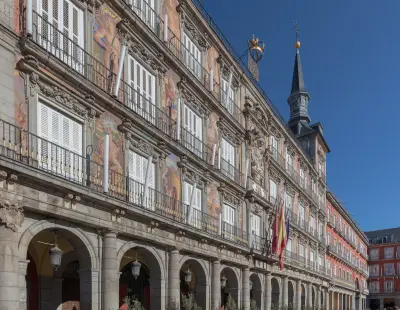 Plaza MayorVenue
 Prado MuseumVenue
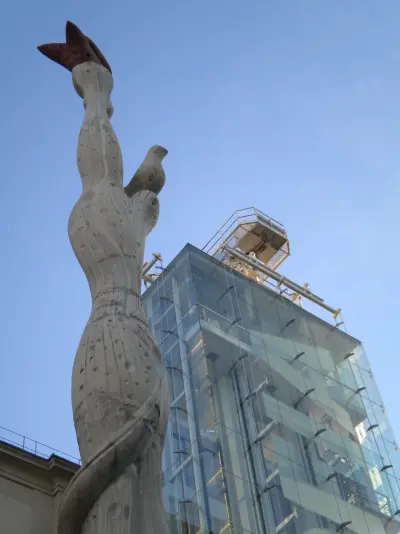 Reina Sofía MuseumVenue
 Retiro ParkVenue
 Royal Palace of MadridVenue
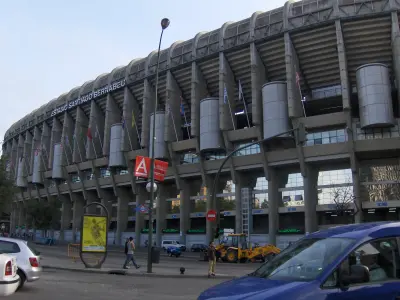 Santiago Bernabéu StadiumVenue
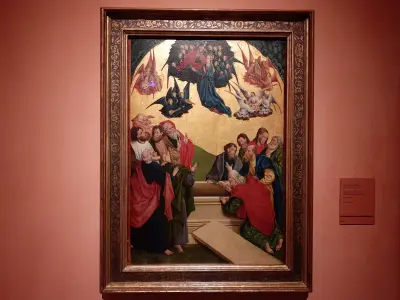 Thyssen-Bornemisza MuseumVenue
 Valle de los Caídos (Cuelgamuros)Venue