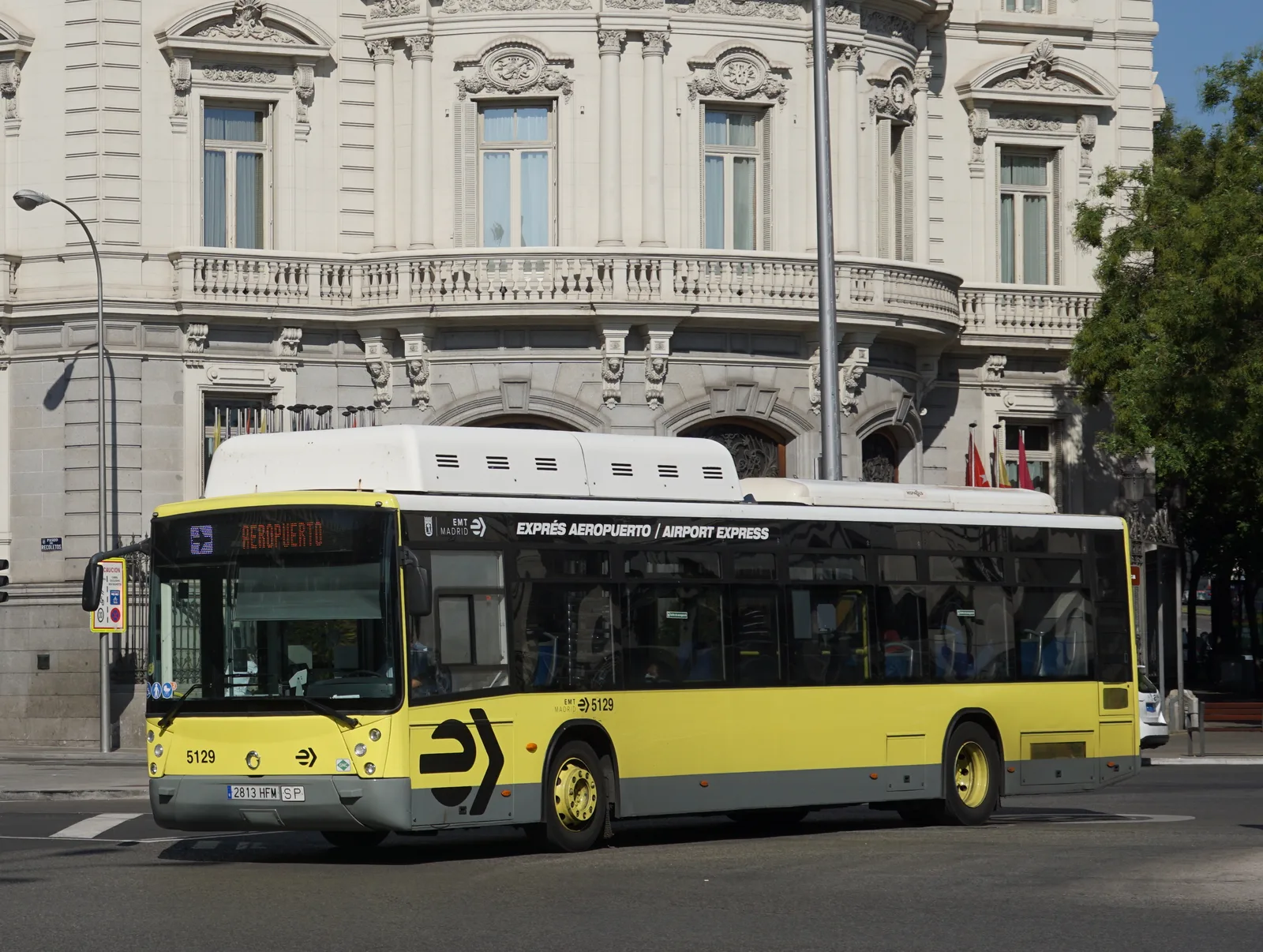
Madrid Airport Express Bus (Express Aeropuerto)
| Detail | Value |
|---|---|
| Line | EMT Line 203 |
| Price | €5 one-way |
| Service hours | 24/7 (every 15–35 minutes) |
| Stops | Cibeles, O'Donnell, Atocha (night-time) |
| Duration | 30–45 min to Atocha |
| Best for | Late night / early morning arrivals when Metro is closed |
Madrid Airport Shuttle Bus — Complete Guide to Bus Connections at MAD
Buses are one of the most flexible and often most affordable ways to move between Madrid Airport (MAD) and the rest of the city, the surrounding region, and even other Spanish cities. The bus network around Adolfo Suárez Madrid–Barajas Airport is more extensive than many travelers realize. It includes dedicated express services, regular city buses, free inter-terminal shuttles, long-distance coaches, and private hotel shuttles — each with its own purpose, route, and pricing structure. Knowing which option fits your situation can save you money, time, and frustration.
This guide covers every major bus service available at Madrid Airport, with practical detail on routes, fares, schedules, and pickup points. Whether you're arriving for a short city break and want a budget-friendly ride to your hotel, transferring between Madrid's airport terminals, heading on to a Spanish provincial city, or comparing buses against the Metro and Cercanías rail, the information here will help you choose the right service and use it confidently.
Madrid Airport's bus network is well-organized but spread across multiple operators — AENA-coordinated services, EMT (the Madrid municipal bus operator), Renfe-affiliated coaches, ALSA, and various private companies. Understanding which company runs which line clarifies why fares, schedules, and pickup locations vary so much between options that all look superficially similar.
What is Bus Services at Madrid Airport?
The bus services connecting Madrid Airport to other destinations fall into five main categories. The first is the Express Airport Bus (Línea Exprés Aeropuerto), the dedicated 24-hour service running between MAD and central Madrid via Atocha station. The second is regular EMT (Empresa Municipal de Transportes) city buses — line 200 to Avenida de América, line 101, line 822 to Coslada, and a few other routes — which serve airport workers and budget-conscious travelers alike.
The third category is the free inter-terminal shuttle bus, an internal AENA service that loops continuously between Terminals 1, 2, 3, and 4 (and the satellite T4S where applicable). The fourth is long-distance coach services operated by ALSA and other carriers, connecting MAD directly to Spanish cities like Toledo, Ávila, Segovia, Zaragoza, and beyond. Finally, many airport-area hotels operate their own private shuttles for guests, often free or included in the room rate.
For travelers comparing options, buses offer specific advantages over alternatives like taxis, ride-share, or rail. They are typically the cheapest way to reach the city center, especially for solo travelers without much luggage. They are accessible at any hour thanks to the 24-hour Express Bus. They run frequently enough that wait times rarely exceed 15–20 minutes during operating hours. And they let you arrive directly at major transport hubs — Atocha for onward AVE high-speed trains, Avenida de América for connections to the Metro and intercity buses, central streets for hotels in the Sol or Cibeles area.
The trade-offs are also real. Buses can be slower than the Metro or Cercanías during peak Madrid traffic, particularly the journey into the city center along the M-11 and M-30 motorways. They have less luggage space than rail, which matters when you're traveling with multiple large bags. And inexperienced travelers can find the multi-operator system confusing — buying the wrong ticket type or boarding the wrong line is a common pitfall.
Express Airport Bus (Línea Exprés / Línea 203) — 24-Hour Service to Atocha
The Express Airport Bus, officially called the Línea Exprés Aeropuerto and operated by EMT under route number 203, is the flagship bus service at Madrid Airport. It runs 24 hours a day, every day of the year, providing reliable access between the airport and central Madrid no matter how late your flight arrives or how early you need to depart. For many travelers — especially those arriving on overnight flights, departing before the Metro starts running, or simply preferring a direct route to the train station — this is the single most useful airport bus.
The Express Bus runs between the airport and Atocha railway station during the day, and between the airport and Plaza de Cibeles overnight (when Atocha is closed to normal traffic). It stops at all four passenger terminals — T1, T2, T3, and T4 — and at two intermediate points (O'Donnell during the day, Plaza de Cibeles always). The full journey from the airport to Atocha typically takes 35–40 minutes, though this can extend to 50 minutes or more during peak Madrid traffic.
Fares are €5 per passenger when you board, payable in cash to the driver or by contactless credit card. There are no transfers, no discounts for round trips, and no booking required — you simply walk up to the bus, pay, and ride. Children under four travel free; children four to twelve pay full fare on this service. Reduced-mobility passengers pay the same rate, with the bus offering a wheelchair-accessible boarding ramp at every stop.
During the day, buses run roughly every 15 minutes from each terminal. At night (between approximately 23:30 and 06:00), frequency drops to every 35 minutes. The night service goes only to Plaza de Cibeles, where you can transfer to a night bus (búho) or a taxi to reach other Madrid neighborhoods. For early-morning flights or late-night arrivals, the 24-hour availability is what makes this bus uniquely valuable compared to alternatives like the Metro (closed 01:30–06:00) or Cercanías (limited overnight service). Many travelers think of the Express Bus as the natural counterpart to a Madrid Airport taxi — significantly cheaper, slightly slower, and just as reliably available around the clock.
EMT Bus 200 — Avenida de América Connection
EMT Bus 200 is the second-most-used airport bus among travelers, connecting Terminals 1, 2, 3, and 4 to Avenida de América, a major transport interchange in the eastern part of central Madrid. From Avenida de América, you can transfer to Metro lines 4, 6, 7, and 9, the Madrid intercity bus station, or onward EMT routes that fan out across the city.
The journey from the airport to Avenida de América takes approximately 35–45 minutes depending on traffic. Buses run from approximately 05:00 in the morning until 23:30 at night, with frequencies of about every 15–20 minutes during peak hours and every 25–30 minutes during off-peak. Unlike the Express Bus, the 200 does not run 24 hours.
The fare structure differs from the Express Bus. The Línea 200 uses standard EMT urban fares: €1.50 for a single ticket purchased on the bus (cash or contactless), or you can use the integrated public transport pass (Abono Transportes) if you have one. Travelers who plan to use Madrid public transport extensively often find that buying a 10-trip Metrobus voucher (€12.20) or a 1- or 7-day tourist transport card (€8.40 to €70) provides better value than paying single fares.
The 200 is particularly useful for travelers heading to neighborhoods served by Metro lines 4 (toward Argüelles or Diego de León), 7 (toward Pueblo Nuevo or Pitis), or 9 (toward Vicálvaro or Mirasierra) — these are areas that are less directly accessed by the Express Bus or by Metro Line 8 from the airport. It also serves passengers arriving from intercity buses at the Avenida de América station who want to continue to or from the airport.
EMT Bus 101 and Other Local Routes
Beyond the headline express and 200 services, EMT operates several additional local bus lines connecting the airport area to specific Madrid neighborhoods. Line 101 runs between Terminals 1, 2, 3 and the Canillejas neighborhood in northeastern Madrid, where it connects to Metro Line 5. Line 200, in addition to its airport role, also extends into other parts of the city as part of its longer route. There are also night routes that complement the daytime services.
These secondary routes serve a more local function than the main airport buses, and they are used primarily by airport employees, residents of nearby neighborhoods, and budget travelers heading to specific districts. Tourists rarely use them as primary airport transport, but they can be useful for travelers staying in the eastern or northeastern Madrid suburbs and wanting a single-fare connection to the airport.
Schedules for these services are similar to other EMT urban routes — early morning to late night, with frequencies of 20–40 minutes depending on the line and time of day. Fares match the standard EMT structure: €1.50 single, with various pass options available.
For travelers staying outside central Madrid, checking whether their accommodation neighborhood is served by one of these local airport buses can sometimes provide a faster and more direct route than transferring through the city center. The EMT website (emtmadrid.es) has a route planner that lets you input your origin and destination to see all available options.
EMT Bus 822 — Coslada and Eastern Madrid Connection
Line 822 runs between Terminals 1 and 2 and the suburban municipality of Coslada, located east of Madrid. While Coslada is not a major tourist destination, it is home to a significant population of travelers' family members, expat residents, and longer-stay business visitors, making this line useful for a specific subset of airport users.
The 822 connects to Metro Line 7 at the Henares station and to Cercanías commuter rail (Line C-2 and C-7) at Coslada Central. Through these connections, passengers can reach further destinations in eastern Madrid, including parts of the Corredor del Henares industrial corridor and historical towns like Alcalá de Henares.
Operating hours are similar to other EMT lines, running from early morning until late evening with intermediate frequencies. Fares are standard EMT urban rates. The journey from the airport to Coslada typically takes 25–35 minutes depending on traffic.
For most international visitors to Madrid, the 822 is not the first choice for airport transport. But for travelers staying in the eastern suburbs, with family in Coslada, or attending events at venues in the Henares corridor, it is a direct, affordable option that avoids the need to detour through central Madrid.
Free Inter-Terminal Shuttle Bus
The free inter-terminal shuttle is one of the most useful services at Madrid Airport, particularly for connecting passengers and anyone who finds themselves at the wrong terminal. Operated by AENA (the Spanish airport authority) at no cost to passengers, it runs continuously between all four passenger terminals — T1, T2, T3, and T4 — with the loop also extending to T4S, the satellite terminal connected to T4 via an underground people-mover.
The shuttle has two parallel services: a landside loop (anyone can board, no ticket required) and an airside loop (only available to passengers with valid boarding passes who have already passed through security). The landside service stops at marked terminal exits at ground level, with clear signage in Spanish and English directing passengers to the shuttle stops. The airside service serves connecting passengers and is available from designated transfer-passenger areas inside the secure zone.
Frequency is roughly every 5–10 minutes during peak hours (06:00–22:00) and every 15–20 minutes during quieter overnight periods. The full loop between T1 and T4 takes approximately 15–20 minutes, depending on traffic between terminal areas. The journey time means that passengers connecting between T1/T2/T3 and the more distant T4/T4S complex should always allow 60+ minutes for the transfer, plus any time needed for security re-screening or baggage handling.
For travelers connecting through Madrid on different airlines or alliances — for example, arriving on a Star Alliance flight at T1 and continuing on an Iberia flight from T4 — the inter-terminal shuttle is essential. Combined with the free underground people-mover between T4 and T4S, it makes the airport's geographically separated terminals function as a single integrated facility, even though the physical distance between T1 and T4 is over 2.5 kilometers. For more on terminal transfers, see our guide to Madrid Airport transfers.
ALSA and Long-Distance Coach Services to Other Cities
Madrid Airport is a stop for long-distance coach services connecting to several Spanish cities, operated primarily by ALSA, Spain's largest intercity bus company, with additional operators serving specific routes. These services let travelers go directly from the airport to provincial cities without needing to transfer through central Madrid, which can save considerable time, especially for trips to nearby destinations.
The most popular long-distance route from MAD is to Toledo, the historical city 70 kilometers south of Madrid. ALSA operates direct coaches from Terminal 4 to Toledo's main bus station, with journey times of around 90 minutes and fares around €10–€15 each way. Compared to the alternative of taking the Cercanías or Express Bus to Atocha and then the AVE high-speed train to Toledo, the direct bus is slower but can be cheaper and avoids the transfer through central Madrid.
Other long-distance coach services from MAD connect to Ávila, Segovia, Zaragoza, and seasonal destinations. Schedules and frequencies vary by route — some run multiple times daily, others only a few times a day or only on weekends. Booking tickets in advance through the ALSA website or app is recommended, especially during summer and Spanish public holidays when buses can sell out.
For travelers planning multi-city Spanish trips that include flying into Madrid, combining long-distance coaches from MAD with flights into Madrid can sometimes be more economical than connecting flights to smaller airports. The downside is the longer overall journey time and the need to manage luggage at the bus station. Most Spanish intercity coaches have luggage compartments with reasonable capacity, but they are not as spacious as airline holds.
Hotel Shuttle Buses — Free Service for Guests
Many hotels in the Barajas neighborhood and along the airport perimeter operate free shuttle buses for their guests. These shuttles typically run on a schedule every 30–60 minutes, taking guests between the hotel and the airport terminals, often without requiring a reservation. For travelers staying at one of these hotels, the shuttle is the most convenient and economical way to reach the airport, particularly for early-morning flights when the Metro is closed.
Hotels with established airport shuttle service include the Meliá Madrid Aeropuerto (the only hotel directly adjacent to T4), the Hilton Madrid Airport, AC Hotel by Marriott Aeropuerto Madrid, the NH Madrid Barajas, and several Holiday Inn properties in the immediate airport area. These shuttles typically pick up at all four terminals at designated stops, though the schedules and pickup points vary by hotel — always confirm details with your specific hotel before relying on the shuttle.
For travelers staying at hotels slightly farther from the airport — properties along the M-11 motorway or in the broader Barajas district — the situation varies. Some hotels run their own shuttles; others contract with shared shuttle companies that combine guests from multiple properties. A few hotels rely on the Metro (Line 8) and provide guests with simple instructions on using public transport. When booking, look for properties that explicitly advertise "free airport shuttle" rather than vaguer language like "near the airport."
Reservations for hotel shuttles are sometimes required, especially during peak times or for the smaller hotels with limited shuttle capacity. The standard practice is to confirm shuttle pickup with the hotel reception or front desk a day in advance, providing your flight number and arrival/departure time. Most hotels are flexible with last-minute changes but appreciate notice when possible.
Fares and Payment Methods Across Services
Bus fares at Madrid Airport vary significantly by service and operator, and understanding the differences helps you choose the most economical option for your needs. The Express Airport Bus charges €5 single, payable in cash or by contactless card to the driver. EMT urban routes (200, 101, 822, etc.) charge €1.50 single for boarding-time payment. The free inter-terminal shuttle is no charge. ALSA long-distance coaches range from €10 to €30+ depending on destination.
For travelers planning to use Madrid public transport extensively beyond just the airport bus, the integrated transport passes offer better value. The Abono Transportes monthly pass costs €54.60 for unlimited use of Metro, EMT buses (including airport routes 200/101/822 but not the Express), and Cercanías within Zone A; €60.65 includes Zone B1 (covering Coslada). The 10-trip Metrobus voucher (€12.20) provides individual rides at €1.22 each — significantly cheaper than €1.50 single tickets, though it doesn't cover the Express Bus.
For tourists, the Tourist Transport Pass (Abono Turístico) covers all public transport including the Metro and EMT buses for 1 to 7 days, priced from €8.40 (1 day, Zone A) to €70 (7 days, Zone T including all of Madrid region). The Express Bus (Línea 203) is a separate product not covered by these passes — you always pay €5 individually for that service.
Payment methods accepted on Madrid airport buses include cash (euros only), contactless credit and debit cards (Visa, Mastercard, American Express), Apple Pay and Google Pay, and the integrated transport cards mentioned above. The trend across all EMT services is toward contactless payment, with cash becoming less common among regular users. ATMs are available at all terminals if you arrive without euros.
Journey Times and Departure Points by Terminal
Understanding journey times between the airport and major Madrid destinations helps with planning and managing expectations. The Express Bus from any terminal to Atocha takes 35–40 minutes during normal traffic, expanding to 50–60 minutes during peak hours (typically 08:00–10:00 and 17:00–19:00). EMT Line 200 to Avenida de América takes 35–45 minutes. Direct routes to nearby suburbs (Coslada via 822, Canillejas via 101) take 25–35 minutes.
Departure points at each terminal are clearly marked with bus shelters and route signage. At Terminal 1, the airport buses depart from the curb at the ground-floor exit (Planta 0). At Terminal 2, the same setup exists at the dedicated bus area outside arrivals. Terminal 3 has a smaller bus area shared with T2. Terminal 4's bus stops are slightly more distributed: the Express Bus (203) and EMT 200 depart from a designated area near the public arrivals exit, with clear signage. The free inter-terminal shuttle stops are positioned at all four terminals at the same general curbside locations.
For arriving passengers, the bus stops are reached by following the standard exit signs from baggage claim, then proceeding outside the terminal building to the bus area. Walking distance is typically 2–5 minutes from baggage claim to the bus stops, depending on the terminal. Free WiFi covers the bus areas at all terminals for travelers using mobile apps to plan their journey.
For departing passengers, the bus stops are accessed from the same general areas — outside the public departure halls. If you're arriving at the airport by bus and need to find your check-in counter, follow signs from the bus stop to your specific airline's check-in area, which can be located on different floors depending on the terminal.
Accessibility on Madrid Airport Buses
All Madrid airport buses operated by EMT (including the Express 203, the 200, 101, 822, and other routes) are fully accessible to passengers with reduced mobility. The buses feature low-floor boarding, wheelchair-accessible ramps, designated wheelchair spaces, and audio/visual stop announcements. Drivers are trained to assist passengers boarding and alighting with wheelchairs, mobility aids, or service animals.
For passengers needing additional assistance — such as boarding help with multiple bags, support for visually impaired travelers, or communication with hearing-impaired passengers — the AENA airport assistance program (PRM, Persons with Reduced Mobility) coordinates between the terminal staff and the bus operator to provide door-to-door support. Passengers should request this assistance at least 48 hours in advance through their airline, which then transmits the request to the airport.
The free inter-terminal shuttle is similarly accessible, with low-floor boarding and wheelchair spaces. Hotel shuttle buses vary in accessibility — most major chain hotels operate accessible shuttles, but smaller properties may have older vehicles that are less suitable for wheelchair users. When booking, confirm shuttle accessibility specifically.
ALSA long-distance coaches also include accessible vehicles, though the proportion of accessible buses on any given route varies. ALSA's website allows passengers to request an accessible vehicle when booking, with confirmation typically provided within 24 hours.
Luggage on the Bus
Luggage policies on Madrid airport buses vary by service, and travelers with significant baggage need to plan accordingly. The Express Airport Bus (203) accommodates standard-sized luggage in racks at the front of the bus and in the overhead compartments. Each passenger can bring one large suitcase plus a carry-on; additional bags may be possible depending on space, but during peak times the bus can become crowded with luggage.
EMT urban buses (200, 101, 822, and others) have less dedicated luggage space than the Express Bus. They are designed primarily for daily commuters rather than airport travelers, so passengers with multiple large bags can find them tight. Solo travelers with a single suitcase generally manage fine; families with multiple bags may prefer alternatives like the Express Bus or a taxi.
The free inter-terminal shuttle has dedicated luggage space and is well-suited to passengers transferring between terminals with full luggage. ALSA long-distance coaches have luggage holds underneath the bus, with space for one or two large bags per passenger included in the fare.
Hotel shuttles typically have luggage space adequate for the number of guests they're designed to carry, though buses serving the larger hotels can fill up during busy periods. If you have unusual luggage — sports equipment, musical instruments, oversized items — it's worth contacting the hotel or operator in advance to confirm space.
Schedules and Frequencies
The Express Airport Bus (203) operates 24 hours a day. Daytime frequency is 15 minutes between buses; nighttime (approximately 23:30–06:00) is every 35 minutes. The day route runs to Atocha; the night route runs to Plaza de Cibeles only. Service is reliable year-round including holidays.
EMT Line 200 operates from approximately 05:00 to 23:30, with 15–20 minute peak frequency and 25–30 minute off-peak frequency. Saturdays and Sundays have reduced frequency. EMT Lines 101, 822, and others have similar daytime-only operation, with each line having its own specific schedule that depends on demand patterns.
The free inter-terminal shuttle runs continuously throughout airport operating hours, with reduced frequency overnight. The shuttle service is rarely interrupted except for occasional maintenance.
ALSA long-distance coaches follow scheduled departures for each route. Toledo service is approximately hourly during peak times, every 1.5–2 hours during off-peak. Other routes (Ávila, Segovia, etc.) have less frequent service — typically 4–8 departures per day. Holiday schedules can differ; checking the ALSA website or app before traveling is essential.
Tips for First-Time Bus Users at Madrid Airport
For travelers using Madrid Airport buses for the first time, several practical tips can smooth the experience. First, identify which service you actually need before arriving at the bus stop. The Express Bus and the EMT 200 leave from the same general area but go to different destinations and cost different amounts. Knowing which one you want avoids the awkwardness of standing at the wrong stop or boarding the wrong vehicle.
Second, have €5 ready for the Express Bus or €1.50 for EMT urban routes. While contactless payment works, having exact change speeds boarding and avoids any awkwardness if a card reader is temporarily down. Cash registers vary by bus, but most accept exact-fare cash without issues.
Third, allow extra time during peak Madrid traffic. The journey to Atocha or Avenida de América can take 50–60 minutes during morning and evening rush hours, compared to 35–40 minutes off-peak. Building in a 60-minute buffer for any time-sensitive connection is wise.
Fourth, download the EMT Madrid app (free on iOS and Android) before traveling. The app provides real-time bus location and arrival predictions, route planning, and basic information in English. The Madrid Public Transport (Crtm) app and Google Maps also have reliable airport bus information.
Fifth, watch out for the Express Bus's split route — during the day it goes to Atocha, but the night service (after roughly 23:30) only goes to Plaza de Cibeles. Late-arriving travelers heading to areas served by Atocha (such as the AVE high-speed train connections to other Spanish cities) need to factor in that they'll arrive at Cibeles instead and need to take a taxi or wait for morning Cercanías service.
How does Buses with Metro and Cercanías compare?
Choosing between bus, Metro, and Cercanías depends on your destination, time of day, luggage, and budget. The Madrid Metro (Line 8) connects all four terminals to Nuevos Ministerios in central Madrid, with onward Metro connections from there. Journey time is approximately 15 minutes from the airport to Nuevos Ministerios, plus transfer time. Fare is €4.50–€5 with the airport supplement. Operating hours are 06:00–01:30, with 24-hour service unavailable.
The Cercanías commuter train (Line C-1) connects only Terminal 4 to Atocha and Chamartín stations, with journey times of approximately 25–30 minutes to Atocha. Fare is €2.60. Service runs from approximately 06:00 to 22:30, with limited overnight service. For travelers connecting to AVE high-speed trains at Atocha, this is often the fastest option.
Compared to these alternatives, the Express Airport Bus (Línea 203) costs more (€5 vs €2.60 Cercanías or €4.50–5 Metro) but offers 24-hour availability, accommodates luggage more comfortably than the Metro, and goes directly to Atocha (the Metro requires a transfer). EMT bus 200 is the cheapest option (€1.50) but has the longest journey time and least luggage space.
For most travelers heading to central Madrid during normal daytime hours, the choice comes down to: (a) Metro Line 8 if your destination is near a Line 8 station or transfer point, (b) Cercanías if you're starting at T4 and going to Atocha or Chamartín, (c) Express Bus if you're going to Atocha and have luggage or it's outside Metro hours, (d) EMT 200 if you're on a budget and have minimal luggage. For comparison of all the options including getting to Madrid city center, our dedicated guide covers more detail.
Need help? Reach out
You May Also Like
- Madrid Airport (MAD)
- Madrid Airport Terminals
- Madrid Airport Transfers
- Madrid Airport Train
Plan your trip — airport routes
 AranjuezCity
 ÁvilaCity
 CuencaCity
 El Escorial (San Lorenzo)City
 SegoviaCity
 ChuecaNeighborhood
 Gran VíaNeighborhood
 La LatinaNeighborhood
 LavapiésNeighborhood
 MalasañaNeighborhood
 MoncloaNeighborhood
 Puerta del Sol (City Centre)Neighborhood
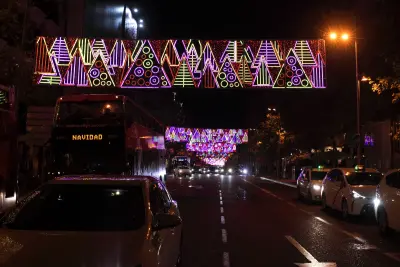 Salamanca districtNeighborhood
 ValdebebasNeighborhood
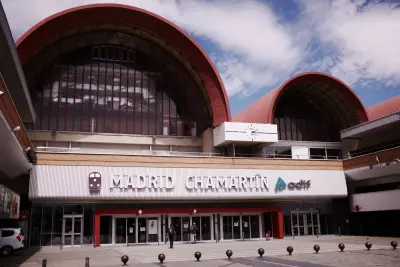 Chamartín railway stationStation
 Nuevos MinisteriosStation
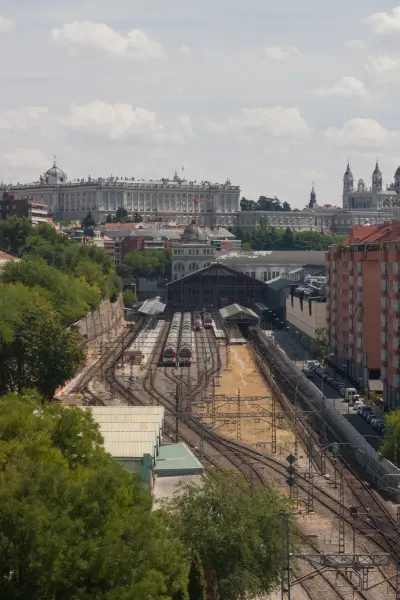 Príncipe Pío stationStation
 Casa de CampoVenue
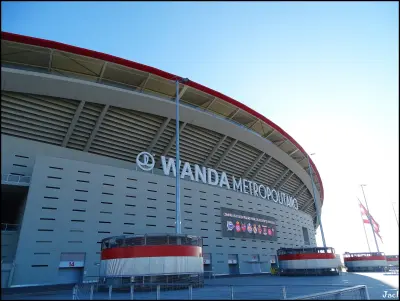 Cívitas Metropolitano (former Wanda Metropolitano)Venue
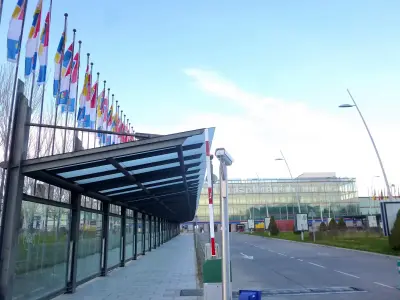 IFEMA Feria de MadridVenue
 Madrid RíoVenue
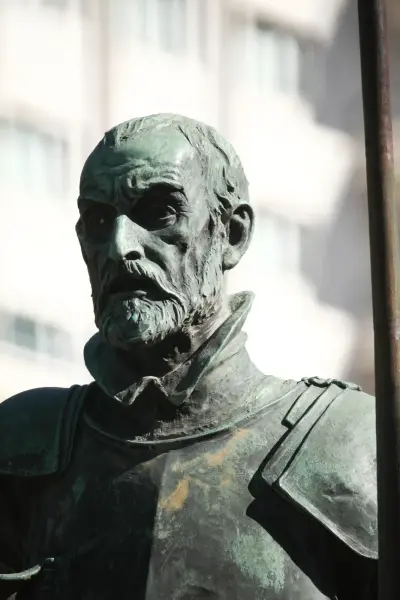 Plaza de EspañaVenue
 Plaza MayorVenue
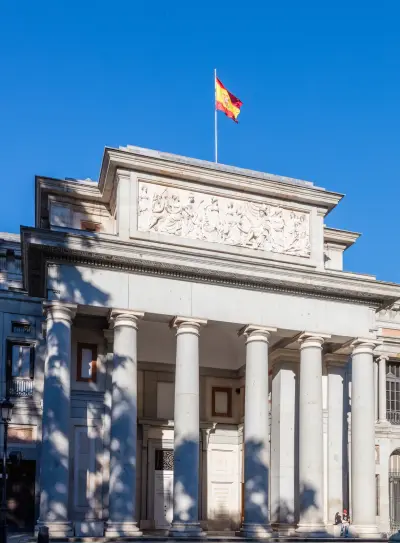 Prado MuseumVenue
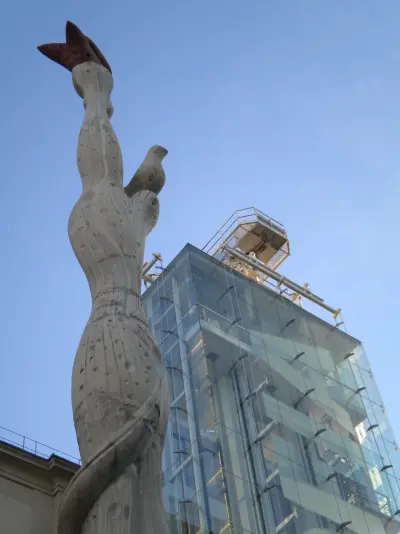 Reina Sofía MuseumVenue
 Retiro ParkVenue
 Royal Palace of MadridVenue
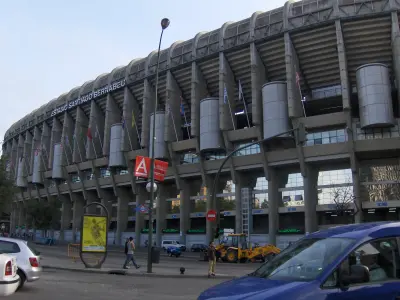 Santiago Bernabéu StadiumVenue
 Thyssen-Bornemisza MuseumVenue
 Valle de los Caídos (Cuelgamuros)Venue