Madrid Travel Guide

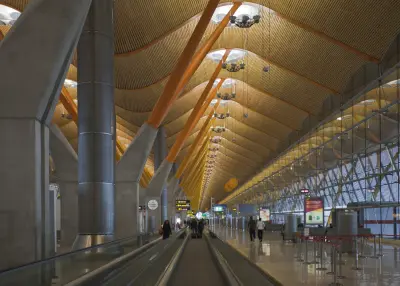
Madrid is one of Europe's most vibrant capital cities, a place where Spanish history, art, food, and contemporary urban life come together in a way that rewards both quick visitors and travelers who linger for weeks. For most international visitors, the journey begins at Madrid Airport (MAD), the city's principal aviation gateway located about twelve kilometers northeast of the historic center. Whether you arrive on a long-haul flight from Latin America, a short hop from another European city, or a domestic Spanish connection, your first impressions of the city are shaped by how smoothly you move from the airport into Madrid itself.

This travel guide is written for arriving and departing visitors who want a clear, practical overview of Madrid as a destination. It covers the essentials — when to come, where to stay, what to see, how to get around — alongside the sort of contextual detail that helps you make sense of the city's rhythm. The guide is also organized to dovetail with our airport-specific pages, so you can move easily from broad city orientation to the specific logistics of arrival, transfers, and onward travel within Spain.

Madrid is a city that quietly impresses rather than overwhelming. It does not compete with Paris for grandeur or with Barcelona for distinctive architecture, but it offers something perhaps more valuable: a deeply lived-in capital where the daily texture of life is genuinely good, the food is consistently excellent, and the cultural infrastructure ranks with the very best in the world. Visitors who give Madrid time tend to leave with a particular fondness for the place, often surprised at how much they enjoyed a city they had perhaps underestimated before arriving.

Welcome to Madrid — Overview of the City

Madrid sits in the geographic heart of Spain, perched on a high plateau roughly 650 meters above sea level. The elevation gives the city its distinctive light, its sharp blue summer skies, and the cold dry winters that locals and visitors quickly learn to expect. As Spain's capital and largest city, Madrid is home to roughly 3.3 million people within the city limits and over 6.7 million across the metropolitan area, making it the second-largest urban region in the European Union after Paris.

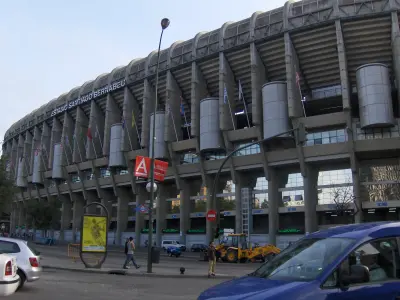
The city is the political, economic, and cultural center of Spain. The royal family, the national government, the central bank, the major media institutions, and the headquarters of most large Spanish companies are based here. So is the Real Madrid football club, whose Santiago Bernabéu stadium draws fans from around the world, and so are several of the most important art museums on the continent. For a city that is not particularly old by European standards — Madrid only became the Spanish capital in 1561 — it has accumulated an extraordinary density of cultural and institutional weight.

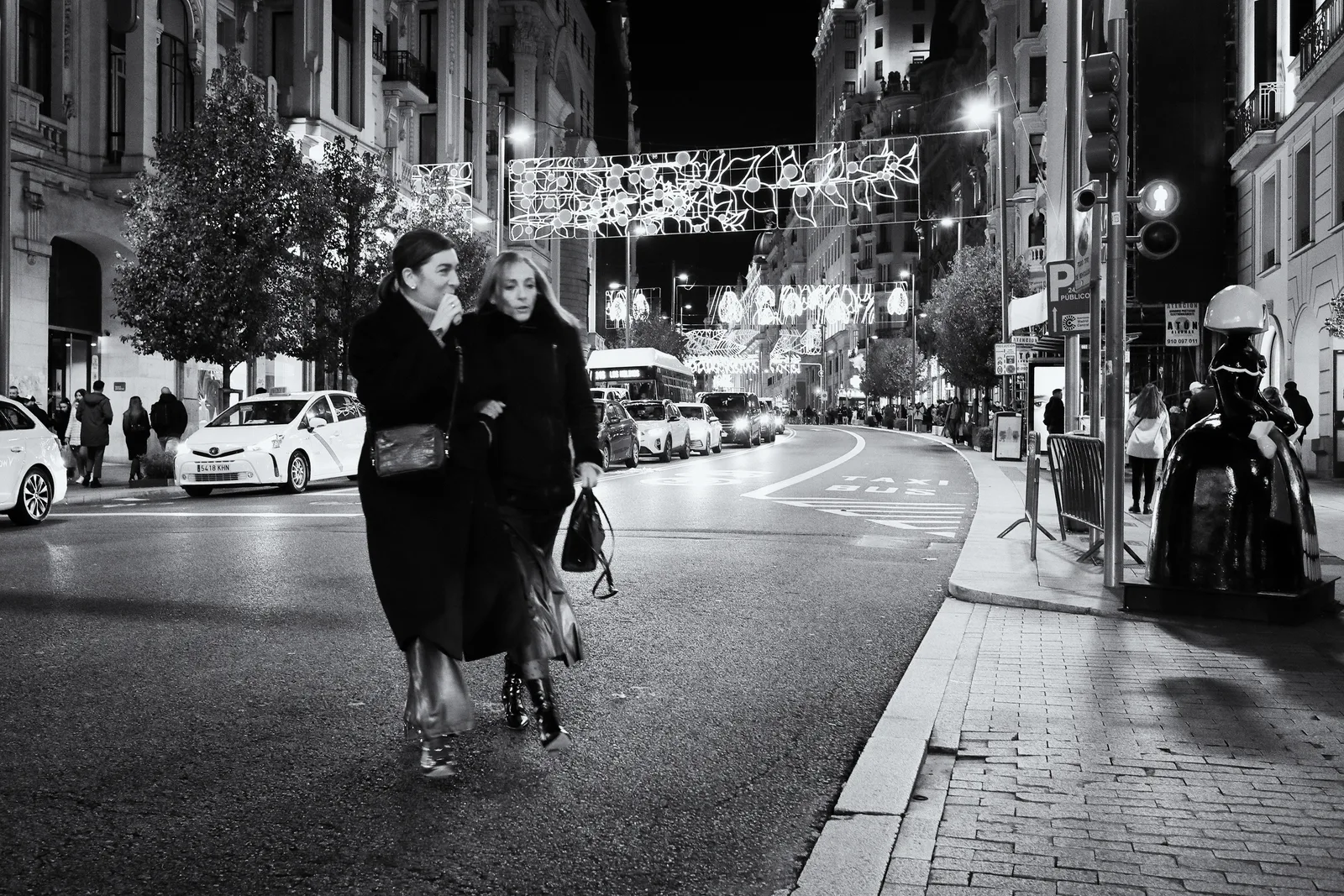
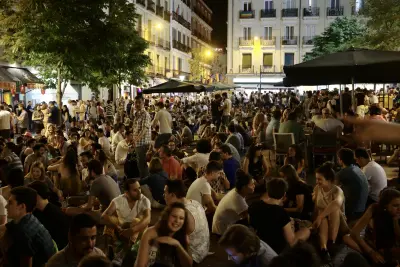
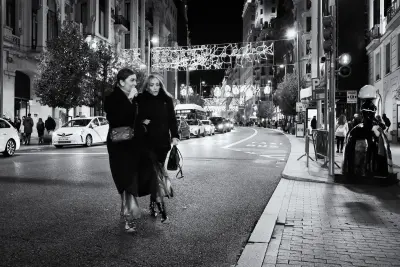
What strikes most first-time visitors, however, is not the institutional gravity but the daily life. Madrid has long evening hours, an extraordinarily dense café culture, well-used public spaces, and a particular openness to strangers that makes the city feel welcoming rather than guarded. People eat late, stay out later, and treat the streets as a living room. Understanding this rhythm is the key to enjoying Madrid on its own terms rather than trying to impose a schedule borrowed from cities that operate on different clocks.

Quick Facts About Madrid

For practical orientation, a few baseline facts help. Madrid's official language is Spanish (Castilian), and while English is increasingly common in tourist areas, hotels, and major restaurants, knowing a few phrases in Spanish makes daily interactions noticeably warmer. The currency is the euro, and Spain has been in the eurozone since the currency's introduction. Card payment is widely accepted, including for small amounts, and contactless payments are nearly universal in central Madrid.

The climate is continental Mediterranean — hot dry summers with daytime highs often exceeding 35°C in July and August, and cold winters with regular frost and occasional snow in December through February. Spring and autumn are the most pleasant times to visit, with mild temperatures and longer daylight hours. Madrid has more days of sunshine than most European capitals, with around 2,800 hours per year, and rainfall is concentrated in spring and autumn rather than spread evenly through the year.

Time zone is Central European Time (CET, UTC+1) with daylight saving in summer (CEST, UTC+2). Madrid is one hour ahead of London, six hours ahead of New York in winter, and nine hours behind Tokyo. Spain is on the same time zone as Berlin, Paris, and Rome, even though geographically it sits closer to the Greenwich meridian — a quirk dating from the Franco era that has since been debated periodically but never changed.

Power outlets are the standard European two-pin Type C and Type F variety, operating at 230V/50Hz. Visitors from the UK, US, and other regions with different plug standards will need adapters. Tap water in Madrid is excellent — the city's water supply, drawn from the Sierra de Guadarrama mountains, is among the best in Europe and is routinely drunk from the tap by locals.

When to Visit — Seasonal Considerations?

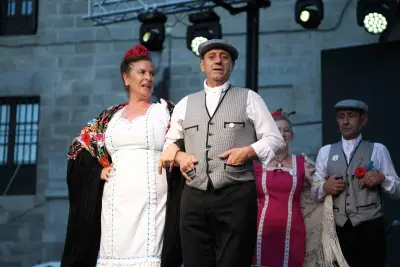
The best time to visit Madrid depends on what you are looking for. Spring (April through early June) offers mild temperatures, long days, blooming gardens in the Retiro and Casa de Campo, and a packed calendar of cultural events. The May 2 holiday celebrating Madrid's regional identity (Dos de Mayo) and the San Isidro festival in mid-May are highlights of the local calendar, with concerts, processions, and traditional dress on the streets.

Autumn (September through November) is similarly excellent, with comfortable temperatures, harvest-season cuisine, and the cultural and academic calendars in full swing. Hotel rates tend to be more reasonable than during peak summer, and the city feels less stressed by tourism than in July and August. Many Madrid residents return from August holidays in early September, restoring the everyday rhythm that makes the city distinctive.

Summer (late June through August) is hot — often genuinely uncomfortably so during the worst heatwaves, when daytime temperatures can exceed 40°C. Many residents leave the city for the coast or the mountains during August, and some restaurants and shops close. The flip side is that Madrid empties out, the streets feel calmer, evenings (when temperatures drop) are particularly pleasant for outdoor dining, and several outdoor cultural festivals run through July and August. If you do visit in summer, plan to start early, take the siesta seriously, and stay out late.

Winter (December through February) is colder than many visitors expect, with crisp dry days, occasional rain, and rare snow. The city is quieter and the museums are uncrowded. Christmas markets, the King's Three Kings parade on January 5, and the general festive atmosphere give December and early January a particular charm. February is the quietest month for tourism and offers excellent value for those who don't mind chilly weather.

Getting from MAD Airport to Your Hotel

The journey from Madrid Airport to your accommodation is one of the first practical questions arriving travelers face. The right answer depends on where you are staying, when you arrive, how much luggage you have, and what you are willing to spend. Several solid options exist, each with different cost-and-convenience profiles, and our detailed coverage of getting to city center walks through each in detail.

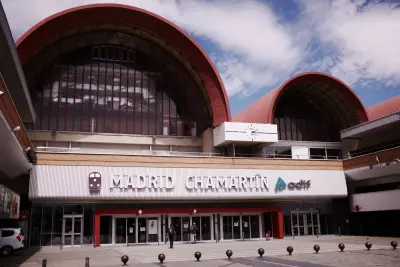
For most travelers heading to a hotel in central Madrid, the practical options are: the Madrid Metro (Line 8, with a transfer at Nuevos Ministerios for many central destinations), the Cercanías commuter rail (Line C-1 from Terminal 4 to Atocha and Chamartín, useful if your hotel is near these stations), the Express Airport Bus (24 hours, runs between Atocha and the airport), official taxis (fixed €30 fare to most central destinations), and ride-share services like Uber, Cabify, and Bolt (comparable to taxi pricing, sometimes cheaper). Pre-booked private airport transfers are another popular option for travelers who want a guaranteed driver waiting at arrivals.

For families with significant luggage, late-night arrivals, or anyone who simply wants the simplest experience, a taxi or pre-booked transfer is generally the right choice. The fixed €30 fare to anywhere within Madrid's M-30 ring road removes any uncertainty about cost, and the journey takes 25 to 40 minutes depending on traffic. For solo travelers or those traveling light, the Metro is by far the cheapest option at around €5 with the airport supplement, though the change at Nuevos Ministerios can be inconvenient with bags.

If your final destination is one of the hotels near MAD rather than central Madrid, transport is even simpler — most airport-area hotels offer free shuttle service that runs at regular intervals to and from all terminals. This is often the most relaxed option for early-morning departures the next day, since you avoid early-morning traffic and the stress of an early city-to-airport journey.

Where to Stay — Central Madrid Neighborhoods Overview?

Madrid's central neighborhoods each have a distinct character, and choosing the right one shapes how you experience the city. The historic center around Sol and Plaza Mayor is the obvious starting point for first-time visitors — central, well-connected by metro, and walkable to many of the major sights. Hotels in this area range from luxury historic properties to backpacker hostels, with plenty of options in the mid-range.

Just east of Sol is the Barrio de Las Letras (Literary Quarter), a neighborhood of narrow streets, bookshops, theaters, and cafés that combines history with contemporary life. It is quieter than Sol itself but still very central. Continuing east, the Retiro neighborhood surrounds Madrid's most important park and includes the Prado Museum and several other major cultural institutions — a good base for travelers focused on art and museum visits.

Chueca and Malasaña, north of Sol, are the most contemporary central districts, full of independent shops, design-forward restaurants, and the city's most active nightlife. Chueca is the historic heart of Madrid's LGBTQ+ community and one of Europe's most welcoming queer neighborhoods. Malasaña is younger, more bohemian, and home to many of the city's best independent cafés and music venues. Both are excellent bases for visitors who want to experience contemporary Madrid life rather than focusing primarily on historic sights.

For a calmer, more upscale stay, consider Salamanca to the northeast — Madrid's grandest residential district, with broad avenues, designer shopping, and excellent restaurants. La Latina, southwest of Sol, has a village-like atmosphere with traditional tapas bars and Sunday flea markets. Lavapiés, further south, is the city's most diverse neighborhood, with strong immigrant communities, alternative cultural venues, and a growing food scene.

Top Attractions

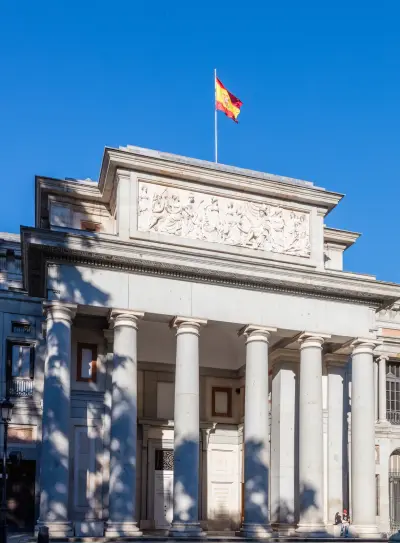
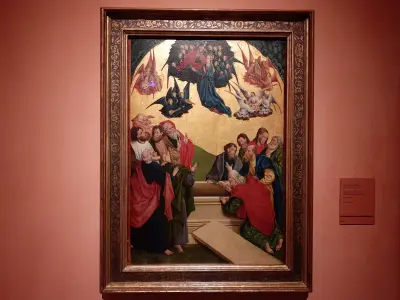
Madrid's cultural landmarks rank among the finest in Europe, and even a short visit allows time for several. The Prado Museum is the obvious starting point — one of the world's great art collections, with unmatched holdings of Velázquez, Goya, El Greco, Bosch, Titian, and Rubens. Plan at least three hours for a focused visit, and longer if you want to do justice to its scope. The Reina Sofía, a few blocks south, holds the twentieth-century complement, including Picasso's Guernica and significant collections of Dalí, Miró, and Spanish modernism. The Thyssen-Bornemisza, the third of the so-called Golden Triangle museums, fills in the gaps with a private collection that runs from medieval art through the twentieth century.

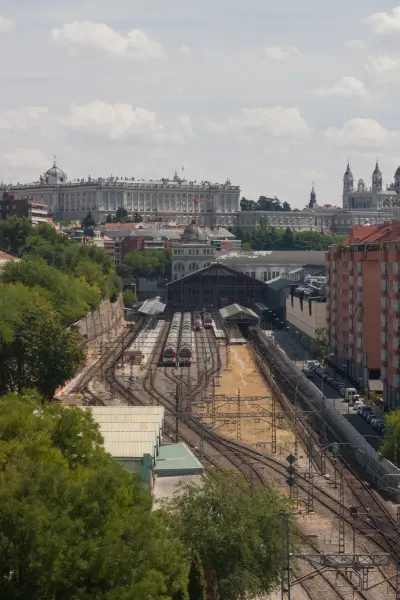
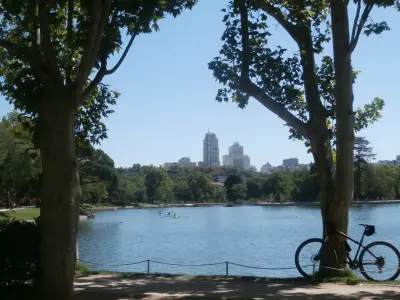
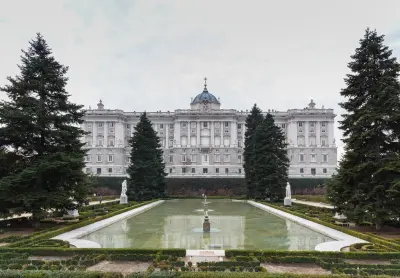
The Retiro Park, immediately east of the Prado, is Madrid's primary green space and one of the great urban parks of Europe. The lake, the rose garden, the Crystal Palace, and the network of formal walks make it an excellent place for a long stroll, particularly in spring and autumn. The Royal Palace (Palacio Real), on the western edge of the historic center, is the official residence of the Spanish royal family (though they actually live in Zarzuela). Its public rooms are open to visitors, and the scale and decoration reflect Spain's imperial history.

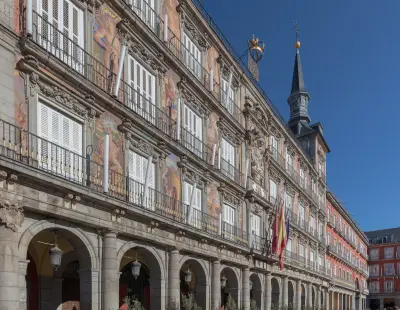
Plaza Mayor, the great rectangular square in the heart of the old city, is the most iconic public space in Madrid. Built in the early seventeenth century, it has hosted royal weddings, bullfights, and Inquisition trials, and today it serves as a gathering place, café terrace, and tourist landmark. Nearby, Plaza de la Villa is a smaller and more atmospheric space, while Puerta del Sol (always shortened to "Sol") is the symbolic center of Spain — Kilometer Zero of the country's road network — and a major transit hub.

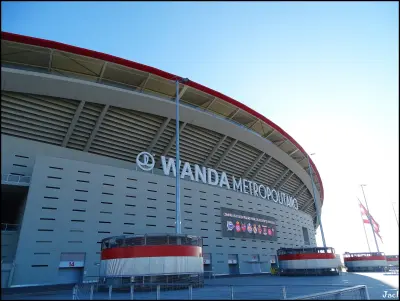
For visitors with more time, the Templo de Debod (an actual ancient Egyptian temple given to Spain and reassembled in a hilltop park overlooking the city), the Las Ventas bullring, and the Santiago Bernabéu Stadium tour each offer distinctive Madrid experiences beyond the headline museums.

Madrid Food and Dining Culture

Madrid's food culture is one of the city's great pleasures, and it operates on a rhythm that takes most visitors a few days to fully internalize. Lunch is the main meal of the day, typically eaten between 2:00 and 4:00 PM, with restaurants often offering a fixed-price midday menu (menú del día) that includes a starter, main course, dessert, and drink for fifteen to twenty euros. This is the best-value way to eat well, and it is genuinely good food at most establishments rather than tourist fare.

Dinner runs late by international standards. Most Spaniards do not sit down for dinner before 9:00 PM, and 10:00 PM is more typical, with restaurants often serving until midnight or later. Earlier dinners are possible at tourist-oriented restaurants, but you will eat alongside other tourists; for the genuine local experience, embrace the late-evening rhythm. The afternoon between lunch and dinner is bridged by the merienda (light snack) and sometimes by tapas, the small dishes that accompany drinks at neighborhood bars.

Tapas culture deserves particular attention. The traditional Madrid model is that ordering a drink (a beer, a glass of wine) at a bar comes with a small free dish — perhaps a slice of jamón, a small portion of croquetas, or a piece of tortilla. Some bars have moved to a paid model, charging for tapas separately, but the genuine free-tapa tradition still exists in working-class neighborhoods and many traditional bars in La Latina, Lavapiés, and the older parts of the city. Going to several bars in succession, ordering a drink and a small plate at each, is one of the great Madrid experiences.

Madrid specialties to try include cocido madrileño (a rich chickpea stew that is the city's signature dish), bocadillo de calamares (a fried squid sandwich, particularly associated with the bars around Plaza Mayor), patatas bravas, jamón ibérico, churros con chocolate (typically eaten as a late-night snack or breakfast at Chocolatería San Ginés), and any of the regional Spanish cheeses, cured meats, and preserves that converge in the capital from across the country.

Day Trips from Madrid

Madrid's central location makes it an excellent base for day trips to historic Spanish cities and significant cultural sites within easy rail or bus distance. The most popular and rewarding is Toledo, the medieval Spanish capital located 70 kilometers south of Madrid. Reachable in 33 minutes on the AVE high-speed train from Atocha station, Toledo offers a remarkably well-preserved medieval old town, important religious sites including the cathedral and the synagogue of Santa María la Blanca, and the legacy of El Greco, who lived and painted here. Our specific guide on the day trip to Toledo covers practical timing and routes.

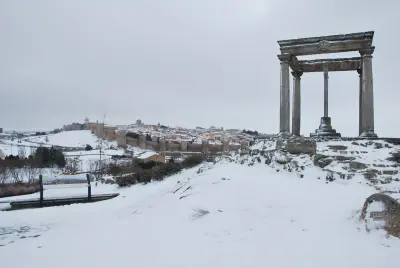
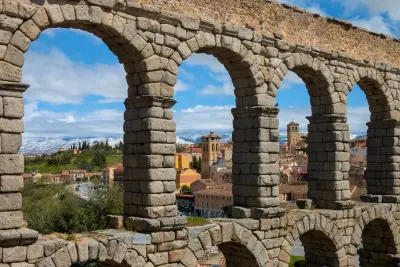
Segovia, an hour by AVE from Chamartín, is famous for its remarkably preserved Roman aqueduct, its cathedral, and the Alcázar that reportedly inspired Disney's Cinderella castle. The combination of Roman, medieval, and Renaissance architecture makes for a compact and visually striking day. Ávila, similarly accessible by train, has Spain's most complete medieval city walls and a rich religious history connected to Saint Teresa.

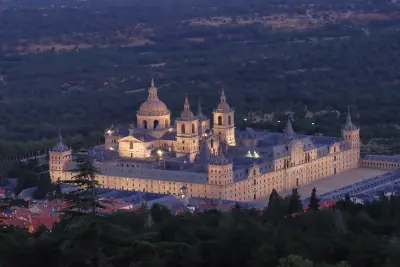
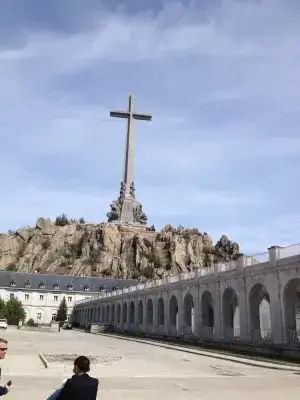
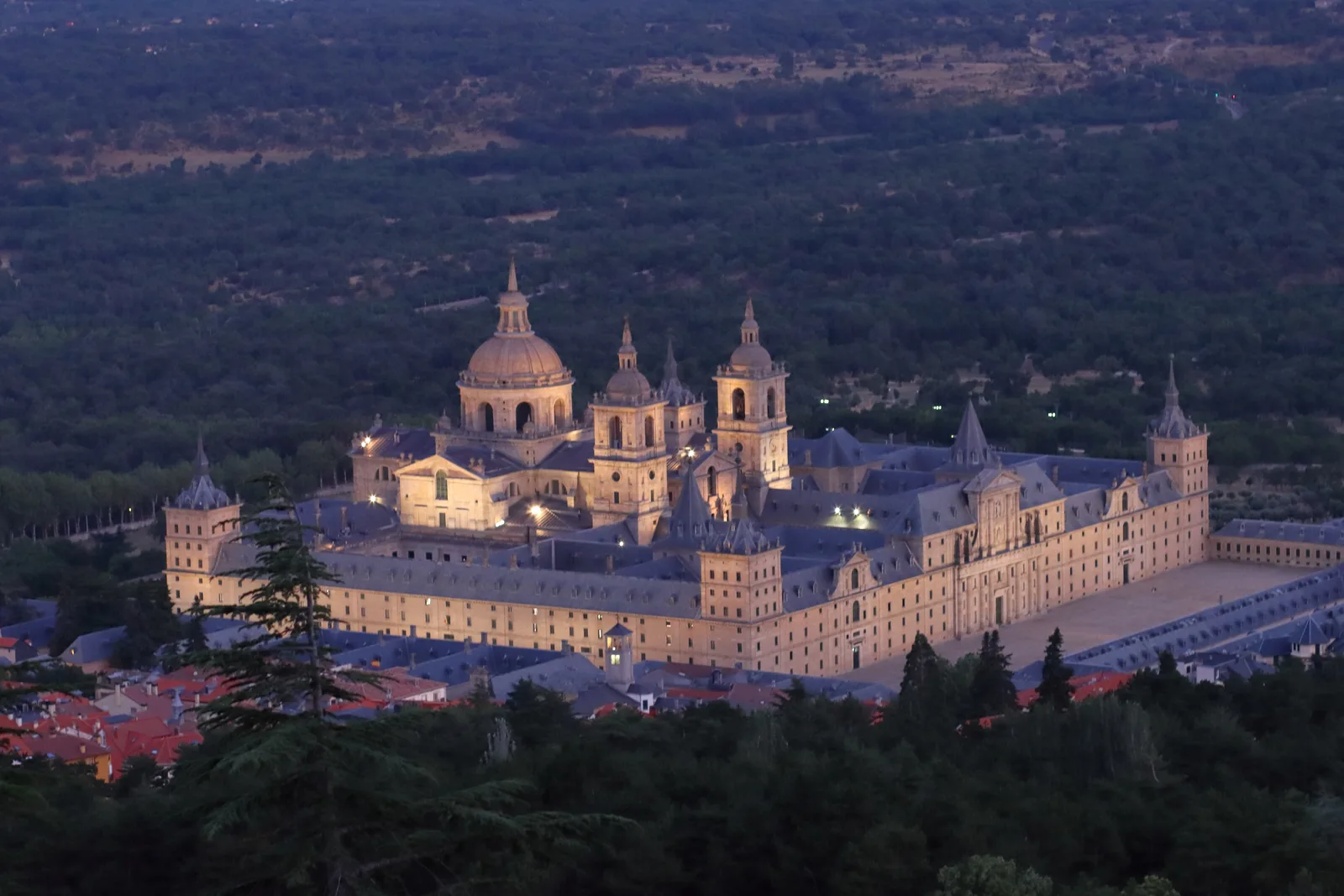
El Escorial, the massive royal monastery built by Philip II in the sixteenth century, is reachable in about an hour by Cercanías or bus and offers a powerful sense of the Spanish Habsburg monarchy at the height of its empire. The Valley of the Fallen, nearby, is more historically fraught — built under Franco's regime and the subject of ongoing political debate — but visited by many travelers as part of the same day.

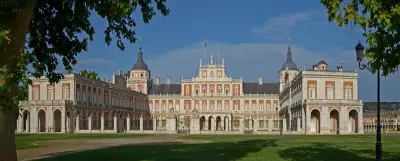
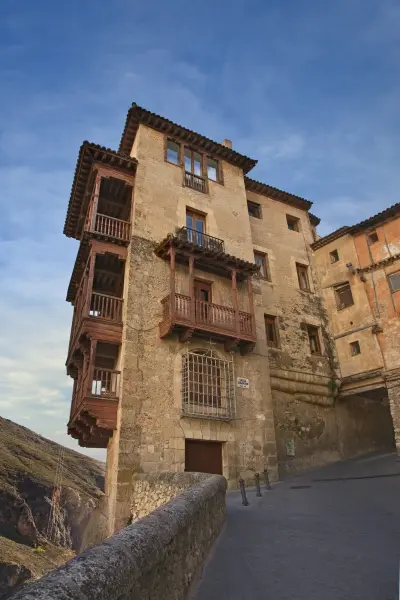
For travelers with a bit more time, Salamanca (golden sandstone, ancient university, splendid plaza), Cuenca (hanging houses on a dramatic gorge), and Aranjuez (royal palace and gardens) are all worthwhile additions to a Madrid base. The high-speed rail network makes these trips much easier than they would be in many other countries.

Madrid for Layover Travelers — What's Possible in 4-8 Hours

For travelers connecting through Madrid Airport with a layover of four hours or more, leaving the airport and catching a glimpse of the city is genuinely feasible — and often a much better use of time than waiting in the terminal. The Express Airport Bus runs 24 hours and reaches Atocha or Plaza de Cibeles in 35 to 40 minutes; the Metro takes about the same. A four-hour layover, accounting for travel time both ways and security, gives you roughly an hour of city time, while a six-hour layover gives you closer to three hours. Our layover guide covers strategies for layovers of various lengths in detail.

For a short layover, the most rewarding focused itineraries center on a single neighborhood or museum. A quick visit to the Prado (90 minutes can cover the absolute highlights), a tapas crawl in La Latina, or a walk through the Retiro Park to Plaza Mayor each fit into a few hours. For travelers who arrive with no specific agenda, simply stepping out for a meal, a coffee, and a walk through the historic center provides a flavor of Madrid that the airport cannot.

The practical considerations for layover excursions: confirm in advance that your visa status allows you to leave the international transit area (Schengen rules apply), check that your luggage will be transferred automatically to your onward flight (most connecting itineraries handle this), and budget plenty of time for the return journey, including airport security and potentially passport control if your onward flight is non-Schengen.

Public Transport in Madrid

Madrid has one of the best public transport systems in Europe, with extensive coverage, reliable service, and reasonable prices. The Madrid Metro is the backbone of the network, with 13 lines covering virtually every part of the city. Trains run from approximately 6:00 AM to 1:30 AM, with frequencies of 2 to 5 minutes during peak hours and 5 to 10 minutes in off-peak periods. A single ticket costs around €1.50 to €2 depending on distance, and a 10-trip ticket offers significant savings for active visitors.

The bus network (operated by EMT Madrid) complements the Metro and reaches some areas the underground does not serve. Night buses (búhos) run when the Metro is closed, providing 24-hour coverage of the city. The Cercanías commuter rail network connects Madrid to its surrounding region, including direct service from Atocha and Chamartín to Toledo, Aranjuez, El Escorial, and other day-trip destinations.

For visitors planning to use public transport extensively, the Tourist Travel Pass offers unlimited rides for periods from one to seven days, and works on Metro, buses, and Cercanías. The Multi card is a reusable transit card that you load with credit and tap at gates — useful for stays of more than a few days, and a small step toward the local experience. Cash payment for individual tickets is also possible at vending machines and ticket counters.

Walking is genuinely viable for getting around central Madrid. The historic center is compact, and many of the major sights are within twenty minutes of each other on foot. For travelers who prefer to walk between major destinations and use the Metro for longer journeys, the city is straightforward to navigate. Taxis and ride-share services fill the gaps for late-night, luggage-heavy, or tired moments — fares within central Madrid are generally reasonable.

Practical Tips — Money, Language, Safety, Customs

Spain uses the euro, and Madrid is generally a card-friendly city — most restaurants, shops, taxis, and public transport accept contactless payment with major credit and debit cards, including from non-Eurozone issuers. ATMs are widely available, with major Spanish banks (BBVA, Santander, CaixaBank) offering competitive exchange rates. Carrying a small amount of cash for tips, very small purchases, and the occasional traditional bar that prefers cash is sensible.

Language: Spanish (Castilian) is the official and dominant language. English is increasingly common in tourist areas, hotels, and major restaurants, but it is not universal. Learning a few basic phrases — please, thank you, hello, how much is this — makes a noticeable difference in the warmth of daily interactions. Madrid is also home to significant communities speaking Latin American Spanish, Catalan, Galician, and other languages, but Castilian remains the lingua franca.

Safety in Madrid is generally good for a major European capital. Violent crime against tourists is rare. The most common issue is petty theft and pickpocketing in tourist-dense areas — Sol, Plaza Mayor, Atocha and Chamartín stations, the Metro during rush hour, and the area around the Prado Museum are all known pickpocket zones. Standard precautions — bag in front, wallet in front pocket, awareness of bag straps — handle the issue. Late-night safety in central neighborhoods is fine; common sense applies as in any city.

Cultural customs that affect visitors: tipping is appreciated but not required at restaurants (rounding up or leaving 5-10% is generous); meal times run later than in northern Europe or North America; public displays of friendliness — saying hello when entering a shop, taking time over meals — are part of the social fabric and reciprocated when offered. Greeting with two cheek kisses (right cheek first) is common between friends and informal acquaintances; handshakes for business contexts. Sunday is the day of rest more than in many cities — many smaller shops close, though restaurants and museums generally operate normally.

Madrid for Business Travelers

Madrid is one of Europe's major business centers, hosting headquarters for multinational corporations, the European headquarters of many Latin American companies, and an extensive ecosystem of professional services, consulting, finance, and technology. Business travelers are a significant share of the airport's passenger volume, and the city is well-equipped to accommodate professional visits.

The principal business districts are Azca and the Cuatro Torres area along the Paseo de la Castellana, the broad north-south avenue that bisects northern Madrid. These areas concentrate the headquarters of Spanish banks (Santander, BBVA), telecommunications companies (Telefónica), and many international firms. The Cuatro Torres complex, four sleek skyscrapers built in the late 2000s, is a recognizable landmark and houses major office space alongside hotels.

For meetings, the convention infrastructure is extensive. IFEMA, Madrid's main conference center, is located near the airport and hosts major trade fairs throughout the year. Smaller conference facilities exist throughout the city, and major hotels in central Madrid offer well-equipped meeting rooms. Coworking spaces have proliferated in recent years, with networks like WeWork, Talent Garden, and locally-owned spaces in Chueca, Malasaña, and the central business districts.

Practical business considerations: most meetings start around 9:00 or 10:00 AM and may run later than expected. Long lunches are still common in some sectors, particularly for relationship-building. Spanish business culture combines warmth with formality — using titles (Señor, Señora, Don, Doña) initially is appropriate, with first-name informality emerging once relationships develop. The siesta has largely faded from professional life in Madrid, but quieter periods between 2:00 and 4:00 PM still affect when meetings can be scheduled effectively.

Madrid for Families

Madrid is a remarkably family-friendly destination, with extensive infrastructure for children, generally welcoming attitudes toward kids in restaurants and public spaces, and a wealth of attractions that work for various ages. Spanish culture is broadly child-positive — children dining with parents at 10 PM in restaurants is normal, and few establishments have any sense that children should be hidden away.

The Retiro Park is the obvious family starting point, with its boating lake, playgrounds, ample green space, and weekend puppet shows. The Parque del Buen Retiro contains the Crystal Palace, the rose garden, and a number of attractions that kids enjoy without preparation. Casa de Campo, the much larger green space west of the city center, includes the Madrid Zoo, the Parque de Atracciones (an amusement park), and the cable car (Teleférico) that gives kids a different perspective on the city.

The Faunia nature park, located just east of the city, combines zoo, ecosystem reconstructions, and animal encounters in a format children find engaging. The Museo del Ferrocarril (Railway Museum) houses historic trains in a former station, popular with young children who like locomotives. The Cosmocaixa science museum offers hands-on exhibits and scheduled programs for various age groups.

For art-focused families, the Prado Museum offers free family activities and audio guides designed for children, and the Reina Sofía's collection of twentieth-century art often resonates with kids more than they expect. Many of Madrid's neighborhoods, particularly Chueca and Malasaña, have ice cream shops, child-friendly cafes, and the kind of pedestrian-friendly streets where families can move at their own pace without dodging heavy traffic.

Common Questions and Resources

Several practical questions come up frequently among Madrid visitors, and a few resources are worth knowing in advance. The official tourism website of Madrid (esmadrid.com) provides current event listings, museum information, and practical visitor information in multiple languages. The Tourist Information Center at Plaza Mayor offers in-person assistance, maps, and ticket sales for major attractions and tours. Many central hotels have concierge or front-desk staff who can advise on restaurants, reservations, and itinerary planning.

For the airport-specific logistics — check-in timing, terminal assignments, transport options, and so on — our Madrid Airport guide covers the operational details. If you are connecting onward to other Spanish destinations, the journey through connecting to Atocha is the typical route, with high-speed AVE trains departing from Atocha to most major Spanish cities.

For visa and entry requirements, consult the Spanish consulate in your country before travel. Most travelers from the EU, US, Canada, UK, Australia, New Zealand, and many Latin American countries do not require advance visas for stays under 90 days, but the new ETIAS pre-authorization system is rolling out for non-EU visa-exempt travelers, with implementation expected during 2025-2026. Check the current status before booking, as the system may apply to your trip.

For travelers who want a deeper dive into Madrid's cultural offerings — opera at the Teatro Real, flamenco at venues like Corral de la Morería or Cardamomo, jazz at Café Central, contemporary theater at the Centro Dramático Nacional, or seasonal cultural festivals — advance booking is generally advisable for high-demand events. Many performances offer English subtitles or assistance, particularly for opera and major theater productions.

Madrid rewards visitors who give it time. Even a short visit can be deeply enjoyable if you embrace the city's rhythm rather than trying to maintain a foreign one — eating late, walking unhurriedly, lingering over coffee, and treating the streets as a destination rather than just transit. For visitors who plan to stay longer, the city quietly reveals layer after layer, from neighborhood markets and small museums to underground music scenes and weekend escapes into the Sierra. Whether you are arriving for a quick layover, a long weekend, or an extended stay, Madrid offers a particular European experience that is increasingly hard to find — a great capital that is still recognizably itself, lived in by the people who call it home.

Planning a trip to Madrid? Get personalized advice.

You May Also Like